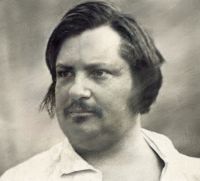
 Charles Dickens,
Martin Chuzzlewit
(1844)
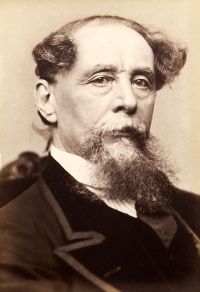
Charles Dickens,
Martin Chuzzlewit
(1844)
“ His shoes looked too large; his sleeve looked too long; his hair looked too limp; his features looked too mean; his exposed throat looked as if a halter would have done it good. ”
The halter, a tool traditionally used to restrain or guide animals, appears in literature as a multifaceted symbol, evoking themes of control, bearing, and social convention. Charles Dickens employs it metaphorically to critique physical and societal constraints, as in Martin Chuzzlewit, where the imagined use of a halter underscores a character’s meager existence.
Meanwhile, Fürst von Pückler-Muskau observes the ritualized gestures of 19th-century etiquette, hinting at unspoken rules comparable to the halter’s binding function. From art to anthropology, authors like Geneva Armstrong and John Garstang depict the halter’s influence on stance and form, blending literal and figurative meanings. This duality—practical and symbolic—reveals the halter’s lasting role in shaping human behavior and narrative tension.
Charles Dickens,
Martin Chuzzlewit
(1844)
“ His shoes looked too large; his sleeve looked too long; his hair looked too limp; his features looked too mean; his exposed throat looked as if a halter would have done it good. ”
Fürst von Hermann Pückler-Muskau, Tour in England, Ireland, and France…
“ The practice of half lying instead of sitting; sometimes of lying at full length on the carpet at the feet of ladies; of crossing one leg over the other in such a manner as to hold the foot in the hand; of putting the hands in the arm-holes of the waistcoat, and so on,—are all things which have obtained in the best company and the most exclusive circles: it is therefore very possible that the keeping on the hat may arrive at the same honour. ”
Charles Dickens,
Bleak House — Chapter XLIII: Esther's Narrative
(1852)
“ I said, ‘Can you, at your time of life, be so headstrong, my friend, as to persist that an arm-chair is a thing to put upon a shelf and look at? That it is an object to contemplate, to survey from a distance, to consider from a point of sight? ”
“ As I glance across my table, I am somewhat distracted by the spectacle of a venerable head whose crown occasionally appears beyond, at about its level. The apparition of a very small hand—whose fingers are bunchy and have the appearance of being slightly webbed—which is frequently lifted above the table in a vain and impotent attempt to reach the inkstand, always affects me as a novelty at each recurrence of the phenomenon. ”
Geneva Armstrong, Woman in Art (1900)
“ Velvet, satin, fur, and the wealth of hair escaping from the broad brim of the hat, are exquisite, while the pose—sitting sideways in an upholstered chair, an arm resting on the back—is perfectly natural as she looks over the right shoulder. ”
Henry James, The American scene (1907)
“ From her position, her high-backed chair by the window that commands most of the coming and going, she looks up intelligently, over her knitting, with no vision of any limit on her part as yet, to this attitude, and with nothing indeed to suggest the possibility of a limit save a hint of that loss of temporal perspective in which we recognize the mental effect of a great weight of years. ”
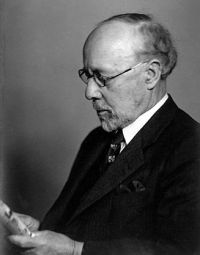 John Garstang,
The land of the Hittites
(1910)
John Garstang,
The land of the Hittites
(1910)
“ The leader is a godlike figure nearly seven feet high, clad in short tunic and shoes with turned-up toes. His left leg is forward and his left arm is advanced; the right arm is drawn back, and, the face being in profile to the left, we have here an illustration of the convention familiar also in Egyptian drawing, whereby the front view of the upper part of the body is seen, while the head and limbs are reproduced in profile. ”
Walter W. Moore, A Year in Europe
“ Occasionally he would rise to his feet with evident effort, leaning on, or rather grasping, one arm of his chair, and bless the people he was passing, with two fingers outstretched in the familiar attitude that we have seen in the pictures. ”
Baroness Emmuska Orczy Orczy, The Triumph of the Scarlet Pimpernel
“ And presently, as the day wore on and the shades of evening blurred one object in the room after another, the straight-backed chair, still left in its place, assumed a fantastic human shape—the shape of a meagre figure with narrow shoulders and thin, carefully be-stockinged legs. ”
 Harold Lamb,
Marching Sands
(1920)
Harold Lamb,
Marching Sands
(1920)
“ In this chair was seated an old man. A majestic form, clothed in a robe of lamb's wool which vied in whiteness with the beard that descended to the man's waist. Each sleeve of the robe was bound above the elbow by a broad circlet of gold. A chain of the same metal was about the man's throat. ”
Henry Ridgely Evans, Hours with the Ghosts or, Nineteenth Century Witchcraft
“ After the séance the prestidigitateur fully explained the modus operandi of the mystic tie, which is herein for the first time correctly given to the public.The medium holds out his left wrist first and has it tied securely, about the middle of the rope. Two members of the committee are directed to pull the ends of the cord vigorously. “Are you confident that the knots are securely tied?” he asks; when the committee respond “yes,” he puts his hand quickly behind him, and places against the wrist, the wrist of his right hand, in order that they may be pinioned together. ”
J. D. Paxton, Letters from Palestine
“ It is amusing to one not accustomed to the sight, to observe how partial the people are to a sitting posture. You may see the blacksmith sitting and hammering his iron; the carpenter sitting and hewing his wood, or planing his plank; the merchant sitting and selling his goods; and the women sitting and washing their clothes,—not sitting on chairs, or on benches, but á-la-turque, with their feet folded under them. ”
 John Seely Hart,
The Quilting Party
(1852)
John Seely Hart,
The Quilting Party
(1852)
“ I have been in many a proud assembly since that day, where the great and the beautiful have met to admire and be admired, where lovely women glided gracefully to and fro in the quadrille with so little animation that the flowers in their hands scarcely trembled to the languid motion. ”
 Anna Katharine Green,
The Filigree Ball
Anna Katharine Green,
The Filigree Ball
“ By scrutinizing them closely I could even tell where the thumb had rested, and at once foresaw the possibility of determining by means of these marks both the size and shape of the hand which had left behind it so neat and unmistakable a clue. Wonderful! but what did it all mean? Why should a man rest his finger-tips on this out-of-the-way shelf? Had he done so in an effort to balance himself for a look up the chimney? No; for then the marks made by his fingers would have extended to the edge of the shelf, whereas these were in the middle of it. ”
 Georg Wilhelm Friedrich Hegel,
The Philosophy of Fine Art, volume 3…
Georg Wilhelm Friedrich Hegel,
The Philosophy of Fine Art, volume 3…
“ Yet these outlines, that is, the silhouette we find in them, is just what is most important; it is the main thing which we recognize, and which simply makes the rest intelligible. For in the case of a group we find that many portions stand in front relatively to others, an arm before the trunk of the body, or one leg in front of another. ”
“ The new guest was one of those solid men who are square at the base and square at the shoulders, with ruddy skins; men who lean backward when they walk, seeming to displace much atmosphere about them, and who appear to think that more than one glance of the eye is needful to take them in. ”
Robert Lloyd, Lloyd's Treatise on Hats, with Twenty-Four Engravings
“ It is no less singular than true, that the same hat, by being placed on the head in different positions, will give, in appearance, as many distinct characters to the same person as the number of those positions amount to. ”
Albert Barrère, Argot and Slang
“ They indeed make a most ridiculous figure, with hats of an inch in the brim, that do not cover, but lie upon the head; with about two pounds of fictitious hair, formed into what is called a club, hanging down their shoulders, as white as a baker’s sack ”
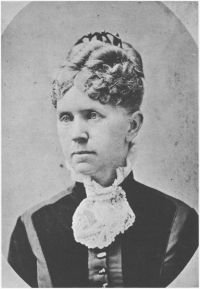 Frances Fuller Victor,
The New Penelope
(1877)
Frances Fuller Victor,
The New Penelope
(1877)
“ One day a man, to whose motherless children I had been kind when opportunity offered, slouched into my room without the ceremony of knocking and dropping into a chair as if his knees failed him, began twirling his battered old hat in an embarrassed manner, and doing as so many of his predecessors had done—proposing off-hand. ”
Josephine Chase, Grace Harlowe's Fourth Year at Overton College
“ No one could fathom the significance of a certain tall figure, dressed in rags, who stopped short in her tracks at frequent intervals, and, producing a needle and thread, sewed industriously at her tattered garments. ”
 William Clark Russell,
John Holdsworth, Chief Mate
William Clark Russell,
John Holdsworth, Chief Mate
“ Conceive a stooped and trembling figure, the shoulders forward so as to hollow the chest, and the back bowed like an old man’s, the arms lengthened by the abnormal attitude and defeating every faint suggestion of symmetry which the eye might still hope to find. ”
Edward Money, The Truth About America
“ Gradually it became evident that each pair of soles represented an individual, who lay luxuriously poised on the back legs of a chair, with his feet up in the true American posture, which, however, mind you, I in no way decry, being much given to it myself. ”
Cyrus Thomas, A Study of the Manuscript Troano (1882)
“ In the right-hand compartment of the upper division is a squatting human figure in black on a blue-ground, doubtless representing some deity. He has a fiery red mouth and a very prominent nose, and is holding by the hand a cord, which passes round a character at his feet, probably representing a peddler's pack. ”
 Leonardo da Vinci,
A Treatise on Painting
(1802)
Leonardo da Vinci,
A Treatise on Painting
(1802)
“ The shoulder which bears the weight is always higher than the other. This is seen in the figure opposite, in which the centre line passes through the whole, with an equal weight on each side, to the leg on which it rests. ”
 Edward Whymper,
Scrambles amongst the Alps — Chapter 12
(1871)
Edward Whymper,
Scrambles amongst the Alps — Chapter 12
(1871)
“ The Messieurs—sometimes strangely and wonderfully dressed—stand about in groups, or lean back in chairs, or lounge on the benches which are placed by the door. They wear extraordinary boots, and still more remarkable head-dresses. Their peeled, blistered, and swollen faces are worth studying. ”
 Frederick Douglass,
My Bondage and My Freedom
(1855)
Frederick Douglass,
My Bondage and My Freedom
(1855)
“ Behind the tall-backed and elaborately wrought chairs, stand the servants, men and maidens—fifteen in number—discriminately selected, not only with a view to their industry and faithfulness, but with special regard to their personal appearance, their graceful agility and captivating address. ”
Fürst von Hermann Pückler-Muskau, Tour in England, Ireland, and France…
“ Even scales, by which to ascertain one’s weight daily—a strange taste of the English—are not wanting. The numerous servants are never seen but in shoes, and in the neatest livery or plain clothes; and a porter is always at his post to take charge of great-coats and umbrellas. ”
Emily Sarah Holt, Clare Avery: A Story of the Spanish Armada
“ A chair that is ten years old is there fit for nought; a glass of five years may not be set on board; and a gown you have worn one year must be cast aside, whether it be done or no. The fashion choppeth and changeth all one with the moon; nor can a gentleman wear aught that is not the newest of his sort. Sir, the Queen’s Highness carrieth ne’er a gown two seasons, nor never rippeth—all hang by the walls. ”
Reginald Harvey Arnold, Simplex Munditiis, Gentlemen
“ Your position should always be as dignified as possible; if sitting, the body should be held upright and the arms gracefully placed, and not twisted or hung over the back of the chair. Always face the person whom you are addressing. When standing, your position must be straight, shoulders back, and head well up. ”
Robert Kerr, A General History and Collection of Voyages and Travels…
“ Accordingly I made him the present I intended for the old chief, which consisted of a shirt, an axe, a piece of red cloth, a looking-glass, some nails, medals, and beads. He received these things, or rather suffered them to be put upon him, and laid down by him, without losing a bit of his gravity, speaking one word, or turning his head either to the right or left; sitting the whole time like a statue ”
 William Schwenck Gilbert,
Foggerty's Fairy and Other Tales
(1890)
William Schwenck Gilbert,
Foggerty's Fairy and Other Tales
(1890)
“ And then we had a fiddler who could play under a chair, and over a chair, and through a chair, and on his head, and with his head between his legs, and under all circumstances of contortion under which a man could reasonably be expected to play a fiddle. ”
 W. Somerset Maugham,
Of Human Bondage
(1915)
W. Somerset Maugham,
Of Human Bondage
(1915)
“ A chair, a chest of drawers which served also as a wash-stand, and a cheap easel, were all the furniture. The place would have been squalid enough in any case, but the litter, the untidiness, made the impression revolting. ”
 Frank Harris,
My Life and Loves
(1922)
Frank Harris,
My Life and Loves
(1922)
“ I remember how the nearest girl used to lift me up and put me in my high-chair and how I would hurry over the sums set in compound long division and proportion, for as soon as I had finished, I would drop my pencil on the floor, and then turn round and climb down out of my chair, ostensibly to get it, but really to look at the girls' legs. ”
 William Henry Holmes,
Art in Shell of the Ancient Americans
William Henry Holmes,
Art in Shell of the Ancient Americans
“ Placing the plate so that the two perforations are at the left, we have the principal figure in an upright posture. This figure apparently represents a personage of some importance, as he is decked from head to foot with a profusion of ornaments and symbols. He is shown in profile with the arms extended in action, and the feet separated as if in the act of stepping forward. The head is large, occupying about one-third of the height of the design. ”
hatter John Thomson, A Treatise on Hat-Making and Felting
“ A given quantity of wool calculated for one pair of shoes is weighed out, which is divided into four equal portions, two of them for each shoe. One at a time is laid upon the hurdle, and with the proper bow it is bowed as if for a hat, and disposed of in exactly an equilateral triangle, which being gathered together with the basket, is pressed, and temporarily solidified, laid aside, and the other portion treated in the same manner. ”
:Mary Elizabeth Blake, Mexico, picturesque, political… (1888)
“ We have yet to see the first instance of shirking or of carelessness. Slight of frame, small in stature, with every appearance of delicacy in physique, they will take upon the shoulders as much as five or six men can lift, and carry it an indefinite distance. ”
William Leitch, God's glory in the heavens (1867)
“ By turning handles attached to the chair, you move up or down, along the concave of a circle, and to the right or left, at pleasure. All that you have to do is to observe at ease, and give an occasional pressure or tap with your finger. ”
Arts and Crafts Exhibition Society, Arts and Crafts Essays
“ Take the common male chest of drawers as a case in point. Its function is to hold a man's shirts and his clothes, articles of a known and constant size. Why are the drawers not made proportionate for their duty? Why are they so few and so deep that when filled—as they needs must be—they are uneasy to draw out, and to obtain the particular article of which we are in quest, and which of course is at the bottom, we must burrow into the heavy super-incumbent{286} mass of clothes in our search, and—that successful—spend a weary while in contriving to repack the ill-disposed space. ”
 Dorothy L. Sayers,
Lord Peter views the body
(1928)
Dorothy L. Sayers,
Lord Peter views the body
(1928)
“ This big book lies on a steel shelf at the back of the inner compartment. Just a moment. I have not described this inner compartment to you. It is six feet high, three feet wide, and three feet deep. One can stand up in it quite comfortably, unless one is very tall. It suits me nicely—as you may see, I am not more than five feet eight and a half. The President has the advantage of me in height; he might be a little cramped, but there would be room for him to squat if he grew tired of standing. ”
Henry M. Field, From the Lakes of Killarney to the Golden Horn
“ A lady may take a chair, and for forty francs be carried quite to the top on the shoulders of four stout fellows. But the 285 more common way is to take two assistants, one to go forward who drags you up by a strap attached around his waist, to which you hold fast for dear life, while another pushes behind. ”
 Charles Dudley Warner,
A Little Journey in the World
Charles Dudley Warner,
A Little Journey in the World
“ Tall—at least six feet-with a well-shaped head set on square shoulders, brown hair inclined to curl, large blue eyes which could be merry or exceedingly grave, I thought him a picture of manly beauty. Good-natured, clever, prosperous, and not yet thirty. ”
Francis Bradley Bradley-Birt, An American Girl in India (1911)
“ If ever my brother Bob sees a mantelshelf anywhere round about he just goes right there for it straight away, and manages to get his feet on to it somehow. All men love mantelshelves, but an Englishman leans his back against them, while an American uses them as a foot-rest. ”
Gardner C. Teall, The Pleasures of Collecting
“ A chair-collector looks beyond the mere utilitarian fact that each chair can be sat upon with comfort, or can’t be.First of all he must acquaint himself with the various periods: Italian Renaissance, French Renaissance, Flemish, Spanish, Elizabethan, Carolean, and Jacobean (Tudor to Stuart) , William and Mary,{82} Queen Anne, the Early Georgian, the French periods of the Henris, the Louis, the Empire, the styles of Chippendale, Adam, Hepplewhite, and Sheraton, and the early American forms. ”
 George Henry Lewes,
Rose, Blanche, and Violet, Volume III…
(1848)
George Henry Lewes,
Rose, Blanche, and Violet, Volume III…
(1848)
“ She advanced, and the conversation was again interrupted. Nothing more was said during the rest of the quadrille; both were absorbed in their own thoughts. He led her to a seat, and took another beside her. ”
Frances Bowyer Vaux, Domestic Pleasures, or, the Happy Fire-side
“ If you sat down in one particular chair, although there was nothing in its appearance to distinguish it from others, a couple of arms would immediately clasp you, so as to render it impossible to disentangle yourself, till some one, who understood the trick, chose to set you at liberty. ”
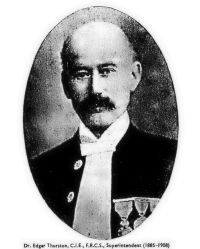 Edgar Thurston,
Castes and Tribes of Southern India…
Edgar Thurston,
Castes and Tribes of Southern India…
“ They are as a rule tall, robust individuals, who go about all but naked, with a jingling chain tied to the right wrist, their hair long and matted, a knife in the hand, and a big stone on the left shoulder. ”
A. A. Stewart, Type: A Primer of Information About the Mechanical Features of Printing Types
“ As all these irregular shapes must be made to appear in line with each other, the type-body on which they are made is larger than the letter. The blank parts around the face of a letter are called the counter, the shoulder, and the beard. The counter is the shallow place between the lines of the face. The shoulder is the low flat part of the type around the face. The beard is the sloping part between the face and the shoulder. ”