Summary

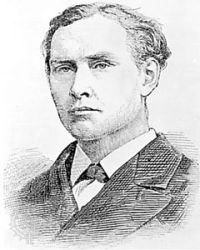
Portrait of Edward Whymper Edward Whymper Scrambles amongst the Alps — Chapter 12 (1871)

Big, black, and leaden-coloured clouds rolled up from Zinal, and met in combat on the Morning glacier with others which descended from the Eothhorn. Down came the rain in torrents, and crash went the thunder. The herd-boys hurried under shelter, for the frightened cattle needed no driving, and tore spontaneously down the Alp as if running a steeple-chase. Men, cows, pigs, sheep, and goats forgot their mutual animosities, and rushed to the only refuge on the mountain.
Source: Wikisource

Portrait of Edward Whymper Edward Whymper Scrambles amongst the Alps — Chapter 12 (1871)

To have retreated from the place where Croz suggested a change of plan, to have descended below the reach of danger, and to have mounted again by the route which Almer suggested, would have been equivalent to abandoning the excursion; for no one would have passed another night in the chalet on the Arpitetta Alp. "Many," says Thucydides, "though seeing well the perils ahead, are forced along by fear of dishonour—as the world calls it—so that, vanquished by a mere word, they fall into irremediable calamities."
Source: Wikisource

Portrait of Edward Whymper Edward Whymper Scrambles amongst the Alps — Chapter 12 (1871)

Croz—held hard in by the others, who kept down the Zinal side—opened his shoulders, flogged down the foam, and cut away the cornice to its junction with the summit; then boldly leaped down, and called on us to follow him.
It was well for us now that we had such a man as leader. An inferior, or less daring guide, would have hesitated to enter upon the descent in a dense mist; and Croz himself would have done right to pause had he been less magnificent in physique. He acted, rather than said, "Where snow lies fast, there man can go; where ice exists, a way may he cut; it is a question of power
Source: Wikisource

Get perspective with Kwize: daily news enlightened by great literature