Summary

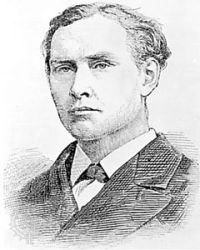
Portrait of Edward Whymper Edward Whymper Scrambles amongst the Alps — Chapter 21 (1871)

What if we should be beaten at the last moment? The slope eased off, at length we could be detached, and Croz and I, dashing away, ran a neck-and-neck race, which ended in a dead heat. At 1.40 p.m. the world was at our feet, and the Matterhorn was conquered. Hurrah! Not a footstep could be seen.
It was not yet certain that we had not been beaten. The summit of the Matterhorn was formed of a rudely level ridge, about 350 feet long, [13] and the Italians might have been at its farther extremity. I hastened to the southern end, scanning the snow right and left eagerly. Hurrah! again
Source: Wikisource

Portrait of Edward Whymper Edward Whymper Scrambles amongst the Alps — Chapter 21 (1871)

Nevertheless, the summit was reached by that route by the undaunted Carrel. From knowing the final slope over which he passed, and from the account of Mr. F. C. Grove—who is the only traveller by whom it has been traversed—I do not hesitate to term the ascent of Carrel and Bich in 1865 the most desperate piece of mountain-scrambling upon record. In 1869 I asked Carrel if he had ever done anything more difficult. His reply was, "Man cannot do anything much more difficult than that!"
Source: Wikisource

Portrait of Edward Whymper Edward Whymper Scrambles amongst the Alps — Chapter 21 (1871)

He was the man, of all those who attempted the ascent of the Matterhorn, who most deserved to be the first upon its summit. He was the first to doubt its inaccessibility, and he was the only man who persisted in believing that its ascent would be accomplished. It was the aim of his life to make the ascent from the side of Italy, for the honour of his native valley. For a time he had the game in his hands: he played it as he thought best; but he made a false move, and he lost it. Times have changed with Carrel. His supremacy is questioned in the Val Tournanche; new men have arisen
Source: Wikisource

Get perspective with Kwize: daily news enlightened by great literature