Summary

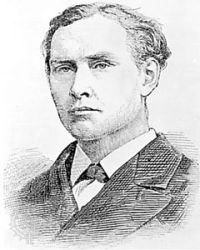
Portrait of Edward Whymper Edward Whymper Scrambles amongst the Alps — Chapter 13 (1871)

First, from the heat of the sun detaching small stones or rocks which have been arrested on ledges or slopes and bound together by snow or ice. I have seen such released many times when the sun has risen high; fall gently at first, gather strength, grow in volume, and at last rush down with a cloud trailing behind, like the dust after an express train.
Source: Wikisource

Portrait of Edward Whymper Edward Whymper Scrambles amongst the Alps — Chapter 13 (1871)

As I have already said, and presently shall repeat more particularly, the crests of all the main ridges of the great peaks of the Alps are shattered and cleft by frost; and it not unfrequently happens that a notch in a ridge, which appears perfectly insignificant from a distance, is found to be an insuperable barrier to further progress; and a great detour, or a long descent, has to be made to avoid the obstacle. When committed to an arête one is tied, almost always, to a particular course, from which it is difficult to deviate. Much loss of time must result if any serious obstruction occurs
Source: Wikisource

Portrait of Edward Whymper Edward Whymper Scrambles amongst the Alps — Chapter 13 (1871)

They are generated by the sun, and delivered by the frost. "Fire," it is well said in Plutarch's life of Camillus, "is the most active thing in nature, and all generation is motion, or at least, with motion; all other parts of matter without warmth lie sluggish and dead, and crave the influence of heat as their life, and when that comes upon them, they immediately acquire some active or passive qualities."
Source: Wikisource

Get perspective with Kwize: daily news enlightened by great literature