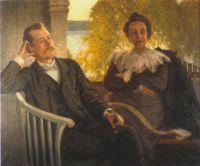
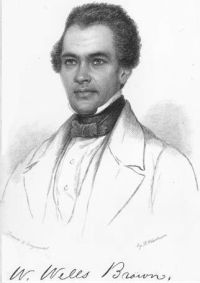
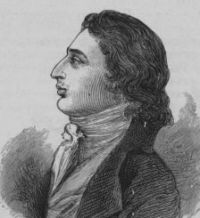
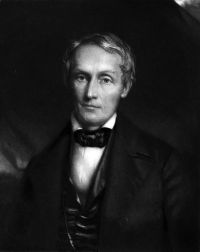
Forehead

Definition and stakes

Various,  The Yale Literary Magazine (Vol…

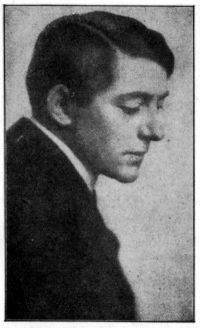
“ There’s a forehead for you, shaded with fine dark hair—there’s an eye, deep, crystaline, full—there’s a cheek, delicate, perhaps too delicate—and above a prominent chin, there’s the pale thin lip of the scholar. His countenance is gentle, but there’s something of severity about the small closed mouth, and in the glitter of that eye—and yet all is calm, all is serenity, all is gentleness. No dark passions have had commission to mark that noble forehead—no feverish and fiery ambition have dared to light their hectic taper on that cheek—all is natural. ”
Source: Gutenberg

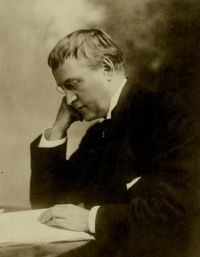
Portrait of Henry T. Finck Henry T. Finck,  Romantic Love and Personal Beauty

“ THE FOREHEAD BEAUTY AND BRAIN It has been stated already that, anatomically considered, the forehead is not a part of the face but of the cranium. From an artistic and popular point of view, however, the forehead is a part of the face, and a most important one. Modern taste fully endorses the ancient law of facial proportion, which makes the height of the forehead equal to the length of the nose, and to the distance from the tip of the nose to the tip of the chin. ”
Source: Gutenberg

The World's Greatest Books — Volume 15…

“ I consider the outline and position of the forehead to be the most important feature in physiognomy. We may divide foreheads into three principal classes—the retreating, the perpendicular, and the projecting, and each of these classes has a multitude of variations.
A few facts with respect to foreheads may now be given.
The higher the forehead, the more comprehension and the less activity.
The more compressed, short, and firm the forehead, the more compression and firmness, and the less volatility in the man.
”
Source: Gutenberg

Get perspective with Kwize: daily news enlightened by great literature