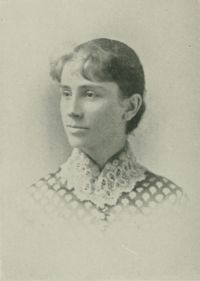
Estelle M. Hurll

Biographical details

Estelle M. Hurll The Madonna in Art

Through all his pictures of the Virgin and child we can see that the Madonna as the Christ-bearer is the ideal he always has in view. He falls short of it, not through any lack of earnestness, but because his type of womanhood is incapable of expressing such lofty idealism. His virgins are modelled upon the simple Andalusian maidens, sweet, timid, dark-eyed creatures. Their faces glow with gentle affection as they look wistfully out of the picture, or raise their eyes to heaven, as if dimly discerning the heights which they have never reached.
Source: Gutenberg

Estelle M. Hurll Child-life in Art

Child-life in every form appeals with singular force to the sympathies of all. In palace and in cottage, in the city and in the country, childhood reigns supreme by the divine right of love. No monarch rules more mightily than the infant sovereign in the Kingdom of Home, and none more beneficently. His advent brings a bit of heaven into our midst, and we become more gentle and tender for the sacred influence. Every phase of the growing young life is beautiful and interesting to us. Every new mood awakens in us a sense of awe before unfolding possibilities for good or evil.
Source: Gutenberg

Estelle M. Hurll Michelangelo

As if in answer to the divine summons, the lifeless figure begins to stir, rising slowly to a sitting posture. The face turns towards the source of life as the flower turns to the sun. The eyes are lifted to the Creator's with a wistful yearning. It is the look we sometimes see in the eyes of a woodland creature appealing for mercy. It is such a look as might belong to that imaginary being of the Greek mythology, the faun, half beast, half human. Thus Adam, still but half created, begins to feel the thrill of life in his members, and is aroused to action.
Source: Gutenberg

Get perspective with Kwize: daily news enlightened by great literature