Sinus

Definition and stakes

William Abbott Herdman,  Encyclopædia Britannica, Ninth Edition (1888)

“ The sinus leaving the dorsal end of the heart is called the cardio-visceral vessel, and this, after giving off to the test the branch above mentioned, breaks up into a number of sinuses, which ramify over the alimentary canal and the other viscera. These visceral lacunae finally communicate with a third great sinus, the viscero-branchial vessel, which runs forward along the dorsal edge of the branchial sac externally to the dorsal lamina and joins the dorsal ends of all the transverse vessels of the branchial sac. ”

Source: Wikisource

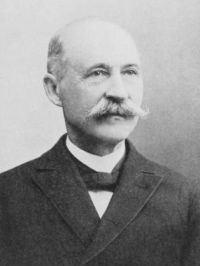
Portrait of Alexis Thomson Alexis Thomson,  Manual of Surgery, Sixth Edition… (1921)

“ Sinus.#--A sinus is a track leading from a focus of suppuration to a cutaneous or mucous surface. It usually represents the path by which the discharge escapes from an abscess cavity that has been prevented from closing completely, either from mechanical causes or from the persistent formation of discharge which must find an exit. A sinus is lined by granulation tissue, and when it is of long standing the opening may be dragged below the level of the surrounding skin by contraction of the scar tissue around it. ”
Source: Wikisource

H. S. Jennings,  Anatomy of the Cat

“ Sinus cavernosus.—A short broad venous sinus, one on each side of the hypophysis, on the body of the sphenoid. It receives veins from the side and ventral surface of the brain. The two sinuses are connected by communicating branches craniad and caudad of the hypophysis. From them branches pass out through the orbital fissure to join the plexus formed by the branches of the posterior facial vein.
4. Sinus petrosus inferior.—This arises from the sinus cavernosus and passes caudolaterad in the groove between the edge of the petrous bone and the basilar portion of the occipital.
”
Source: Gutenberg

Get perspective with Kwize: daily news enlightened by great literature