Summary

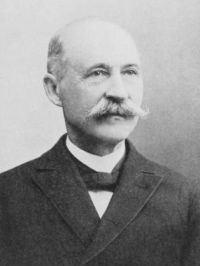
Portrait of Thomas Fillebrown Thomas Fillebrown Resonance in Singing and Speaking

Beauty of tone is not everything; the singing of mere sounds, however lovely, is but a tickling of the ear. The shortcoming of the Italian school of singing, as of composition, has been too exclusive devotion to sensuous beauty of tone as an end in itself. The singer must never forget that his mission is to vitalize text with tone. The songs of Schubert, Schumann, Franz, Brahms, Grieg, Strauss, and Wolf, as well as the Wagnerian drama, are significant in their inseparable union of text and music. The singer is therefore an interpreter, not of music alone, but of text made potent by music.
Source: Gutenberg

Portrait of Thomas Fillebrown Thomas Fillebrown Resonance in Singing and Speaking

A split sounding-board spoils the pianoforte, the indented bell destroys the sweet tone of the French horn, and a cracked fiddle is the synonym for pandemonium itself.
The quality and power of resonance is well illustrated by a tuning-fork, which, if set in vibration, can, unaided, scarcely be heard by the person holding it. But if rested on a table, or a plate of glass, or, better still, on the bridge of a violin, its tones may be distinctly heard throughout a large hall.
Source: Gutenberg

Portrait of Thomas Fillebrown Thomas Fillebrown Resonance in Singing and Speaking

Technical training is not all in all. Simple recognition of the existence of our powers is needed even more. Freedom comes through the recognition and appropriation of inherent power; recognition comes first, the appropriation then follows simply. The novice does not know his natural power, his birthright, and must be helped to find it, chiefly, however, by helping himself, by cognizing and re-cognizing it.
No student of the most human of all arts—singing—need give up if he has burning within him the song impulse, the hunger to sing.
Source: Gutenberg

Get perspective with Kwize: daily news enlightened by great literature