Cerebellum

Definition and stakes

Albert F. Blaisdell,  A Practical Physiology: A Text-Book for Higher Schools

“ The cerebellum, or lesser brain, lies in the back of the cranium, and is covered over in man by the posterior lobe of the cerebrum. It is, at it were, astride of the back of the cerebro-spinal axis, and consists of two hemispheres joined by a central mass. On its under surface is a depression which receives the medulla oblongata. The cerebellum is separated from the cerebrum by a horizontal partition of membrane, a portion of the dura mater. In some animals, as in the cat, this partition is partly bone. ”

Source: Gutenberg

Andrew Wilson,  Popular Science Monthly (1879)

“ The cerebellum thus appears to be the great brain center whence are issued the commands and directions which guide the muscular actions and movements of our lives. Contrariwise, the true functions of the cerebellum are proved by experiments in which this part of the brain has been left intact while the cerebrum or true brain has been removed—an operation absolutely painless, as will presently be more particularly mentioned. A bird or higher animal in such a case will lose all power of volition; it will be deprived of sight, hearing, and other senses; it will die of hunger unless fed ”
Source: Wikisource

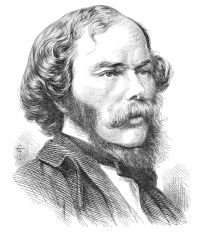
Portrait of Lorenz Oken Lorenz Oken,  Elements of Physiophilosophy

“ The cerebellum is the auditory brain, and from it the acoustic nerves take their rise. For, since the ear is the sense of the whole motor system, and consequently of half the animal, it inevitably follows, that an appropriate or special nervous mass must be developed for it, just as the myelon or spinal chord has been for the trunk. An organ, which is so constantly active, must necessarily have a large nervous mass. The cerebellum is consequently not a brain in the general sense, but one which is wholly individualized. ”
Source: Gutenberg

Get perspective with Kwize: daily news enlightened by great literature