Cerebrum

Definition and stakes

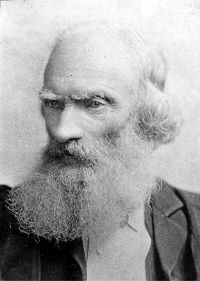
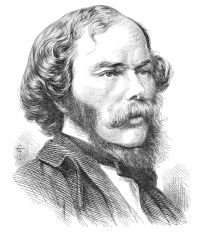
Portrait of George Henry Lewes George Henry Lewes,  The Physical Basis of Mind

“ The disposition of the fibres in the brain is far too complex to be accurately followed. All that we can say is, that there are strands which connect one convolution with another, strands which connect one hemisphere with another, strands which connect cerebrum with cerebellum, and strands which connect the cerebrum with the lower ganglia. It is important to conceive this distinctly; for we shall hereafter see that the function of the Brain (by brain is here meant both Cerebrum and Cerebellum) is not that of innervation, but of incitation and regulation. ”
Source: Gutenberg

Albert F. Blaisdell,  A Practical Physiology: A Text-Book for Higher Schools

“ The cerebellum, or lesser brain, lies in the back of the cranium, and is covered over in man by the posterior lobe of the cerebrum. It is, at it were, astride of the back of the cerebro-spinal axis, and consists of two hemispheres joined by a central mass. On its under surface is a depression which receives the medulla oblongata. The cerebellum is separated from the cerebrum by a horizontal partition of membrane, a portion of the dura mater. In some animals, as in the cat, this partition is partly bone. ”
Source: Gutenberg

Ray Vaughn Pierce,  The People's Common Sense Medical Adviser in Plain English

“ Intellect, Emotion, and Volition. Physiologists assign to the cerebrum its functions, and neurological, as well as phrenological writers, have located them as represented in Fig. 68. True, there is no structural division between the parts of the cerebrum to indicate this diversity of function, nor is there any perceptible limit between the sensory and motor filaments of the game nerve. As no one has any reason for denying that separate portions of the brain may manifest distinct functions of the mind, we shall assume it as a conceded proposition. ”
Source: Gutenberg

Get perspective with Kwize: daily news enlightened by great literature