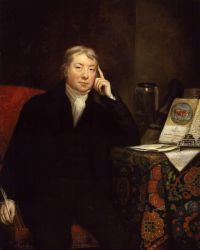
Rufus Osgood Mason

Biographical details

Rufus Osgood Mason Popular Science Monthly (1875)

Is he himself to cease when the material organization wears out?—and consciousness, memory, reason, and, higher, nobler and purer than all, heaven-born aspiration, the crowning development of countless ages, do they all go out in darkness just at the dawning? or, rather, do not the organization of elements and their development into life and movement, the gradual dawning of instinct and reason, and, lastly, of an aspiring soul, give promise of further development under more favoring circumstances for approaching, knowing, and appreciating the great central, causal, all-pervading soul?
Source: Wikisource

Rufus Osgood Mason Popular Science Monthly (1875)

The most intelligent animal, or even the savage man, bears relations to no surroundings beyond the mere seeming of things upon the few acres or miles traversed by his race or tribe; the sun and moon are only what they appear; they rise just beyond the mountain, and they go down in the forest. The thunder and the tempest are incomprehensible, or are the voice and breathings of an angry God. The philosopher, or man of science, on the contrary, holds converse with all objects, animate and inanimate; all peoples and their works, both present and past, upon the surface of the earth.
Source: Wikisource

Rufus Osgood Mason Popular Science Monthly (1875)

The gods of sects and specialties may perhaps be failing of their accustomed reverence, but, in the mean time, there is dawning on the world, with a softer and serener light, the conception, imperfect though it still may be, of a conscious, originating, all-pervading, active soul—the "Over-Soul," the Cause, the Deity; unrevealed through human form or speech, but filling and inspiring every living soul in the wide universe according to its measure: whose temple is Nature, and whose worship is aspiration.
Source: Wikisource

Get perspective with Kwize: daily news enlightened by great literature