“ Every man is what education has made him, whether he has drunk deep at the Pierian spring, or sipped at the humblest fountain. The philosopher, whose comprehensive mind can scan the universe, and read and interpret the phenomena of nature; whose heaven-aspiring spirit can soar beyond the boundaries of time, indulge in the anticipation of immortality, and discern in the past, the present, and the future the all-pervading spirit of benevolence, is equally the child of education with him whose soul proud science never taught to feel its wants, and know how little may be known. ”
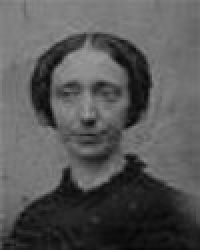
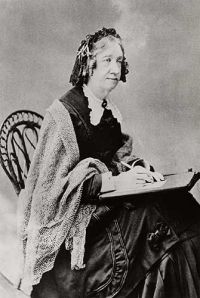
Ira Mayhew
Biographical details
Ira Mayhew (1814–1894) was an educator and writer whose groundbreaking work Popular Education highlighted moral development and the transformative power of learning. His writings, filled with reflections on virtue, societal progress, and the relationship between knowledge and spirituality, contended that education should elevate the soul rather than simply accumulate facts.
Through texts like Popular Education, Mayhew promoted a comprehensive approach to learning, maintaining that genuine education nurtures moral growth and social harmony, leaving a lasting impact on educational theory.
Quotes by Ira Mayhew
“ Judging the future from the past, we are sanguine in our belief that our toils have left an impress upon the mind which time can not efface. Scarcely a week passes but our hearts are cheered and animated, and our eyes are gladdened at the sight of those whom we taught in by-gone years, who bid no fairer then to cheer us than those with whom we labor now. Yet they are saved—saved to themselves; saved to society; saved to their friends—who, but for this Refuge, would have poisoned the moral atmosphere of our land, and breathed around them more deadly effluvia than that of the fabled Upas. ”
“ The education here is a moral education. We do endeavor, it is true, by all the powers we possess, to impress upon the mind the great importance of a good education; and not only to impress it upon the mind, but to assist the mind to act, that it may obtain it. But our principal aim is to fan into life the almost dying spark of virtue, and kindle anew the moral feelings, that they may glow with fresh ardor, and shine forth again in the beauty of innocence. Our object is not to store the memory with facts, but to elevate the soul ”
“ The history of all ages, of all nations, and of all communities is a continued illustration of this truth. Where did the nation ever exist untouched either by religion or superstition? which never had either a theology or a mythology? When you find a nation that exists without food of some sort, then you may find a nation that subsists without religion of some sort; and never, never before. How unphilosophical, how absurd it is, then, to pretend that a system of education may be complete, and yet make no provision for this part of the mental constitution! ”
“ A day will come when men will no longer bear arms one against the other; when appeals will no longer be made to war, but to civilization! The time will come when the cannon will be exhibited as an old instrument of torture, and wonder expressed how such a thing could have been used. A day, I say, will come when the United States of America and the United States of Europe will be seen extending to each other the hand of fellowship across the ocean, and when we shall have the happiness of seeing every where the majestic radiation of universal concord. ”
“ The capacity of being restored, and of infinite improvement in knowledge and virtue, was left. In the lowest depths of ignorance and debasement, the human soul feels that it must have some religion, some support, some refuge 'when flesh and heart fail.' There is a natural dread of annihilation, a longing after immortality, a starting back from the last leap in the dark. Men, if they have not true religion, will cling to the greatest absurdities as substitutes. ”
“ These neglected children are in the midst of us. Our cities swarm with them. They are scattered every where over our beautiful hills and valleys. Grow up they will among our own children, without principle and without morals, to breathe mildew upon the young virtues which we have sown in our families, and to prey upon the dearest interests of society, unless somebody cares for their moral and religious education. And where shall they receive this education, if not in the school-house? You will find them there, if in any place of instruction, and multitudes of them you can reach nowhere else. ”
“ The system of education which we should promote comprehends whatever may have any good influence in developing the mind, by giving direction to thought, or bias the motives of action. To lead infancy in the path of duty, to give direction to an immortal spirit, and to teach it to aspire by well-doing to the rewards of virtue, is the first step of instruction. To youth, education imparts that knowledge whose ways are usefulness and honor, and by due restraint and subordination, makes individual to intwine with public good in a just observance of laws, comprehending the path of duty. ”
“ To manhood, it "leads him to reflect on the ties that unite him with friends, with kindred, and with the great family of mankind, and makes his bosom glow with social tenderness; it confirms the emotions of sympathy into habitual benevolence, imparts to him the elating delight of rejoicing with those who rejoice, and, if his means are not always adequate to the suggestions of his charity, soothes him at last with the melancholy pleasure of weeping with those who weep." To age, it gives consolation, by remembrance of the past, and anticipation of the future. ”
“ Who ever heard of a specter appearing to such a person, dragging him from bed at the dead hour of midnight, to wander through the forest, trembling with fear? Such beings appear only to the ignorant and illiterate, at least to those who are unacquainted with natural science, and we never hear of their appearing to any who did not previously believe in their existence. But should philosophers be freed from such terrific visions, if substantial knowledge has not the power of banishing them from the mind? ”
“ Why do the masters of oratory, who charm great audiences with their recitations, take so many of their themes from the Bible? The reason is obvious. They can find none so well suited to their purpose. And why should not the common schools, in which are nurtured so many of the future orators, and rulers, and teachers of the land, have the advantage of the best of all reading-lessons? Moreover, since so much of the sense of Scripture depends upon the manner in which it is read, why should not the thousands of children be taught the art in school, who will never learn it at home? ”
“ And will not such persons be most readily awakened to descry and adore the power, the skill, and the beneficence of the Great Architect who reared the stupendous fabric of the universe, who devised the infinite variety of forms which diversify creation, and whose pencil has so profusely decked every work with myriads of mingling dyes, resulting all from a few parent colors? To an unpracticed eye, the beauties and wonders of creation are all lost. ”
“ Among all nations, and in all ages of the world, ignorance has not only debarred mankind from many exquisite and sublime enjoyments, but has created innumerable unfounded alarms, which greatly increase the sum of human misery. In the early ages of the world, a total eclipse of the sun or of the moon was regarded with the utmost consternation, as if some unusual catastrophe had been about to befall the universe. ”
“ Any person who expects to effect with less education what another is enabled to do with more, ought not to smile at the delusion of the savage or the simplicity of his reasoning.On a cursory inspection of the great works of art—the steam-engine, the printing-press, the power-loom, the mill, the iron foundery, the ship, the telescope, etc., etc.—we are apt to look upon them as having sprung into sudden existence, and reached their present state of perfection by one, or, at most, by a few mighty efforts of creative genius. ”
“ The enlightened man sees in every thing he beholds upon the surface of the earth, whether animal or vegetable, and in the very elements themselves, no less than when contemplating the wonders of astronomy, instances innumerable illustrative of the wisdom and beneficence of the Architect, all of which has a direct tendency to increase his happiness. In the invisible atmosphere which surrounds him, where other minds discern nothing but an immense blank, he beholds an assemblage of wonders, and a striking scene of divine wisdom and omnipotence. ”
“ The doctrine of the inherent and necessary disability of mankind for self-government should be regarded not simply with denial, but with abhorrence; not with disproof only, but with execration. To sweep so foul a creed from the precincts of truth, and utterly to consume it, rhetoric should become a whirlwind, and logic fire. Indeed, I have never known a man who desired the establishment of monarchical and aristocratical institutions among us, who had not a mental reservation that, in such case, he and his family should belong to the privileged orders. ”
“ But it should be borne in mind that it is the teacher's high prerogative not only so to instruct and train the rising generation that they shall rightly understand law, but to infix in their minds the principles of justice and equity, the attainment of which is the high aim of legislation. While our legislators enact laws for the government of the people, the well-qualified and faithful schoolmaster prepares those under his charge to govern themselves. Without the teacher's conservative influence, under the best legislation, the great mass of the people will be lawless ”
“ Government in school, as elsewhere, should be mild but efficient. The teacher should speak kindly, but with authority. Every request should meet with a ready compliance. The scholars will not only fear to disobey such a teacher, but will, at the same time, respect, and even love him. This is not only good theory, but is susceptible of being reduced to practice. It is, indeed, exemplified in many of our schools, as a visit to them will clearly manifest. I know of no one thing in school government more mischievous in its tendency than the habit of speaking several times without being obeyed. ”
“ Scotland affords a very striking illustration of the power of education in diminishing pauperism and crime, and in improving the morals and increasing the wealth of a country. Indeed, it would be difficult to find another instance in the history of nations of a country which has made such rapid progress in the diminution of crime, the increase of public wealth, and the diffusion of comforts, as Scotland. And this gratifying change—this remarkable instance of progress in the scale of being, has been concurrent with increased and increasing attention to the education of the people. ”
“ If good is to be done, we must bring our minds, as soon as possible, to the confession of the truth, that the education of the people, to be effectual, must here, as elsewhere, to a great extent, be the work of the state; and that an expense, of which all should feel the necessity, and all will share the benefit, must, in a just proportion, be borne by all.—John Duer.The desirableness of national or universal education is now generally admitted in all enlightened communities; but there are some who, honestly no doubt, question its practicability. ”
“ Knowledge is power, it is true; but we should bear in mind that it is potent for evil as well as for good; and that, whether its effects be good or ill, depends entirely upon the dispositions and sentiments by which it is impelled and guided. Numerous have been the instances illustrative of the fact that the greatest scourges of our race are men of gigantic cultivated intellect. Where knowledge but qualifies its possessor for inflicting misery, ignorance would indeed be bliss. ”
“ One will be roused to action, and will feel just right for some animating game. Both body and mind will be elastic and joyous. He will bound like the roe, make the welkin ring with his merry shout, and return to the bosom of his family with a gladdened heart, ready to impart and receive pleasure, while the other boy will [162] be too keenly affected by the contact of the air, and think it too cold to stay out of doors. He will thrust his hands into his pockets, and curl himself up like one decrepit with age. ”
“ Education includes all those influences and disciplines by which the faculties of man are unfolded and perfected. It is that agency that [17] takes the helpless and pleading infant from the hands of its Creator, and, apprehending its entire nature, tempts it forth, now by austere, and now by kindly influences and disciplines, and thus molds it at last into the image of a perfect man; armed at all points to use the body, nature, and life for its growth and renewal, and to hold dominion over the fluctuating things of the outward. It seeks to realize in the soul the image of the Creator. ”
“ If this confidence in ourselves is justified—and who among Americans does not feel a pride in endeavoring to maintain it?—let us never forget that it can be justified only by a watchfulness and zeal in proportion to our confidence. Let us never forget that we must prove ourselves wiser, better, and purer than any other nation ever has yet been, if we are to count upon success. Every other republic has fallen by the discords and treachery of its own citizens. ”
“ The surface of the earth is a blank, or, at best, but a confused and misty page. Such an eye passes over this scene of things, and makes no communication to the mind that will awaken thought, much less enkindle the spirit of devout adoration, and fill the soul with love to Him "whose universal love smiles every where." ”
“ Howe, in a lecture before the American Institute of Instruction, "Education should have for its aim the development and greatest possible perfection of the whole nature of man: his moral, intellectual, and physical nature. My beau ideal of human nature would be a being whose intellectual faculties were active and enlightened; whose moral sentiments were dignified and firm; whose physical formation was healthy and beautiful: whoever falls short of this, in one particular—be it in but the least, beauty and vigor of body—falls short of the standard of perfection. ”
“ To rescue man from that state of degradation to which he is doomed unless redeemed by education; to unfold his physical, intellectual, and moral powers, and to fit him for those high destinies which his Creator has prepared for him, can not fail to excite the most ardent sensibility of the philosopher and philanthropist. A comparison of the savage that roams through the forest with the enlightened inhabitant of a civilized country would be a brief but impressive representation of the momentous importance of education.—Report of School Commissioners, New York, 1812. ”
“ In the ordinary mode of our scholastic instruction, education, so far from being finished at the age above stated, can scarcely be said to have commenced. The key of knowledge has indeed been put into the hands of the young; but they have never been taught to unlock the gates to the temple of science, to enter within its portals, to contemplate its treasures, and to feast their minds on the entertainments there provided. ”
“ If the eye be obstructed, the ear opens wide its portals, and hears your very emotions in the varying tones of your voice; if the ear be stopped, the quickened eye will almost read the words as they fall from your lips; and if both be close sealed up, the whole body becomes like a sensitive plant—the quickened skin perceives the very vibrations of the air, and you may even write your thoughts upon it, and receive answers from the sentient soul within.—Annual Report of the Trustees of the Perkins Institution and Massachusetts Asylum for the Blind, 1841. ”
“ The Sense of Sight.—The sense of sight, which is the most refined and admirable of all the senses, still remains to be considered. The senses generally serve as interpreters between the material universe without and the spirit within. But it is more especially by the sense of sight that we are enabled to hold converse with the external world. Without it we should be deprived of a large portion of the pleasures of life not only, but even of the means of maintaining our existence. It is through the sense of vision that the wisdom, power, and benevolence of the Deity are chiefly manifested to us. ”
“ I call that education which embraces the culture of the whole man, with all his faculties—subjecting his senses, his understanding, and his passions to reason, to conscience, and to the evangelical laws of the Christian revelation.—De Fellenberg.From the beginning of human records to the present [13] time, the inferior animals have changed as little as the herbage upon which they feed, or the trees beneath which they find shelter. In one generation, they attain all the perfection of which their nature is susceptible. ”
“ A republic, by the very constitution of its government, requires, on the part of the people, more vigilance and constant exertion than any other form of government. The American Republic, above all others, demands from every citizen unceasing vigilance and exertion, since we have deliberately dispensed with every guard against danger or ruin except the intelligence and virtue of the people themselves. It is founded on the basis that the people have wisdom enough to frame their own system of government, and public spirit enough to preserve it ”
“ And if I showed you satisfactorily that sin against the organic laws caused so great a proportion of blindness, how much more readily will you grant that the same sin gives to so many of our population the narrow chest, the hectic flush, the hollow cough, which makes the victim doomed, by his parent, to consumption and early death! Do you not see, every Sabbath, at church, the young man or woman, upon whose fair and delicate structure the peculiar impress of the early doomed is stamped? ”
“ Why is it that, if we except Egypt, all the remaining territory of Africa, containing nearly ten millions of square miles, with a soil most of which is incomparably more fertile by nature, produces less for the sustenance of man and beast than England, whose territory is only fifty thousand square miles? In the latter country, knowledge has been a substitute for a genial climate and an exuberant soil; while in the former, it is hardly a figurative expression to say that all the maternal kindness of nature, powerful and benignant as she is, has been repulsed by the ignorance of her children. ”