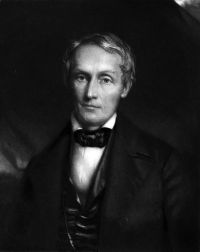
Samuel George Morton

Samuel George Morton

Summary

Portrait of Samuel George Morton Samuel George Morton Crania Ægyptiaca

Yet even now, the physical characteristics of the ancient Egyptians are regarded with singular diversity of opinion by the learned, who variously refer them to the Jews, Arabs, Hindoos, Nubians, and Negroes. Even the details of organic structure have been involved in the same uncertainty,—the configuration of the head, the position of the ear, the form of the teeth, the colour of the skin, and the texture of the hair; while the great question is itself undetermined—whether civilization ascended or descended the Nile;—whether it had its origin in Egypt or in Ethiopia.
Source: Gutenberg

Portrait of Samuel George Morton Samuel George Morton Crania Ægyptiaca

It is in the first place necessary to recur to the fact of the very long occupation of Egypt by successive dynasties of Hykshos or shepherd kings, and that these were not of one but of several nations—Phenicians, Pelasgi, and Scythians; while to these followed, at a long interval, an Ethiopian or Austral-Egyptian dynasty. Each of these great revolutions must have tended in turn to the amalgamation of the Egyptians with other nations
Source: Gutenberg

Portrait of Samuel George Morton Samuel George Morton Crania Ægyptiaca

But when we find that the oldest remains are similarly characterized, and bear in mind that the removal of the brain through the nose was a conventional part of the more perfect art of embalming, may we not suppose that this imperforate state of the cranium points to an early epoch of Egyptian history, before mankind had resorted to those elaborate methods of preserving the dead body which are so remarkable in the Theban catacombs?
Source: Gutenberg

Get perspective with Kwize: daily news enlightened by great literature