The oval, derived from the Latin ovum (egg), refers to a closed, egg-shaped curve in geometry, distinguished by its smoothness, convexity, and typically a single axis of symmetry. Although its mathematical definition varies—spanning from the precise conditions of projective geometry to the constructed arcs used in technical drawing—common usage extends the term to any form that evokes an egg or ellipse.
Authors such as Edward Sellon described ovals as earthworks with specific dimensions, while Isaac Newton used the term in mathematical discussions concerning motion and force. Martha Evans Martin compared Jupiter’s Great Red Spot to an enormous oval, and Henry Thoreau observed the simplicity of an oval outline in capturing natural forms. These varied applications—from geometric accuracy to natural observation—underscore the oval’s versatility as both a technical and symbolic figure, connecting mathematics, art, and natural description.
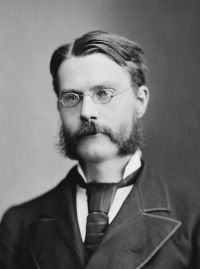 Edward S. Holden,
Studies in Central American Picture-Writing
Edward S. Holden,
Studies in Central American Picture-Writing