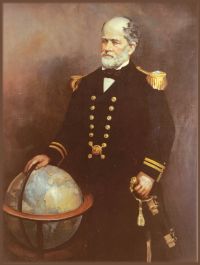
The equator, an imaginary line encircling Earth’s midpoint, divides the planet into northern and southern hemispheres and functions as a cornerstone in geographical and meteorological studies. Authors have long examined its importance, from Matthew Fontaine Maury’s study of ocean currents—where equatorial waters drive global circulation—to James Ferguson’s precise astronomical description of its role in separating latitudes.
Vicente Blasco Ibáñez highlighted its climatic effects, portraying it as a source of warm currents that shape coastal ecosystems, while Charles Darwin associated it with the distribution of life, likening its influence to tides sculpting mountain ranges. These diverse viewpoints emphasize the equator’s dual nature as both a physical boundary and a dynamic element within Earth’s systems.
 Alice Meynell,
Essays
(1914)
Alice Meynell,
Essays
(1914)