The concept of "East" encompasses a geographical, cultural, and philosophical orientation, often symbolizing mystery, tradition, and contrast with the "West." Authors have long explored its duality: Rudyard Kipling juxtaposed East and West as irreconcilable yet interconnected forces, while Samuel Vaknin framed the East as the foundational source of Western civilization, urging modernity to rediscover its wisdom.
Felicia Hemans romanticized the East as a realm of enchantment, whereas H. Fielding highlighted Western perceptions of it as enigmatic and superstitious. Meanwhile, John P. Jones posited the East as the West’s necessary complement, balancing practicality with mysticism. These perspectives collectively underscore the East’s enduring role as both a mirror and a counterpoint to Western identity.
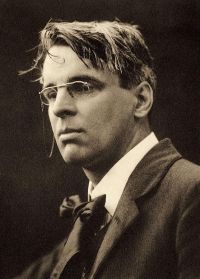 William Butler Yeats,
The Wind Among the Reeds
(1899)
William Butler Yeats,
The Wind Among the Reeds
(1899)