AI-generated from sources
The Shifting Gaze, From Orientalist Fantasy to Artistic Dialogue
In Brief
- Early Western engagement with Eastern art was characterized by ethnocentric dismissal, perceiving it as static, imitative, and lacking genuine creative impulse.
- A fundamental philosophical divergence between East and West lies in the Eastern focus on expressing the 'inner spirit' and 'cosmic essence' over Western mimesis or realistic depiction.
- Eastern art is deeply integrated into the spiritual and daily life of its civilizations, unlike the often 'sporadic efflorescence' of art in the West.
- The historical one-sided gaze has evolved into a multi-directional dialogue, challenging Western artistic hegemony and fostering more nuanced cross-cultural understanding.
Main authors


The Western encounter with the artistic traditions of the East has historically been fraught with a mixture of fascination and profound misunderstanding. For centuries, a prevailing ethnocentric gaze positioned European aesthetic values as the universal standard, leading to the frequent dismissal of Eastern art as undeveloped, stagnant, or fundamentally lacking in genuine creative impulse [1]. Observers often characterized Chinese and other Asian artistic outputs as the products of a civilization that had failed to progress, possessing a literature devoid of genius and a pictorial art defined by laborious copying rather than originality [2, 3]. This perspective extended to music, which was perceived as a monotonous and wailing expression of a dreamy, apathetic culture, unable to achieve the complexity and dynamism celebrated in the West [4]. Such judgments were not merely aesthetic critiques but reflections of a broader cultural condescension that struggled to recognize or value artistic paradigms different from its own.
This initial gaze did more than just devalue Eastern traditions; it actively constructed an 'Orient' that served Western imaginative and narrative purposes. This constructed Orient was often a romanticized tableau of exotic types and picturesque scenes, a backdrop for Western desires and adventures [7, 8]. However, this dynamic of misrepresentation and appropriation was never static. Beneath the surface of these encounters lay a deep philosophical chasm separating the artistic intentions of the East and West. The evolution of this relationship has moved beyond simple exoticism toward a more complex dialogue, one in which Eastern artists and thinkers have asserted their own aesthetic principles, challenging the historical hegemony of the Western perspective and fostering the possibility of a more genuine cultural exchange and understanding [25, 29].
An Ethnocentric Gaze, The Western Misreading of Eastern Art
A foundational element of the early Western critique of Eastern art was the assertion that it lacked a true 'art feeling' and had failed to undergo meaningful development. O. B. Boise, in a particularly stark assessment from the early 20th century, claimed that China had contributed nothing to the evolution of music, arguing its first creative impulses had been deliberately stunted, much like the archaic practice of foot-binding . This sentiment was echoed across artistic disciplines, with critics like James Augustus St. John concluding that Chinese fine arts and literature showed little progress over many ages, especially when compared to the perceived creative splendors of Persia or India . Even a century later, Francis Brinkley noted that the prevailing European view of the Chinese painter was that of a mere copyist, skilled only in imitation and the creation of monstrosities .
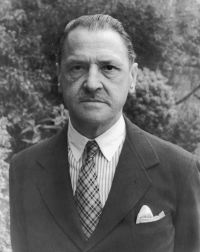
Specific aesthetic judgments were consistently filtered through a Western lens, leading to characterizations that highlighted difference as deficiency. Oriental music was widely described as embodying a 'wailing monotony,' its cautious melodic transitions and descending resolutions seen as sonic evidence of a 'dreamy apathy' inherent to the Eastern character . This perception of limitation extended to the visual arts as well. W. Somerset Maugham, while acknowledging the intricate skill of Chinese decoration, ultimately found its exuberance bewildering and its underlying ideas few. In his view, the Chinese artist resembled a fiddler playing endless, skillful variations on a single, repetitive tune, a display of ingenuity that ultimately led to weariness [5].
These misreadings stemmed from a deep-seated theoretical bias, an inability to conceive of art outside established Western paradigms. As Hermann Smith observed, European theorists were so wedded to their own conceptions of scales, octaves, and harmony that they inevitably prejudged and failed to comprehend Asiatic musical systems, attempting to force foreign facts to fit familiar theories [6]. This ethnocentrism manifested not only in critique but also in creation, where the 'Orient' was absorbed into the Western imagination as a source of exotic color and picturesque effect. Composers like Puccini and Eichheim used Japanese and Chinese melodies and instruments to create novel soundscapes for Western audiences, while popular literature conjured images of the infinitely tempting and mysterious Eastern woman, a figure existing to captivate the Western hero [9]. This tendency to generalize and stereotype was visually codified in public displays, where the diverse peoples of the East were presented as a single, impressive tableau of types joining the 'Nations of the West' .
Paradoxically, this same Western gaze sometimes expressed a fear that its own influence would corrupt the very traditions it often misunderstood. Some commentators, like Helen Barrett Montgomery, worried that the demands of wealthy Western collectors with a 'fad for Eastern art' would have an unhealthy effect on traditions like Japanese porcelain making [10]. This protective, yet paternalistic, attitude reveals the complexity of the colonial-era encounter. The West could simultaneously devalue Eastern art for not conforming to its standards while fetishizing its perceived purity and fearing its contamination by the very modernity the West championed. This created a dynamic where the East was positioned as a passive repository of authentic, unchanging tradition, a fragile artifact to be either dismissed or preserved by outsiders.
The Soul of Things, Philosophical Divides in Eastern and Western Art
A central philosophical divergence between Eastern and Western art lies in their differing relationships with the natural world. Since the Renaissance, a dominant strain in European painting has been the pursuit of mimesis, the accurate or subtle copying of nature [11, 20]. To properly appreciate Chinese painting, however, observers like Joseph Breck argued that one must relinquish the Occidental preoccupation with 'likeness' [12]. The Chinese master, as Samuel Merwin explained, did not seek to copy a landscape but to surrender his soul to it, and then paint the resulting emotion . The function of art was not photographic fidelity but the interpretation of life through the perception of harmonies and rhythms unseen by the ordinary eye [13].
This rejection of literalism is rooted in a deeper spiritual purpose. For many Eastern artists, the highest aim is to express the inner spirit or abstract qualities of a subject, a goal informed by religious and philosophical traditions like Buddhism [14]. Rabindranath Tagore articulated this as a fundamental belief that the universe possesses a soul, a conviction he saw as the core of the East's mental contribution to humanity. Artists in Japan and China, according to Tagore, see and believe in this 'soul of things,' which allows their work to achieve greatness without needing to emphasize realistic detail [15]. In this worldview, a lotus is never just a flower; it is also a symbol of divinity. This contrasts sharply with a Western artistic trajectory that might transform a lotus into a decorative acanthus design, ultimately returning it to the status of a mere flower—an object to be studied, represented, and grasped [16].
Consequently, art in many Eastern societies is not a distinct or rarefied activity but is deeply integrated into the fabric of daily life and religious practice. Swami Vivekananda asserted that the very soul of the Asian is interwoven with art, viewing it as an inseparable part of religion and a prerequisite for the use of any object [17]. This seamless integration means that art becomes the inevitable expression of the civilization's spirit, rather than a 'sporadic efflorescence' set apart from ordinary existence, as it often is in the West [18]. This holistic approach also shapes social aesthetics; Lafcadio Hearn noted that the characteristic reserve in facial expression found in Japanese art is a direct reflection of a social ethic that values the masking of personal pain and passion, a discipline strongly influenced by Buddhist philosophy [19].
The philosophical divide can be framed as a contrast between the cosmic and the personal. Thinkers such as Claude Fayette Bragdon argued that much of modern Western art has focused on exalting the personal, the accidental, and the ephemeral—the specific shadow on a particular landscape. In contrast, Oriental art, much like the great arts of antiquity before the Renaissance, insists on the cosmic and impersonal . The primary preoccupation is with the 'secret essence' or 'archetypal idea' of the subject, not its fleeting appearance. This prioritization of the enduring universal over the transient individual marks a profound difference in what art is expected to capture and convey, a difference that explains many of the initial misinterpretations by Western observers.
Reclaiming the Narrative, Dialogue and Reinterpretation
By the turn of the 20th century, a more nuanced understanding began to emerge in the West, with some thinkers recognizing the unique power of Eastern aesthetics. Oscar Wilde, for instance, saw the growing influence of Japanese art as a corrective to a Western tradition that had become overburdened with intellectual doubts and spiritual tragedy. He argued that the East had remained true to art's primary pictorial conditions, offering a sense of aesthetic gratification untroubled by moral or narrative complaint [21]. This engagement helped spark a shift in Western art itself, as pioneers of modernism began to re-embrace the 'Oriental conception' of art as decoration, relying on the abstract qualities of form and color as symbols that appeal directly to the imagination rather than as vehicles for natural representation [22].
This evolving dialogue underscored the necessity of deep cultural immersion for any true artistic appreciation. Lafcadio Hearn critically observed that ordinary Western illustrations were just as incomprehensible to an untrained Japanese viewer as Japanese drawings were to a European. To perceive the truth and beauty in the art of another culture, he contended, one must first know the life which that art reflects [24]. This sentiment was shared by scholars who argued that to judge the East aright, the West must study its spiritual history as reflected in its ancient literature, moving beyond aesthetics to a genuine philological and philosophical engagement . Similarly, Bertrand Russell noted that the beauty and dignity of Chinese life, which valued reasonableness over ruthless passion, only became visible to foreigners after prolonged exposure, revealing the cultural values underpinning their art [23].
Despite this growing awareness, the path toward mutual understanding was fraught with the perils of superficiality and misguided imitation. Critics rightly pointed out the folly of artists attempting to simply reproduce the styles of another culture. Birge Harrison, writing in 1909, deplored the 'brilliant and hollow shell' of Japanese attempts to assimilate Occidental art, just as he believed it was wrong for Americans to try making Japanese color-prints [27]. True artistic expression, in this view, must be authentic to one's own cultural vision. G. K. Chesterton also challenged the simplistic romanticism of some 'Orientalisers,' arguing that while Eastern art should be admired for its own traditions, it was a mistake to believe it held a monopoly on the sympathetic or transcendental interpretation of nature [26]. The dialogue required more than just imitation or uncritical praise; it demanded a clear-eyed assessment of genuine differences.
The most promising vision for the future of this artistic relationship lies not in imitation but in a complex and layered synthesis. History reveals that cultural exchange has always been a subtle process; as Francis Brinkley noted, the Grecian affinities in Japanese art were not a direct import but were transmitted through the spread of Buddhism from India, a region touched centuries earlier by the conquests of Alexander the Great [28]. This intricate web of influence suggests a model for a more harmonious future. The hope, expressed with early 20th-century optimism, was for the distinct spirits of East and West to join hands, creating a new global harmony and a better understanding between peoples . This vision reframes the dynamic from a one-way gaze to a reciprocal exchange, where artists from all cultures engage with historical narratives and global influences to forge new, unique identities.
The trajectory of the West's artistic relationship with the East charts a course from dismissive ethnocentrism to an increasingly complex cultural dialogue. Initially, Western observers, armed with their own aesthetic criteria, often perceived Eastern art not as different, but as deficient—a static, imitative, and underdeveloped practice . This perspective overlooked the rich philosophical underpinnings of traditions that prioritized the expression of an inner, cosmic spirit over the realistic depiction of surfaces, and that integrated art seamlessly into the spiritual and daily life of a culture . The 'Orient' of the Western imagination was thus often a caricature, a collection of exotic types and romanticized landscapes constructed to serve a foreign narrative .
However, this historically one-sided gaze has given way to a multi-directional interplay. The influence of Eastern aesthetics began to challenge and enrich Western art, prompting a reconsideration of abstract form and symbolic meaning . More importantly, the conversation is no longer dictated solely by the West. The crucial evolution has been the active engagement of Eastern artists and thinkers in interpreting their own traditions and challenging historical hegemonies . While the dangers of superficial imitation and cultural misunderstanding persist , the modern dynamic points toward a future of genuine exchange. This ongoing process moves beyond exoticism and appropriation, aspiring to a global artistic landscape where mutual respect and deep understanding allow for a shared appreciation of the world's diverse creative expressions .