AI-generated from sources
The Chromatic Tension, From Representation to Autonomous Sensation
In Brief
- Western art history has been shaped by a fundamental tension between color as a descriptive tool and color as an autonomous sensory force.
- Traditional art theory, championed by figures like Reynolds and Ingres, prioritized line, form, and narrative clarity, relegating color to a secondary, decorative role.
- A counter-movement elevated color, drawing parallels to music and emphasizing its capacity for pure sensuous impression and emotional expression.
- Vincent van Gogh stands as a pivotal figure who embraced color as a direct conduit for intense personal emotion, deliberately choosing its raw power over traditional artistic values.
Throughout the history of Western art, color has been the subject of a persistent and fundamental debate. Its role has perpetually oscillated between two opposing conceptions: on one hand, as a tool for description, subordinate to the primacy of drawing, form, and narrative clarity; on the other, as an autonomous force, a source of pure sensory pleasure capable of directly communicating emotion and symbolic meaning. This tension reflects a deeper philosophical query into the purpose of art itself—whether its ultimate aim is to represent the world with intellectual or moral fidelity, or to create new realities of feeling and sensation through its own intrinsic means. The hierarchy placing line and composition above the supposedly lesser, more decorative appeal of color has long structured artistic pedagogy and criticism.
This traditional valuation, however, has been consistently challenged by artists and thinkers who champion color not as a mere accessory to form, but as its equal, or even its superior, in conveying aesthetic meaning. They have explored its capacity to evoke moods, structure compositions, and express profound subjective experiences that lie beyond the reach of simple mimesis. From the rich palettes of Venetian masters to the revolutionary canvases of the Post-Impressionists, the struggle for color's emancipation traces a significant arc in art history. It marks a gradual but decisive shift from an art centered on objective representation to one that embraces subjective expression, where the artist’s temperament and emotional response to the world are encoded directly into the chromatic language of the work.
Color in Service of Form and Meaning
Historically, a dominant strain of artistic theory has relegated color to a secondary, often decorative, role. Sir Joshua Reynolds articulated a common view that while a harmony of tints might please the eye in a manner analogous to music, this gratification of sight was a lesser goal, unworthy of art that aspires to grandeur and sublimity [1]. This perspective establishes a clear hierarchy: the intellectual and moral weight of a work, conveyed through its composition and subject matter, must take precedence over the purely sensuous appeal of its palette. In this framework, color serves primarily to attract the senses and enhance the beauty of a piece, but it must remain subservient to the higher aims of character and expression, its use governed by the nature of the subject rather than by its own inherent potential [3].
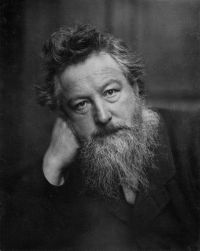
This subordination of color found a staunch defender in an artist like Ingres, who built his artistic practice on the conviction that beauty of line was the paramount virtue, with color and effect being wholly secondary considerations [2]. This thinking aligns with a broader philosophy, articulated by figures such as William Morris, that Western art must always strive to convey a specific, understandable meaning. From this viewpoint, an art of "color for color’s sake" would be a transient affectation, incapable of taking a deep and lasting hold because it would lack the intellectual and narrative substance that gives art its ultimate purpose [4]. The emphasis remains on art's capacity to communicate ideas, a function for which line and form were deemed the superior instruments.
Further reinforcing this perspective was the perceived inadequacy of artistic pigments to truly capture the vibrancy of the natural world. Writers like Lord Henry Home Kames observed that the colors found in nature—in flowers, animals, and the human face—possess a lustre and harmony beyond the power of human imitation, suggesting that color seems to truly live only in nature, languishing in its artistic representation [6]. This perceived limitation led some artists to believe that a finer grace and stronger energy could be expressed through simpler means, such as black and white, which, like the white marble of Greek sculpture, could achieve a certain timeless purity without the dazzling but ultimately fleeting bloom of color [7]. For painters navigating this challenge, color could even be seen as a distraction from the more fundamental task of rendering solid, convincing forms through the analysis of light and shadow, or chiaroscuro [5].
The Rise of Color as a Sensuous and Musical Force
In opposition to the traditional hierarchy, a powerful counter-current emerged that celebrated color for its intrinsic aesthetic value. This perspective championed color as a primary source of sensuous impression, arguing that while an exclusive devotion to it might neglect more intellectual pleasures, its absence diminishes the very essence of painting, which is rooted in beauty and sensuousness [9]. Thinkers began to assert that color is an original, fundamental form of beauty, a gift that inspires a natural and immediate delight [12]. Within this rising school of thought, the true "colorist" was defined not as one who simply uses color imitatively, but as an artist who delights in color for its own sake, composing with it to charm the eye in the same way a musician charms the ear with sound [10, 11].
The analogy between color and music became a crucial conceptual tool for elevating color's status. Color, like musical notes, could be arranged into harmonies, chords, and complex compositions, transforming it from a mere tool of representation into an end in itself [19]. John Ruskin went so far as to declare that an artist who cannot "melodize and harmonize hue" is no painter at all, for this craft is the peculiar essence of painting [20]. This musical conception freed color from its descriptive obligations, allowing it to become a medium for expressing the artist's temperament and emotional life [16, 17]. Charles H. Caffin saw in this development an art that could approach the complexity of modern music, weaving intricate harmonies that surpassed the simpler, chantlike color schemes of earlier art forms like medieval stained glass [14].
This new artistic freedom necessitated a departure from strict realism. To convey the sensation of color and its emotional significance, the artist had to move beyond rendering the world's actual hues and tones [13]. De Witt H. Parker argued that a degree of liberty from exact representation is essential for the artist to compose colors for expressive purposes; when color is merely a sign for an object, it loses its own expressive power [15]. This idea was pursued to its logical conclusion by movements like Synchromism, which proclaimed that color should itself become form and the generating function of a painting [18]. Artists who embraced this path, embarking on what James Huneker called "chromatic adventures," demonstrated an ability to extract magnificent harmonies from tones once considered irreconcilable, pushing the boundaries of what was thought possible in art [8].
Van Gogh and the Expressionist Revolution
Vincent van Gogh stands as a pivotal figure in the struggle for color's autonomy, embodying an approach where color became a direct conduit for intense personal emotion. For him, painting was not about executing a preconceived scheme but was a visceral, man-to-man struggle to grasp and express life itself [21]. His primary objective was to render what he felt, flinging his impressions onto the canvas with an urgency that prioritized emotional truth over harmonious composition. This led him to actively seek out a palette of bold, even glaring, colors, recognizing that the muted tones of his Dutch contemporaries were insufficient for his expressive needs [22].
Van Gogh made a conscious and decisive choice to follow what he called "the road to colour," fully aware that this path required sacrificing other artistic qualities [23]. He understood that one could not simultaneously prioritize traditional values and the raw power of color, stating, "One cannot be at the Pole and at the Equator at once" . Drawing inspiration from artists like Delacroix, who used an unexpected note of lemon-yellow to lend a mysterious power to a depiction of Christ, van Gogh wielded color to achieve a similar emotional resonance, contrasting it with Rembrandt's mastery of values [24]. His deliberate use of "prohibited" colors like chrome yellows and Prussian blue marked a radical break with convention and a commitment to a new, more potent artistic language .
This revolutionary approach was both technical and symbolic. It stood in stark contrast to the methods of "tonists," who unified their paintings through a dominant color glaze, favoring instead the Impressionist technique of creating harmony through the juxtaposition of pure, unmixed colors [25]. For van Gogh, this technique was not merely a formal exercise but a way to imbue his work with deep personal symbolism. As Willard Huntington Wright noted, he would use a vibrant orange and yellow for the head of a beloved friend against an intense blue background, not just to capture a likeness, but to epitomize his love [26]. Van Gogh himself acknowledged that such an exaggeration—like painting a peasant with flaming orange skin to convey the scorching harvest sun—would likely be dismissed by the public as caricature, yet he pursued it unflinchingly as the only means to express the profound feeling he sought to convey [27].
Art for Art's Sake and the Meaning of Color
The assertion of color's autonomy brought to the forefront a critical philosophical debate surrounding the concept of "art for art’s sake." On one side, thinkers like Oscar Wilde proposed that art is fundamentally abstract, that "form and colour tell us of form and colour—that is all," and that art often conceals the artist more than it reveals them [31]. This view positions the aesthetic object as a self-contained reality, independent of the creator's passion or any external meaning. In stark opposition, Vincent van Gogh came to see this idea as the "maddest form of individualistic isolation," arguing that art can only find its true purpose in life and its function as a life-affirming force [28]. This creates a fundamental tension between a purely aesthetic appreciation of color and form and the desire for art to connect with and convey deeper human experience.
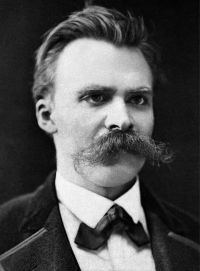
The rise of an art based on pure, dazzling color also invited criticism. Guy Debord, writing in a later era, viewed such a development as a symptom of cultural exhaustion, suggesting that when art paints its world in brilliant hues, it signifies that "a moment of life has grown old" and can only be evoked in memory, not rejuvenated [30]. Similarly, Friedrich Nietzsche diagnosed a tendency in the public to value artistic elements in isolation—power for power's sake, and color for color's sake. He saw this as a loss of the ability to appreciate the integrated mastery of a complete work of art, where all means are organized toward a unified effect [32]. These critiques frame the intense focus on color as a potential slide into superficiality, where the part is mistaken for the whole.
Ultimately, a more synthesized understanding suggests that the purpose of art is neither to simply stir feeling nor to exist in a purely formal vacuum. As De Witt H. Parker contends, the goal is to objectify feeling—to embed it within the very structure of color and line, so that the emotion is experienced as an intrinsic quality of the work itself [29]. In this view, color's expressive power is realized not when it is isolated, but when it is masterfully integrated into an aesthetic form. The triumph of color, therefore, lies not in its complete separation from meaning or content, but in its proven capacity to become the primary vehicle through which profound human feeling is given a tangible, visible, and enduring form.
The historical trajectory of color in Western art reveals a profound evolution from a position of subordination to one of expressive autonomy. Initially conceived as a decorative enhancement subservient to the intellectual rigors of line and narrative, color was often seen as a mere gratification of the senses, secondary to the higher aims of art . This traditional hierarchy, which prioritized meaning and moral character, was gradually dismantled by a growing appreciation for color's unique capacity for sensuous beauty and emotional resonance . Artists and theorists began to explore its potential to function like music, creating harmonies and moods that could communicate directly with the viewer, independent of realistic depiction . This journey, culminating in the intensely personal and symbolic color language of figures like Van Gogh, marks a definitive shift in the understanding of what a painting could be and do .
The debate over color's role is, in essence, a reflection of the larger, enduring dialectic within art itself: the tension between mimesis and expression, intellect and emotion, objectivity and subjectivity. The successful emancipation of color did not resolve these tensions but rather reframed them, demonstrating that form and feeling are not mutually exclusive but can be fused within the aesthetic experience . The modern demand to appreciate color for color's sake, as critiqued by Nietzsche , and the counter-insistence that art must find its meaning in life , continue to define contemporary artistic discourse. The story of color is therefore not just a chapter in technical history; it is a persistent philosophical inquiry into the power of art to structure human feeling and create meaning in a world of pure sensation.