Summary

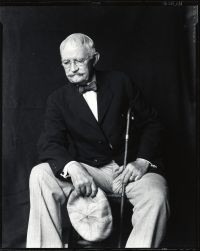
Portrait of Henry Rankin Poore Henry Rankin Poore Pictorial Composition and the Critical Judgment of Pictures

Is our artist a genre painter: then does his mind see small things to delight in them, or to delight us—if this, he is our servitor or little better,—does he go at the whole thing with the sincerity of an artistic purpose and somewhere place a veritable touch of genius, or only represent one item after another until the whole catalogue of items is complete, careful that he leave behind no just cause for reproach? Has the man dignified his subject and raised it to something above imitative art, or does he clearly state in his treatment of it that imitation is the end of art?
Source: Gutenberg

Portrait of Henry Rankin Poore Henry Rankin Poore Pictorial Composition and the Critical Judgment of Pictures

Art began with the first touch of man to shape things toward his ideal, be that ideal an agreeable composition, or the loftiest conception of genius. The higher it is the more it is art. Art is head-and-hand work and a creation deserves the name of art according to the quality and quantity of this expended on it. Simply sit down squarely before a thing and imitate it as an ox would if an ox could draw, with no thought or intention save imitation and the result will cry from every line, ‘I am not art but machine work,’ though its technique be perfection.
Source: Gutenberg

Portrait of Henry Rankin Poore Henry Rankin Poore Pictorial Composition and the Critical Judgment of Pictures

Is he a painter of flowers; then is he an artist or a botanist? Is he a marinist; then, as a landsman has he made you feel like one, or has he painted for you water that can be walked on without faith? Has he shown you the dignity, the vastness, the tone, and above all the movement of the sea?
Is he a landscape painter? Then is he in a position to assert himself to a greater degree than they all? The farther one may remove himself from his theme, the less of its minutiae will he see. The process of simplification is individual. What he takes from nature he puts back out of himself.
Source: Gutenberg

Get perspective with Kwize: daily news enlightened by great literature