“ Forms that are not dictated by any emotional necessity, forms that state facts, forms that are the consequences of a theory of draughtsmanship, imitations of natural objects or of the forms of other works of art, forms that exist merely to fill spaces—padding in fact,—all these are worthless. Good drawing must be inspired, it must be the natural manifestation of that thrill which accompanies the passionate apprehension of form. ”
Art theory
Definition and stakes
The theme of “art theory” has been addressed by authors such as Clive Bell, Oscar Wilde, Vernon Lee, John Ruskin and Y. Hirn. It is often associated with terms like painting, artist, aesthetics, painter and beauty.
Quotes about “art theory”
 James Sully,
1911 Encyclopædia Britannica
(1911)
James Sully,
1911 Encyclopædia Britannica
(1911)
“ We may instance the group of problems which have to do with the relation of art to “beauty” in its narrower sense, such as the function of the painful and of the ugly in art, the meaning of artistic imitation and truth to nature, of idealization, and the nature of artistic illusion; also the question of the didactic and of the moral function of art. Even more special problems of art, such as the effect of the tragic, the nature of musical expression, can only be adequately treated in the light of a general aesthetic theory. ”
 Georg Wilhelm Friedrich Hegel,
The Philosophy of Fine Art, volume 1…
Georg Wilhelm Friedrich Hegel,
The Philosophy of Fine Art, volume 1…
“ This recognition of works of art anywhere and everywhere, works which depart from the specific circle and forms of those upon which in the main the abstractions of theory were based, has, as a primary consequence, led to the recognition of a peculiar type of art—-the romantic art. It became necessary to apprehend the notion and the nature of the beautiful in a profounder way than these theories attempted. ”
De Witt H. Parker, The Principles of Aesthetics
“ First, the theory, often called "hedonistic," that the value of art consists in the satisfactions of sense which the media of aesthetic expression afford—the delight in color and sound and rhythmical movement of line and form. ”
“ In this little book I have tried to develop a complete theory of visual art. I have put forward an hypothesis by reference to which the respectability, though not the validity, of all aesthetic judgments can be tested, in the light of which the history of art from palaeolithic days to the present becomes intelligible, by adopting which we give intellectual backing to an almost universal and immemorial conviction. ”
graf Leo Tolstoy, What Is Art?
“ All attempts to define absolute beauty in itself—whether as an imitation of nature, or as suitability to its object, or as a correspondence of parts, or as symmetry, or as harmony, or as unity in variety, etc.—either define nothing at all, or define only some traits of some artistic productions, and are far from including all that everybody has always held, and still holds, to be art. ”
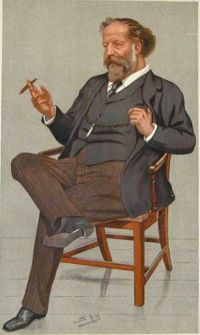 J. Comyns Carr,
Coasting Bohemia
J. Comyns Carr,
Coasting Bohemia
“ To wring from nature its countless harmonies of tone and colour, to seize and interpret the endless subtleties of individual form and character—these are the ideals that have inspired and have satisfied many of the greatest painters the world has produced. Who then shall say that Art has need of any other, any wider ambition? ”
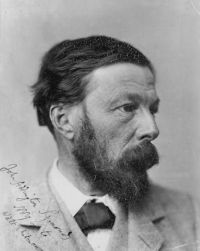 John Addington Symonds,
Sketches and Studies in Italy and Greece…
John Addington Symonds,
Sketches and Studies in Italy and Greece…
“ Even thus the spirit, immersed in things of sense presented to us by the figurative arts, is still spirit, though diminished in its intellectual clearness and invested with hues not its own. To fashion that alabaster form of art with utmost skill, to make it beautiful, to render it transparent, is the artist's function. ”
Alexander Gilchrist, Life of William Blake (1880)
“ Before we can come to a true initiation into, and an abiding enjoyment of, the domains of representative art, we must have a keen, clear, settled, and contented view of its limitations. Far less of the fruitlessness of discontent enters into poetry and literature than into the subject of painting and sculpture. ”
John Addington Symonds,
Sketches and Studies in Italy and Greece…
“ Art gives form to human consciousness; expresses or presents the feeling or the thought of man. Whatever else art may do by the way, in the communication of innocent pleasures, in the adornment of life and the softening of manners, in the creation of beautiful shapes and sounds, this, at all events, is its prime function. While investing thought, the spiritual subject-matter of all art, with form, or finding for it proper modes of presentation, each of the arts employs a special medium, obeying the laws of beauty proper to that medium. ”
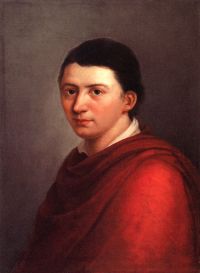 Friedrich von Schlegel,
The philosophy of life, and philosophy of language…
Friedrich von Schlegel,
The philosophy of life, and philosophy of language…
“ Always and universally it is a thought, the idea of some subject or form as the inner sense and significance thereof, that constitutes the essence of a work of art, and with which art in general is concerned. In other words, art is symbolical. And this may be predicated with equal truth of every higher art, as well as of sculpture, whatever may be the medium of its manifestations, whether a statue, or tone as in music, or words as in poetry. ”
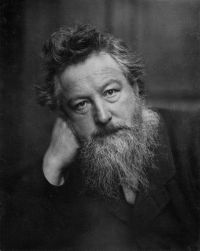 William Morris,
Art Under Plutocracy
William Morris,
Art Under Plutocracy
“ And yet, I say, how have we of these latter days treated the beauty of the earth, or that which we call art?Perhaps I had best begin by stating what will scarcely be new to you, that art must be broadly divided into two kinds, of which we may call the first Intellectual, and the second Decorative Art, using the words as mere forms of convenience. The first kind addresses itself wholly to our mental needs; the things made by it serve no other purpose but to feed the mind, and, as far as material needs go, might be done without altogether. ”
Various, The Germ: Thoughts towards Nature in Poetry…
“ Whilst, at the same time, it is not disallowed that a subsequent pleasure may and does result, upon reflecting that the objects contemplated were the work of human ingenuity.Now the subject to be treated, is the ‘subject’ of Painter and Sculptor; what ought to be the nature of that ‘subject,’ how far that subject may be drawn from past or present time with advantage, how far the subject may tend to confer upon its embodiment the title, ‘High Art,’ how far the subject may tend to confer upon its embodiment the title ‘Low Art;’ what is ‘High Art,’ what is ‘Low Art’? ”
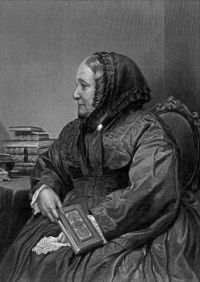 Mrs. Jameson,
Visits and Sketches at Home and Abroad…
Mrs. Jameson,
Visits and Sketches at Home and Abroad…
“ Its forms, and its symbols, and its imagery, have mingled with every branch of art, and become a universal language. It is the deification of the material world; and therefore, that art, which in its perfection may be called the apotheosis of form, finds there its proper region and element. ”
Georg Wilhelm Friedrich Hegel,
The Introduction to Hegel's Philosophy of Fine Arts
“ Just so the human eye, a man's face, flesh, skin, his whole figure, are a revelation of mind and soul, and in this case the meaning is always something other than what shows itself within the immediate appearance. This is the way in which a work of art should have its meaning, and not appear as exhausted in these mere particular lines, curves, surfaces, borings, reliefs in the stone, in these colours, tones, sounds, of words, or whatever other medium is employed; but it should reveal life, feeling, soul, import and mind, which is just what we mean by the significance of a work of art. ”
“ This emotion is called the aesthetic emotion; and if we can discover some quality common and peculiar to all the objects that provoke it, we shall have solved what I take to be the central problem of aesthetics. We shall have discovered the essential quality in a work of art, the quality that distinguishes works of art from all other classes of objects. ”
Carleton Eldredge Noyes, The Enjoyment of Art
“ The appreciator need simply ask, What is the beauty, what the idea, which the artist is striving to reveal by these symbols of color and form? He understands that the import of the work is the idea, and that the work itself is beautiful because it symbolizes a beautiful idea; its significance is spiritual. The function of art, then, is through the medium of concrete, material symbols to reveal to men whatever of beauty has been disclosed to the artist's more penetrating vision. ”
J. S. Memes, History of Sculpture, Painting…
“ A sound judgment in literature, or an acquaintance with the general principles upon which all works of taste must necessarily be conducted, are not sufficient, without practical skill, truly to estimate a production of art. The poet employs [Pg 220] vehicles of thought and signs of expression familiar to all as the use of reason; the means and instruments of the painter constitute in their management a peculiar science, in which excellence or defect is less appreciable by natural or untrained observation. ”
De Witt H. Parker, The Principles of Aesthetics
“ The kind of vision that he gives us will depend, of course, upon the materials of his art—it will be one thing in sound, another in color or line or patterned words. Even as we demand of art in general a unique value, as fulfilling a unique function, so we shall demand of the different arts that each provide us with the unique beauty which its materials can create. ”
John Addington Symonds,
Sketches and Studies in Italy and Greece…
“ It is the business of art to create an ideal world, in which perception, emotion, understanding, action, all elements of human life sublimed by thought, shall reappear in concrete forms as beauty. This being so, the logical criticism of art demands that we should not only estimate the technical skill of artists and their faculty for presenting beauty to the æsthetic sense, but that we should also ask ourselves what portion of the human spirit he has chosen to invest with form, and how he has conceived his subject. ”
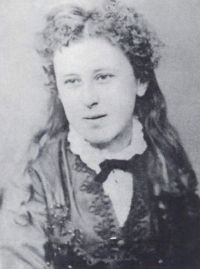 Vernon Lee,
Renaissance Fancies and Studies
Vernon Lee,
Renaissance Fancies and Studies
“ And this is the place for a remark which, in the present uncertainty of all æsthetic psychology, I put forward as a mere suggestion, but a suggestion less wide of the truth than certain theories now almost unquestioned: the theories which arbitrarily assume that art is the immediate and exact expression of contemporary spiritual aspirations and troubles. ”
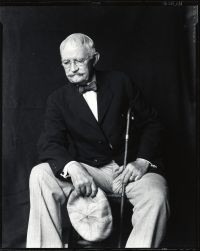 Henry Rankin Poore,
Pictorial Composition and the Critical Judgment of Pictures
Henry Rankin Poore,
Pictorial Composition and the Critical Judgment of Pictures
“ Toil over arrangement and meditate over view-point and light, and though the result be the rudest, it will bear [pg 180] the impress of thought and of art. I tell you art begins when man with thought, forming a standard of beauty, commences to shape the raw material toward it. In pure landscape, where modification is limited, it begins when the artist takes one standpoint in preference to another. In figure composition, where modification is infinite, it begins with the first touch to bring the model into pose. ”
Vernon Lee,
Laurus Nobilis: Chapters on Art and Life
“ Now this possibility of storing for later use, of increasing by combination, the impressions of beautiful things, makes art—and by art I mean all æsthetic activity, whether in the professed artist who creates or the unconscious artist who assimilates—the type of such pleasures as are within our own keeping, and makes the æsthetic life typical also of that life of the spirit in which alone we can realise any kind of human freedom. ”
Vernon Lee,
The Beautiful: An Introduction to Psychological Aesthetics
“ And we can also understand that the problem unconsciously dealt with by all art (though by no means consciously by every artist) is to execute the order of suggesting interesting facts about things in a manner such as to satisfy at the same time the aesthetic demand for shapes which shall be satisfactory to contemplate. ”
Georg Wilhelm Friedrich Hegel,
The Philosophy of Fine Art, volume 3…
“ It is, in short, an inseparable condition of genuine artistic representations of painting that the entire subject-matter should be grasped with imaginative power, should be made visible to us in figurative form, which is expressed and manifests its ideal quality through a series of feeling, that is, through an action, which is of such significance to the emotion, that each and everything in the work of art appears to be entirely appropriated by the imagination to express the content selected. ”
Vernon Lee,
The Beautiful: An Introduction to Psychological Aesthetics
“ This inversion of the question is worth inquiring into, because, like the analogous paradox about the pictorial "realisation" of cubic existence, it affords an illustration of some of the psychological intricacies of the relation between Art and the Beautiful. This is how I propose to explain it.The task to which an artist is set varies from one work to another, while the shapes employed for the purpose are, as already said, limited by his powers and especially by the precise moment in artistic evolution. ”
 Friedrich Schiller,
Aesthetical Essays of Friedrich Schiller
Friedrich Schiller,
Aesthetical Essays of Friedrich Schiller
“ However, these particular affinities are lost in proportion as the works of these three kinds of art rise to a greater elevation, and it is a natural and necessary consequence of their perfection, that, without confounding their objective limits, the different arts come to resemble each other more and more, in the action which they exercise on the mind. ”
Henry James, The American (1907)
“ By what art or mystery, what craft of selection, omission or commission, does a given picture of life appear to us to surround its theme, its figures and images, with the air of romance while another picture close beside it may affect us as steeping the whole matter in the element of reality? It is a question, no doubt, on the painter's part, very much more of perceived effect, effect after the fact, than of conscious design—though indeed I have ever failed to see how a coherent picture of anything is producible save by a complex of fine measurements. ”
graf Leo Tolstoy, The Kingdom of God is Within You…
“ Therefore, however strange it may seem to say so, in spite of the mountains of books written about art, no exact definition of art has been constructed. And the reason of this is that the conception of art has been based on the conception of beauty. ”
 Walter Pater,
The Renaissance: Studies in Art and Poetry
Walter Pater,
The Renaissance: Studies in Art and Poetry
“ All art has a sensuous element, colour, form, sound—in poetry a dexterous recalling of these, together with the profound, joyful sensuousness of motion, and each [210] of them may be a medium for the ideal: it is partly accident which in any individual case makes the born artist, poet, or painter rather than sculptor. But as the mind itself has had an historical development, one form of art, by the very limitations of its material, may be more adequate than another for the expression of any one phase of that development. ”
 John Stuart Mill,
Inaugural address delivered to the University of St…
(1867)
John Stuart Mill,
Inaugural address delivered to the University of St…
(1867)
“ I have spoken of poetry, but all the other modes of art produce similar effects in their degree. The races and nations whose senses are naturally finer, and their sensuous perceptions more exercised, than ours, receive the same kind of impressions from painting and sculpture: and many of the more delicately organized among ourselves do the same. All the arts of expression tend to keep alive and in activity the feelings they express. ”
Carleton Eldredge Noyes, The Gate of Appreciation: Studies in the Relation of Art to Life
“ The ultimate significance of a work of art is its content of emotion, the essential controlling idea, which inspires the work and gives it concrete form. In its actual embodiment, the expressive power of the work resides in the medium. The medium of any art, then, as color and mass in painting, line in drawing and etching, form in sculpture, sound in music, is its means of expression and constitutes its language. ”
Georg Wilhelm Friedrich Hegel,
The Philosophy of Fine Art, volume 3…
“ In our consideration of this third section of our subject we are unable to confine ourselves, as we have hitherto done, to a wholly general examination of the content and purport appropriate to painting, and the mode of configuration, which follows from its principle, for in so far as this art is built up on the particularity of characters and their situation, and upon form and its pose, colour, and so forth, we are compelled to fix in our minds and discuss the actual reality of this art's separate productions. ”
Vernon Lee,
The Beautiful: An Introduction to Psychological Aesthetics
“ I cannot repeat too often that the differentiating characteristic of art is that it gives its works a value for contemplation independent of their value for fact-transmission, their value as nerve-and-emotion-excitant and of their value for immediate, for practical, utility. This aesthetic value, depending upon the unchanging processes of perception and empathy, asserts itself in answer to every act of contemplative attention, and is as enduring and intrinsic as the other values are apt to be momentary and relative. ”
Vernon Lee,
The Beautiful: An Introduction to Psychological Aesthetics
“ And, secondly, it explains how art can fulfil the behests of our changing and discursive interest in things while satisfying the imperious unchanging demands of the contemplated preference for beautiful aspects. And thus we return to my starting-point in dealing with art: that art is conditioned by the desire for beauty while pursuing entirely different aims, and executing any one of a variety of wholly independent non-aesthetic tasks. ”
Related terms
Authors who wrote about “art theory”
 Clive Bell
 Oscar WildeVernon Lee
 John RuskinY. HirnDe Witt H. ParkerCarleton Eldredge Noyesgraf Leo Tolstoy
 Benedetto CroceSir Joshua Reynolds
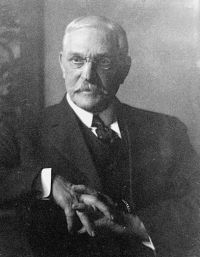 John W. Beatty
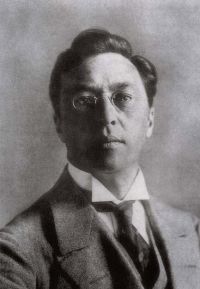 Wassily KandinskyWalter PaterRichard MutherEthel D. PufferHenry Rankin Poore
 Alfred North WhiteheadJohn Stuart Mill
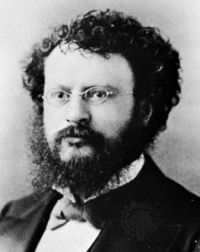 John FiskeGeorg Wilhelm Friedrich Hegel