Summary

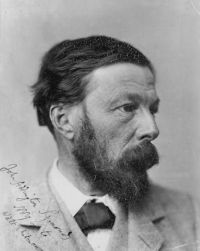
Portrait of John Addington Symonds John Addington Symonds Sketches and Studies in Italy and Greece…

Who shall restore vigour to these dead bones? we cry. If Italy is to live again, she must quit her ruined palace towers to build fresh dwellings elsewhere. Filth, lust, rapacity, treason, godlessness, and violence have made their habitation here; ghosts haunt these ruins; these streets still smell of blood and echo to the cries of injured innocence; life cannot be pure, or calm, or healthy, where this curse has settled.
Occupied with such reflections, we reach the streets of Orvieto. They are not very different from those of most Italian villages, except that there is little gaiety about them.
Source: Gutenberg

Portrait of John Addington Symonds John Addington Symonds Sketches and Studies in Italy and Greece…

The sunset, and sunrise, and the stars of Lombardy, its level horizons and vague misty distances, are a source of absolute relief after the narrow skies and embarrassed prospects of a mountain valley. Nor are the Alps themselves ever more imposing than when seen from Milan or the church-tower of Chivasso or the terrace of Novara, with a foreground of Italian cornfields and old city towers and rice-ground, golden-green beneath a Lombard sun. Half veiled by clouds, the mountains rise like visionary fortress walls of a celestial city—unapproachable, beyond the range of mortal feet.
Source: Gutenberg

Portrait of John Addington Symonds John Addington Symonds Sketches and Studies in Italy and Greece…

Sometimes, when the snow is drifting up the pass, and the world is blank behind, before, and all around, it seems like plunging into chaos. The muffled pines loom fantastically through the drift as we rush past them, and the wind, ever and anon, detaches great masses of snow in clouds from their bent branches. Or again at night, when the moon is shining, and the sky is full of flaming stars, and the snow, frozen to the hardness of marble, sparkles with innumerable crystals, a new sense of strangeness and of joy is given to the solitude, the swiftness, and the silence of the exercise.
Source: Gutenberg

Get perspective with Kwize: daily news enlightened by great literature