Richard Muther

Biographical details

Richard Muther,  The History of Modern Painting…

“ They are not clever who despise landscape painting, the fragments of nature of the great harmony of creation, who depreciate it or entirely forbid it to the sincere artist. Is a painter not to be a painter? Is he to turn statues with his brush, and fiddle with his colours, just as it may please their antique taste? To represent the scheme of creation seems vulgar to them; just as though heaven and earth were not better than an old statue.... Doubtless Greek sculpture stands in the sea of time like a lighthouse, but it should be only a friend and not a commander. ”
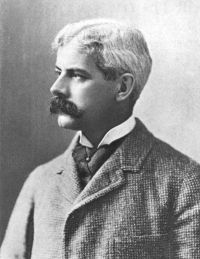
Source: Gutenberg

Richard Muther,  The History of Modern Painting…

“ Daubigny is the painter of the country. If one goes from Munich to Dachau to see the apple trees blossom and the birches growing green, to breathe in the odour of the cow-house and the fragrance of the hay, to hear the tinkle of cow-bells, the croaking of frogs, and the hum of gnats, one does not say, “I want to see nature,” but “I am going into the country.” Jean Jacques Rousseau was the worshipper of nature, while Georges Sand, in certain of her novels, has celebrated country life. In this sense Daubigny is less an adorer of nature than a man fond of the country. ”
Source: Gutenberg

Richard Muther,  The History of Modern Painting…

“ Count von Gleichen; the boy’s miraculous horn; the mountain spirit Rübezahl, wandering along through the wild mountain forest; the hermits; the elves’ dance; the erlking; the knight and the water nymph,—they are flooded with all the enchantment of Romanticism, they possess deep feeling without mawkishness, the old-German note of fairy legend and Hans Memlinc’s childlike simplicity, yet at the same time the life of the present day, full of feeling and rich in delicate shades. How strong and brave are the men; how tender, noble, and charming the women! What a modest, maidenly art it is! ”
Source: Gutenberg

Get perspective with Kwize: daily news enlightened by great literature