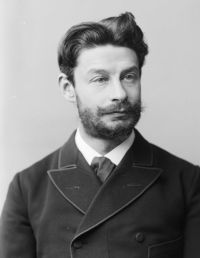
Friedrich von Schiller

Definition and stakes

Portrait of Friedrich Schiller Friedrich Schiller Wilhelm Tell

Wilhelm Tell
by Johann Christoph Friedrich von Schiller
Translator: Theodore Martin
INTRODUCTORY NOTE Johann Christoph Friedrich von Schiller was born at Marbach, Wurtemberg, Germany, November 10, 1759. His father had served both as surgeon and soldier in the War of the Austrian Succession, and at the time of the poet's birth held an appointment under the Duke of Wurtemberg. Friedrich's education was begun with a view to holy orders, but this idea was given up when he was placed in a military academy established by the Duke.
Source: Gutenberg

Calvin Thomas The Life and Works of Friedrich Schiller

In making his hero a defiant self-helper and sending him with sword in hand against the minions of the established order, Schiller was obviously influenced by the example of 'Götz von Berlichingen'. Like Götz, Karl Moor regards himself as the champion of freedom against the law, which is its enemy. Both are friends of the oppressed and haters of pedantry and pettifoggery. Both fight like lions against tremendous odds. Both assume the leadership of a band of outlaws whom they cannot control, and thus become responsible for revolting crimes not foreseen or intended.
Source: Gutenberg

Calvin Thomas The Life and Works of Friedrich Schiller

He is simply a cynical brute in high office. In truth his conduct is so very inhuman as to convey an impression of burlesque. He seems copied from some ogre in a fairy tale.
But if President von Walter appears now like a melodramatic caricature, it is partly because times have changed; for Schiller was not without his models in the recent history of Württemberg. During the period of Karl Eugen's worst recklessness—the decade beginning with 1755,—he was loyally abetted by two men, Rieger and Montmartin, who made themselves thoroughly odious.
Source: Gutenberg

Get perspective with Kwize: daily news enlightened by great literature