“ They carried me across the Oise to a mill hard by the boulevard of the Bridge fort, whence, from a window, I beheld all that chanced. No man sitting in the gallery of a knight’s hall to see jongleurs play and sing could have had a better stance, or have seen more clearly all the mischief that befell.The town of Compiègne lies on the river Oise, as Orleans on the Loire, but on the left, not the right hand of the water. The bridge is strongly guarded, as is custom, by a tower at the further end, and, in front of that tower, a boulevard. ”
Oise
Definition and stakes
The Oise, a major river in northern France, has long functioned as a geographical and cultural landmark, shaping both the landscape and the stories of those who travel along it. From Andrew Lang’s vivid portrayal of its banks in A Monk of Fife to Robert Louis Stevenson’s musings on its evolving connection with human activity in An Inland Voyage, the Oise appears as a complex emblem of nature’s dual character—both a divide and a link.
Authors such as M. F. Mansfield emphasize its role in the water cycle, while others, like Geoffrey Winthrop Young, situate it within the framework of conflict and change. These diverse viewpoints highlight the river’s lasting influence in literature, history, and the everyday lives of those who experience it.
Quotes about “Oise”
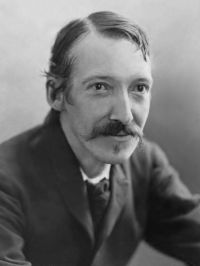 Robert Louis Stevenson,
The Works of Robert Louis Stevenson - Swanston Edition…
Robert Louis Stevenson,
The Works of Robert Louis Stevenson - Swanston Edition…
“ As long as the Oise was a small rural river, it took us near by people's doors, and we could hold a conversation with natives in the riparian fields. But now that it had grown so wide, the life along shore passed us by at a distance. It was the same difference as between a great public highway and a country by-path that wanders in and out of cottage gardens. We now lay in towns, where nobody troubled us with questions; we had floated into civilized life, where people pass without salutation. In sparsely inhabited places, we make all we can of each encounter ”
Robert Louis Stevenson,
An Inland Voyage
“ Now, on the upper Oise, where nothing sailed as a general thing but fish, a pair of canoeists could not be thus vulgarly explained away; we were strange and picturesque intruders; and out of people’s wonder sprang a sort of light and passing intimacy all along our route. There is nothing but tit-for-tat in this world, though sometimes it be a little difficult to trace: for the scores are older than we ourselves, and there has never yet been a settling-day since things were. You get entertainment pretty much in proportion as you give. ”