“ An attack on the town was expected by a large detachment of cavalry. The wretched men had to be hurried out, to line a row of hedges to the west of the town. They waited about half-an-hour, but saw not a sign of the famous square-crested Uhlan helmet. It appeared that the enemy had been content with destroying the canal bridge, which formed the communication between Maroilles and Landrécies, and had then withdrawn. There was a whole brigade in Maroilles, which was therefore cut off from the rest of the division, and from its natural line of retreat. ”
Quotes about “Landrecies”
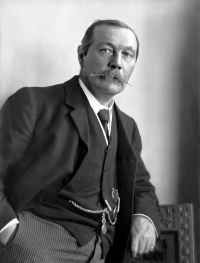 Arthur Conan Doyle,
The British Campaign in France and Flanders…
Arthur Conan Doyle,
The British Campaign in France and Flanders…
“ On the extreme left some of the 1/8 Warwicks discovered another forgotten bridge and pushed across to the north of the town, which was now practically surrounded so that the garrison was soon taken or killed. The official report remarks: "The capture of Landrecies was an operation which might well have absorbed the energies of a whole division. Success was accomplished with a single brigade and was due to the spirited leading of the officers, the bravery of the troops, and that element of good fortune which any well-planned and boldly-executed enterprise deserves." ”
Various, McClure's Magazine, Vol. 1, No…
“ Each of these adventurers became king, or landlord, in his own district, and lived on the wretched natives. Every meskin of butter made on the farm, every pig reared in the cabin, every egg laid by the hens that roosted in the kitchen, went to support the land-king. ”
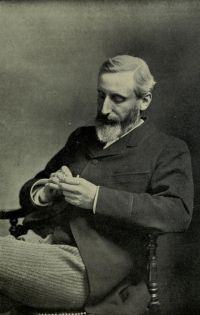 Grant Allen,
Anglo-Saxon Britain
Grant Allen,
Anglo-Saxon Britain
“ But the forest and the pasture land were not appropriated: each man had a right from year to year to let loose his kine or horses on a certain equal or proportionate space of land assigned to him by the village in council. ”
A Declaration and Proposals of the Lord Proprietor of Carolina (1663)
“ If in any other of the territory, then to choose either side, if by a river; we reserving to ourselves twenty thousand acres of land, to be bounded and laid out by our agents in each settlement, in such places as they shall see fit, and in such manner that the colony shall not be thereby incommoded or weakened; which we intend by our agents or assignees in due time to settle and plant, they submitting to the government of that colony. ”
 Archibald Geikie,
Landscape in History, and Other Essays
Archibald Geikie,
Landscape in History, and Other Essays
“ If a settler fenced in his own inclosure he called it his 'ton' or his 'ham.' If he felled the trees of the primeval woodlands and made his own clearance, it became his 'fold.' If he built himself a mud cottage, it was his 'cote,' or if he attained to the dignity of a farm, he called it his 'stead.' As he and his brethren increased their holdings and drew their houses together for companionship and protection, the village kept their family name. ”
James Cook, A Voyage Towards the South Pole and Round the World Volume 2
“ On the banks of this were several plantations, and some villages, whose inhabitants we had met on the road, and found more on the top of the hill gazing at the ship, as might be supposed. The plain, or flat of land, which lies along the shore we were upon, appeared from the hills to great advantage; the winding streams which ran through out, the plantations, the little straggling villages, the variety in the woods, and the shoals on the coast, so variegating the scene, that the whole might afford a picture for romance. ”
Charles F. G. Masterman, The condition of England (1909)
“ The typical continental countryside is that of tiny white-washed or wooden broad-eaved cottages, freely scattered over a region of fruit and flowers and close-tilled coveted land, which, in fact, is one large garden. The record of the great landowners of this country is of vast accumulations of acres: aggregations of whole counties, or estates dotted over many counties, each organised on the same plan of inherited feudal tradition. ”
Mary A. M. Marks, Landholding in England (1908)
“ Our land system is too often regarded as, on the one hand, of so reverend an antiquity that to touch it is to break with all the traditions of Englishmen, and on the other, as so great an improvement, in a democratic direction, on the system of the past, that we cannot materially improve it. ”
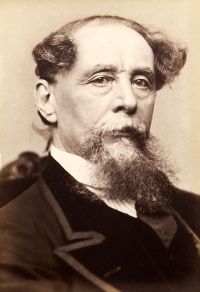 Charles Dickens,
The Holly-Tree Inn — The Landlord
(1900)
Charles Dickens,
The Holly-Tree Inn — The Landlord
(1900)
“ The town and the colony are sound as a bell, never were sounder, never had more stuff in the; never had so much. There is the land still, not a yard of it is gone ; no great fellow has put that on his back and gone off with it. The land is there, and the houses, and the merchandise, and the flocks, and herds, and horses ”
James Mackay Drummond, The Life and Work of Richard John Seddon (1907)
“ He consolidated the land laws, and added provisions which gave a decided impetus to the settlement of land in many districts and helped working men near large centres to obtain small areas on village settlements. ”
The Oera Linda Book, from a Manuscript of the Thirteenth Century
“ Every village shall possess a common for the general good, and the chief of the village shall take care that it is kept in good order, so that posterity shall find it uninjured.7. Every village shall have a market-place. All the rest of the land shall be for tillage and forest. No one shall fell trees without the consent of the community, or without the knowledge of the forester; for the forests are general property, and no man can appropriate them. ”
 William Cullen Bryant,
Letters of a Traveller; Or, Notes of Things Seen in Europe and America
William Cullen Bryant,
Letters of a Traveller; Or, Notes of Things Seen in Europe and America
“ A lonely log-house under these old trees, is a sight for sore eyes; and only two or three plantations, properly so called, meet the eye in the whole distance. The cultivated and more productive lands lie apart from this tract, near streams, and interspersed with more frequent ponds and marshes. Here you find plantations comprising several thousands of acres, a considerable part of which always lies in forest; cotton and corn fields of vast extent, and a negro village on every plantation, at a respectful distance from the habitation of the proprietor. ”
George A. Smith, Journal of Discourses — Volume 11…
“ Our Territory is said to be sparsely settled, but our location renders it necessary that wherever a settlement exists it shall be of considerable size, in order to carry out the necessary arrangements for protection and cultivation. ”
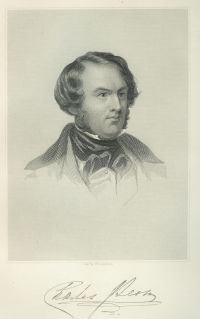 Charles James Lever,
Lord Kilgobbin
Charles James Lever,
Lord Kilgobbin
“ Fields with inclosures, and a cabin or two, are to be met with; a solitary tree, generally an ash, will be seen; some rude instrument of husbandry, or an ass-cart, will show that we are emerging from the region of complete destitution and approaching a land of at least struggling civilisation. At last, and by a transition that is not always easy to mark, the scene glides into those rich pasture-lands and well-tilled farms that form the wealth of the midland counties. Gentlemen’s seats and waving plantations succeed, and we are in a country of comfort and abundance. ”
Lucas Cleeve, Tales of the Sun; or, Folklore of Southern India
“ In a certain village there lived a very rich landlord, who owned several villages, but was such a great miser that no tenant would willingly cultivate his lands, and those he had gave him not a little trouble. ”
Henry de Rosenbach Walker, Australasian Democracy
“ Crown Lands are divided into urban, suburban, and village lands, which are sold by auction at an upset price, and rural lands, which are again subdivided according to their adaptability for cultivation or pasturage. ”
Mary A. M. Marks, Landholding in England (1908)
“ The substances of which I speak are not to be found everywhere. They can be exhausted. The absolute necessity for pasturage is shown in the arrangements for the town-lands. In each vill, or township, there were usually three large open fields; in a large village there would be several sets of such fields. They were divided into small strips—originally of an acre or half-an-acre each—and were separated by narrow strips of turf, known as balks, linches, lanchards, or lanchets. These strips were often distributed by lot. ”
 Frederick Jackson Turner,
The Frontier in American History…
(1921)
Frederick Jackson Turner,
The Frontier in American History…
(1921)
“ There is much that is common in the whole line of advance. The original settlers engross the desirable lands of the older area. Indented servants and new-comers pass to the frontier seeking a place to locate their headrights, or plant new towns. Adventurous and speculative wealthy planters acquire large holdings in the new areas, and bring over settlers to satisfy the requirements of seating and cultivating their extensive grants, thus building up a yeomanry of small landholders side by side with the holders of large estates. ”
 J. Hector St. John de Crèvecoeur,
Letters from an American Farmer
J. Hector St. John de Crèvecoeur,
Letters from an American Farmer
“ If he travels through our rural districts he views not the hostile castle, and the haughty mansion, contrasted with the clay- built hut and miserable cabin, where cattle and men help to keep each other warm, and dwell in meanness, smoke, and indigence. A pleasing uniformity of decent competence appears throughout our habitations. The meanest of our log-houses is a dry and comfortable habitation. Lawyer or merchant are the fairest titles our towns afford; that of a farmer is the only appellation of the rural inhabitants of our country. ”
 Thomas Jefferson,
The Writings of Thomas Jefferson…
Thomas Jefferson,
The Writings of Thomas Jefferson…
“ In England, long leases for twenty-one years, or three lives, to wit, that of the farmer, his wife, and son, renewed by the son as soon as he comes to the possession, for his own life, his wife's and eldest child's, and so on, render the farms there almost hereditary, make it worth the farmer's while to manure the lands highly, and give the landlord an opportunity of occasionally making his rent keep pace with the improved state of the lands. ”
A. H. Keane, Man, Past and Present
“ The land around the settlement was irrigated by canals, and here the corn and vegetables were grown and the flocks and herds were tended for the maintenance of the population. The central figure was always the god, who occasionally gave his name to the site, and who was the owner of all the land, the inhabitants being merely his tenants who owed him rent for their estates. It was the god who waged wars with the neighbours, and with whom treaties were made. ”
 Edward A. Freeman,
Greater Greece and Greater Britain…
Edward A. Freeman,
Greater Greece and Greater Britain…
“ The colony, in short, must rise or sink to the level of a county. The soil of the colony, the people of the colony, would receive the most perfect equality with the soil and the people of the mother-country. ”
 H. B. Marriott Watson,
The Castle by the Sea — Chapter 3
(1909)
H. B. Marriott Watson,
The Castle by the Sea — Chapter 3
(1909)
“ Our little village in its isolation confronts and claims its own native sea, exercising an air of proprietorship which none can dispute, and indeed which there is none to dispute, unless, perhaps, it be the little hamlet of the Point. ”
 J. H. Ingraham,
The South-West, by a Yankee. In Two Volumes…
J. H. Ingraham,
The South-West, by a Yankee. In Two Volumes…
“ On my left, a few hundred yards from the house, and adjoining the pasture, stood the stables and other plantation appurtenances, constituting a village in themselves—for planters always have a separate building for everything. ”
Thomas William Shore, Origin of the Anglo-Saxon Race (1906)
“ In the former there were land-holders who could let their land to whom they pleased, others who could sell their land, others who could both let and sell, and others who could neither let nor sell without license from the superior lord. Some tenants in these counties were very differently circumstanced in other respects in regard to the land they held, the privileges they enjoyed, or the obligations they were under, and these facts point to differences in tribal custom extending back to an early period. ”
 Frederic William Maitland,
Domesday Book and Beyond: Three Essays in the Early History of England
Frederic William Maitland,
Domesday Book and Beyond: Three Essays in the Early History of England
“ Either the small tenement of the cultivator or the big tenement of his lord must have been taken as the typical ‘manse,’ the typical ‘land of one householder.’ Let us at once press home this argument, though at present it involves a hypothesis, for in the dull disquisitions that follow we may be cheered by the thought that great questions are at stake. If in the oldest time the typical ‘land of one householder’ had 120 arable acres, the manorial system was not prevalent, not dominant, in England. ”
“ These tenants and sub-tenants formed a sort of village community, having their houses together, holding the arable land in runrig, which was divided annually by lot among them, and the pasture land in common, each tenant being entitled to pasture a certain number of cattle, sheep, and horses, in proportion to his share of the arable land, which was termed his souming and rouming. ”
 Frances Fuller Victor,
All Over Oregon and Washington
(1872)
Frances Fuller Victor,
All Over Oregon and Washington
(1872)
“ In a little valley, just over the ridge back of this place, a colony have lately settled, who pronounce the soil to be excellent, and themselves delighted with their situation, especially as they are each entitled to a homestead of one hundred and sixty acres of the choicest land they can find. ”
 David Ross Locke,
Nasby in Exile
David Ross Locke,
Nasby in Exile
“ By judiciously evicting the tenants from the arable land and converting it into cattle and sheep walks, and compelling the tenants to go upon the bog and stone land, which they were compelled to reclaim and drain, the original twenty-five hundred acres of arable land silently grew into twenty-four thousand six hundred acres, and fifty-seven families had multiplied to a population of twenty-three thousand eight hundred! ”
J. Giles Powell, The narrative of a voyage to the Swan River… (1831)
“ It is a great object, that the land taken up by settlers should be brought into cultivation as soon as possible, or, at least, if it has been entrusted to the management of those who, from indolence or ignorance, do not make a good use of it, that it may revert to the Crown, for the benefit of some worthier occupant. ”
H. R. Wilton Hall, Our English Towns and Villages
“ You must remember, too, that there were several different kinds of land-owners or overlords—the king, the great lords, bishops, colleges, and monasteries. The manors, of which these estates were made up, in the course of centuries were divided and subdivided in many ways as the land became more valuable. Many people might thus have an interest in one manor which a couple of hundred years before had been in the hands of one person only. ”
 Samuel Freeman Miller,
Buford v. Houtz — Opinion of the Court
Samuel Freeman Miller,
Buford v. Houtz — Opinion of the Court
“ The owner of a piece of land, who had built a house or inclosed 20 or 40 acres of it, had the benefit of this universal custom, as well as the party who owned no land. Everybody used the open, uninclosed country which produced nutritious grasses as a public common or which their horses, cattle, hogs, and sheep could run and graze. ”
 William Carleton,
Phelim Otoole's Courtship and Other Stories
William Carleton,
Phelim Otoole's Courtship and Other Stories
“ But what, in the meantime, must we think of those imprudent landlords, and their more imprudent agents, who let their land to such persons, without proper inquiry into their means, knowledge of agriculture, and general character as moral and industrious men? A farm of land is to be let; it is advertised through the parish ”
 John Morley,
Studies in Literature
John Morley,
Studies in Literature
“ The Crowd listen with interest to talk about altering the Land Laws, because they suspect the English land system to have something to do with the unprosperous condition of the landlord, the farmer, and the labourer ”
 Samuel Rawson Gardiner,
A Student's History of England…
Samuel Rawson Gardiner,
A Student's History of England…
“ The Cultivators of the Soil.—When the new-comers planted themselves on British soil, each group of families united by kinship fixed its home in a separate village or township, to which was given the name of the kindred followed by 'ham' or 'tun,' the first word meaning the home or dwelling, the second the earthen mound which formed the defence of the community. ”
 William Stearns Davis,
Life on a Mediaeval Barony
William Stearns Davis,
Life on a Mediaeval Barony
“ If we go up and down France we shall find the rural population decidedly dense. [77] One little village usually follows another closely and every collection of huts swarms with human bipeds. There are, indeed, vast forests and marshes which might with better management be put under the plow, but the extent of arable land is great. Heaven surely loves the peasants, it has made so many of them. ”
“ The guardian, moreover, so long as he has the wardship of the land, shall keep up the houses, parks, fishponds, stanks, mills, and other things pertaining to the land, out of the issues of the same land; and he shall restore to the heir, when he has come to full age, all his land, stocked with ploughs and wainage, according as the season of husbandry shall require, and the issues of the land can reasonable bear. ”
Various, Chambers's Edinburgh Journal, No…
“ Let any gentleman who is thinking of settling in Canada or Australia, take a labourer's cottage in a distant county—a few pounds will supply one infinitely superior in comfort and healthfulness to the log-cabin of the bush that is to be his ultimate destination—let him take a little land and a bit of garden in a good farming county ”
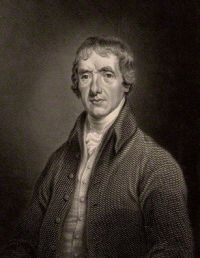 John Aikin,
The Seasons — An Essay On the Plan and Character of Thomson's Seasons
(1791)
John Aikin,
The Seasons — An Essay On the Plan and Character of Thomson's Seasons
(1791)
“ But the rural landskip is not solely made up of land, and water, and trees, and birds, and beasts; man is a distinguished figure in it; his multiplied occupations and concerns introduce themselves into every part of it; he intermixes even in the wildest and rudest scenes, and throws a life and interest upon every surrounding object. ”
