“ Clans are no longer what they were. The purposes for which they once existed, as tolerated but not as sanctioned societies, are not now lawful. To all practical purposes they cannot legally act, and they do not legally exist. The law knows them not. For peaceful pageantry, social enjoyment, and family traditions, mention may still be made of clans and chiefs of clans; but the Highlands of Scotland, no longer oppressed by arbitrary sway, or distracted by feudal contentions, are now inhabited by loyal, orderly, and peaceful subjects of the Crown of Great Britain ”
Summary
W.F. Skene’s Celtic Scotland is a historical study of Scotland’s ancient Celtic heritage, tracing the development of its political and social frameworks from tribal divisions to feudal unification. Focusing on regions such as Dalriada, Pictish territories, and the Highlands, Skene examines themes of sovereignty, territorial expansion, and the relationship between clans, earldoms, and royal power.
Through discussions of coronations, legal frameworks, and cultural blending, the work outlines how Scotland’s diverse populations—Celts, Scots, and later Saxon influences—merged into a centralized kingdom under leaders such as Malcolm Ceannmor and Alexander III. The text highlights the shift from tribal allegiances to feudal duties, portraying Scotland’s historical course as a combination of conflict and unification.
Quotes from Celtic Scotland (W. F. Skene)
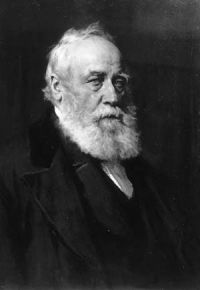 W. F. Skene,
Celtic Scotland
(1886)
W. F. Skene,
Celtic Scotland
(1886)
“ We now learn some further particulars of the coronation of the Scottish kings, and we are told by Fordun that the bishop of St. Andrews, the head of the Scotch Church, and the seven earls of Scotland—the earls of Fife, Stratherne, Atholl, Angus, Menteith, Buchan, and Lothian—took Alexander, brought him to Scone, and there raised him to the throne in honour and peace, with the approval of God and man, and with more grandeur and glory than any one till then, while all wished him joy and none gainsaid him. ”
“ As the people sing their dedication, their voices resound from their shealings, here literally in the wilderness, and as the music floats on the air, and echoes among the rocks, hills, and glens, and is wafted over fresh-water lakes and sea-lochs, the effect is very striking. ”
W. F. Skene,
Celtic Scotland
(1886)
“ This confidence in the Galwegians is somewhat new to thee 466who this day turnest thine arms against those through whom thou now rulest,—beloved by Scots and feared by Galwegians. Thinkest thou, O king, that the majesty of heaven will behold thee, with unmoved eyes, do thy best to ruin those by whom the throne was gotten and secured to thee and thine? With what forces and by what aid did thy brother Duncan overthrow the army of Donald and recover the kingdom which the tyrant had usurped? ”
W. F. Skene,
Celtic Scotland
(1886)
“ The death of Malcolm Ceannmor, though his reign had been prolonged for the unusual period of thirty-five years, was a great misfortune for Scotland. He united in himself so many claims to the allegiance of the heterogeneous races under his rule, that a work of consolidation had been insensibly going on during his reign, while the influence of his pious and accomplished queen, the Saxon Princess Margaret, equally advanced their civilisation. ”
“ It was during this period of upwards of a century and a half that the different provinces of Scotland were welded into one feudal monarchy, and the various races which inhabited them, and upon the allegiance of each of whom the kings of this race had hereditary claims, were fused into one mixed population combining the peculiar qualities of each.The reign of Alexander the Third, the last king of this old Celtic dynasty of Scottish kings, saw the concentration of the various provinces of Scotland into one compact kingdom finally completed by the cession of the Isles in the year 1266. ”
W. F. Skene,
Celtic Scotland
(1886)
“ The distance of Britain from the seat of government, its fertility, and the uncertainty of the Roman tenure of the island, caused it to be regarded less as a valuable portion of the Empire than as a distant mine from which every temporary advantage ought to be drawn at whatever cost to the natives. The Roman civil rule was harsh and oppressive; the British provinces a field for exaction, from which everything it could be made to yield was extracted and carried off without remorse. ”
“ In the British district of Strathclyde the Celtic forms disappeared before the advancing feudalism of David; and when upon the death of his brother he became the first feudal king of all Scotland and its first lawgiver, the constitution of his kingdom was based upon the feudal system; and as its leading principle was that the king was feudal superior of all the territory, and all rights to land emanated from him, all land not given out as feudal holdings was held to be Crown land, and the tribe territories not placed under feudal lords, and now termed Thanages, were regarded as royal demesnes. ”
“ He says—‘The manners and customs of the Scots vary with the diversity of their speech, for two languages are spoken amongst them, the Scottish and the Teutonic, the latter of which is the language of those who occupy the seaboard and plains, while the race of Scottish speech inhabits the highlands and outlying islands. The people of the coast are of domestic and civilised habits, trusty, patient, and urbane, decent in their attire, affable and peaceful, devout in divine worship, yet always prone to resist a wrong at the hands of their enemies. ”
W. F. Skene,
Celtic Scotland
(1886)
“ Every one who is black-haired, who is a tattler, guileful, tale-telling, noisy, contemptible; every wretched, mean, strolling, unsteady, harsh, and inhospitable person; every slave, every mean thief, every churl, every one who loves not to listen to music and entertainment, the disturbers of every council and every assembly, and the promoters of discord among the people, these are the descendants of the Firbolg, the Fir Gailian of Liogairné, and of the Firdomnan in Erinn. But, however, the descendants of the Firbolgs are the most numerous of all these. ”
“ Besides the violent or organic changes produced in a population by the invasion or colonisation of a foreign people which history marks, and the effects of which we can trace in the events recorded in the annals of the country, there is another silent and inorganic spread of one race over the territory of another, the eventual results of which are apparent enough, and the causes which led to it may be divined, but the steps of its progress are less easily marked. ”
“ We thus see how completely the idea of a close connection, amounting to identity both of race and nation, between the Pictish inhabitants of North Britain and the Cruithnigh of Ireland, runs through these popular tales, and expresses a true state of matters which goes far to explain the supposed conquests and settlements under the Irish kings of the mythic and heroic period in Scotland. Although attributed to kings of the different races into which the descendants of Milesius were supposed to be divided, we can see that there is always a tendency to connect them with the Cruithnigh of Ulster. ”
W. F. Skene,
Celtic Scotland
(1886)
“ The great invasion of the Vandals with the Alani and Suevi, which took place in 108the year 406, and was the first of those fatal inroads of the Barbarians into the very heart of the Empire which led to its final ruin, alarmed the troops which remained of the army in Britain, who, on the irruption of the Barbarians into Gaul, found that they would be cut off from the other forces of the Empire and exposed alone in their insular position to the attacks of the enemy, and led them to resort to the step which had now become the habitual tendency of a Roman army so placed—to proclaim an Emperor. ”
“ The ordinary Highlanders esteem it the most sublime degree of virtue to love their chief and pay him a blind obedience, although it be in opposition to the government, the laws of the kingdom, or even to the law of God. Next to this love of their chief is that of the particular branch from whence they sprang, and, in a third degree, to those of the whole clan or name, whom they will assist, right or wrong, against those of any other tribe with which they are at variance. They likewise owe goodwill to such clans as they esteem to be their particular well-wishers ”
W. F. Skene,
Celtic Scotland
(1886)
“ Putting it and the Latin aside, we have here the languages of the four nations, the Angles, Britons, Scots, and Picts, who succeeded the Iberians, and whose legends we have just analysed, distinguished from each other. There can be no doubt of the race and language to which the first three belonged. We have the remains of their languages still spoken among us, and each possesses a literature which enables us to trace the progress of the language from its older forms to the present day. ”
“ When we see these Irish monarchs, however, not only conquering Alban and making settlements there, but extending their conquests over Britain and Gaul, and carrying their arms even to the foot of the Alps, it is difficult to avoid the suspicion that we have here localised as Irish kings some of the Roman emperors connected with the Roman province in Britain, and some of their acts transferred to Ireland, and that this is the true source of many of these fabulous events, so far as there is any foundation for them at all. ”
“ It is of course thinly peopled, and the inhabitants live mostly by hunting and fishing. To this island Olave retired, and lived in the way of poverty. Seeing the island could not support him and his followers, he went confidentially to his brother Reginald, who was at that time resident in the Islands, and thus accosted him: Brother, my lord and sovereign, thou art conscious that the kingdom of the Isles is my birthright, but as the Almighty hath appointed thee to rule over them, I neither envy nor begrudge thee this royal dignity. ”
“ Another feature in the relation between the chief and his kinsmen with their dependent septs was the custom of fosterage which prevailed among the Highland clans as it characterised the Irish tribes. The written contracts of fosterage, which, like the bonds of manrent, superseded the unwritten usage during the transition period when the older Celtic law was losing its influence, and when it became necessary for the chiefs to secure their ancient privileges from passing away under the pressure of other influences, will afford us the best means of ascertaining the true nature of this custom. ”
W. F. Skene,
Celtic Scotland
(1886)
“ War between kings of Norway and Scotland for the possession of the Sudreys. During this time no attempt appears to have been made to renew the contest for the Western Isles, but when the king attained the age of twenty-one, he announced his intention of subduing the Hebrides if life were granted to him. The war was commenced by the earl of Ross, the son of that Macintagart who had proved so important an auxiliary to the crown, with others of the Ross-shire chiefs, with a kind of guerilla warfare against the isle of Skye and those other islands which lay opposite their territories. ”
W. F. Skene,
Celtic Scotland
(1886)
“ Among those British kings who had been subjected to the authority of the Northumbrian king was a king of the Britons termed by Bede ‘Caedwalla.’ He is described by Bede as a man who, though he bore the name and professed himself a Christian, was yet so barbarous in his disposition and behaviour that he spared neither women nor children in his wars. [305] This British king resolved not only to throw off all subjection to Northumbria, but to cut off the whole nation of the Angles within the borders of Britain. ”
“ The Galloway men, however, formed themselves in a body and assailed them with great impetuosity; whereupon they speedily fled in great confusion, and either slew or expelled from it all the men of Galloway who were resident within the island.’ [30] In the following year Godred, the son of Olave, arrived with some ships from Norway, and was elected by the chiefs of the Isles as their king; but he was no sooner secure in his kingdom than he became tyrannical to his chief men, some of whom he dispossessed, and others he degraded from their dignities. ”
“ It would seem as if the task of amalgamating the discordant elements of the population, and of concentrating the semi-independent provinces which they peopled, had no sooner been completed than the dynasty which effected it was to pass away, and a war of succession was to follow, which was still further to root up her ancient institutions, and to throw the kingdom still more into the hands of kings and nobility of an alien race. ”
“ With the Macleods we cannot proceed so far back, as Leod, the eponymus of the clan, cannot be placed earlier than the middle of the thirteenth century; and as soon as we pass these links in the chain of his pedigree, which have Gaelic names, we plunge into a confused list of names, partly Gaelic and partly of Norwegian and Danish kings of the Isles, with which they are mixed up, till we reach the mythic Fergus Leith Derg, whose grandson bears the Norwegian name of Arailt or Harald, centuries before the Norwegians made their appearance in the Isles. ”
W. F. Skene,
Celtic Scotland
(1886)
“ Farther north is the still more remarkable natural boundary where the Eastern and the Western Seas penetrate into the country in the Firths of Forth and Clyde, and approach within a comparatively short distance of each other, separating the northern from the southern regions of Scotland by an isthmus not exceeding thirty-five miles in breadth. This was remarked as early as the first Roman invasion of Scotland, when the historian Tacitus observes that these estuaries almost intersect the country, leaving only a narrow neck of land, and that the northern part formed, as it were, another island. ”
W. F. Skene,
Celtic Scotland
(1886)
“ Fordun tells us that ‘the old custom of the succession of kings lasted without a break until the time of Malcolm, son of Kenneth, when, for fear of the dismemberment of the kingdom, which might perhaps result therefrom, that king by a general ordinance decreed as a law for ever that henceforth each king after his death should be succeeded in the government of the kingdom by whoever was at the time being the next descendant—that is, a son or a daughter, a nephew or a niece, the nearest then living. ”
W. F. Skene,
Celtic Scotland
(1886)
“ As soon as the conquests of the Romans in Britain assumed the form of a province of the empire, all that they possessed in the island was termed ‘Britannia Romana,’ all that was still hostile to them, ‘Britannia Barbara.’ The conquered tribes became the inhabitants of a Roman province, subject to her laws, and sharing in some of her privileges. ”
W. F. Skene,
Celtic Scotland
(1886)
“ The great natural features of a country so mountainous and intersected by so many arms of the sea as that of Scotland, seem at all times to have influenced its political divisions and the distribution of the various races in its occupation. The original territories of the savage tribes of Caledonia appear to have differed little from those of the petty kingdoms which succeeded them, and the latter as little from the subsequent provinces of the monarchy. ”
W. F. Skene,
Celtic Scotland
(1886)
“ Although the Pictish people might resist to the utmost their subjection to a foreign nation, and would make every effort to throw off the yoke, there would be nothing in the mere occupation of the throne by a family of foreign descent, who derived their succession originally through a female of the Pictish royal tribe, to arouse their national feeling to any extent against it.The death of Brude mac Mailchon, the king of the northern Picts, whom Saint Columba converted, is recorded by Tighernac in the year 584, [293] after a reign of thirty years ”
W. F. Skene,
Celtic Scotland
(1886)
“ Towards the end of this century a fleet of Danes under the sons of Imhair came to Dublin, and the greater part of Ireland was plundered by them. After four years these Danes left Ireland, and invaded Alban under Sitriuc, son of Imhair. A battle was fought between these Danes and the Scots at a place which cannot now be recognised under the corrupted name of Visibsolian, or Visibcolian, in which the Scots claimed to be victorious; but that they had overrun the southern districts is evident, as Domnall the king was himself cut off and slain at Dun Fother, or Dunotter. ”
W. F. Skene,
Celtic Scotland
(1886)
“ The Celtic race in Britain and Ireland was preceded by a people of an Iberian type, small, dark-skinned, and curly-haired. They are the people of the long-headed skulls, and their representatives in Britain were the tin-workers of Cornwall and the Scilly Islands, who traded with Spain, and the tribe of the Silures in South Wales, and, in the legendary history of Ireland, the people called the Firbolg. The Celtic race followed them both in Britain and in Ireland. ”
“ Such legends or traditions are either intended as a means of conveying some early facts in the history of the race in a popular form, or of clothing some truths in a symbolic dress, or they are merely the picturesque imaginations of their early sennachies or native historians. Those which relate to the Celtic population of Scotland are derived from two different sources. They are either Welsh or Irish, that is, they are the legends of either the Cymric or the Gaelic race, and in estimating their relative value it is necessary to take their probable origin and character into account. ”
“ There is no doubt that David’s object, on his accession to the throne, was to feudalise the whole kingdom, by importing feudal forms and feudal holdings into it, and to place the leading dignitaries of the kingdom in the position of Crown vassals, as well as to introduce a Norman baronage. The relation of those old Celtic earls or Mormaers towards the Crown on the one hand, had hitherto been purely official, and that towards the districts with which their names were connected 64was not a purely territorial one. It was more a relation towards the tribes who peopled it than towards the land. ”
“ The race of Ith in Scotland. These supposed settlements in Scotland during this mythic period were, however, not entirely confined to the kings of the lines of Heber and Heremon, sons of Milesius, but are also attributed to another line of kings descended from Lughaidh, son of Ith, who was father’s brother of Milesius. We read in an ancient tract that ‘these are the tribes of the Gael that are not of the sons of Miledh, nor of the Tuatha De Danann, nor of the Firbolg, nor yet of the Clann Neimhead, and that widely did this tribe spread throughout Erin and Alban. ”
Common terms
Similar works
Scotland under her early kings Volume 1…Celtic Scotland: a history of ancient Alban…History of Scotland (Margaret MacArthur…Bygone Scotland: Historical and Social…The history of England, from the earliest times to the Norman Conquest…A Student's History of England…An Account of the Danes and Norwegians in England…Phases of Irish History (Eoin Mac Neill…An Outline of the Relations between England and Scotland…Sutherland and Caithness in Saga-Time…
