“ For Marget Kennedy, his eldest daughter, was married to the young Laird, the Sheriff's son, and abode at the castle of Lochnaw. Now in these days the air of Galloway, brisk yet kindly, suited my master better than the sea winds which were ever blowing about Culzean. And what was more to him than all Galloway was not so torn by feuds as Carrick and Kyle. And a man held not his life ever in the palm of his hand, as a tavern drawer does an unsteady cup which at any moment may be spilled. ”
Galloway
Definition and stakes
Galloway, a historic region in southern Scotland, is often described as a landscape of stark contrasts—rural peace interwoven with social unrest and rugged independence. Authors such as Mrs. Henry Wood present it as a setting for moral struggles, where characters like Mr. Galloway represent strained relationships and concealed realities.
In contrast, anonymous narrators in The Stickit Minister’s Wooing emphasize its pastoral beauty, portraying Galloway as a place where tradition and perseverance influence everyday life. These differing portrayals reveal Galloway as both a setting for human conflict and a symbol of regional identity, reflecting its intricate blend of geography, history, and personality.
Quotes about “Galloway”
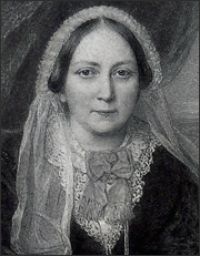 Mrs. Henry Wood,
The Channings: A Story
Mrs. Henry Wood,
The Channings: A Story
“ I have never liked Galloway since; and I long, to this day, to give Butterby a ducking. How I kept my tongue from blurting out the truth, I don’t know: but a gentleman born does not like to own himself a thief. It was the publicity given to it that kept me silent; and I hope old Galloway and Butterby will have horrid dreams for a week to come, now they know the truth! I was boiling over always. I don’t know how I managed to live through it; and that soft calf of a Jenkins was always defending Galloway when I flew out about him. ”
The Stickit Minister's Wooing, and Other Galloway Stories
“ Ignatius Campbell with his great pipe, his low-crowned hat, his seedy black clothes with the fluff sticking here and there upon them, was not the man to impress the Glenkells. For in Galloway the minister may go about in fishing-boots, shooting-jacket, and deerstalker if he will—nobody thinks the worse of him for it. The lawyer may look as if he bought his clothes from a slopshop. The country gentleman may wear a suit of tweeds for ten years, till the leather gun-patch on the shoulder threatens to pervade the whole man, back and front. ”


