
“ Mind, I have been talking, not of ordinary conformity to what the world requires, but of that fine perfection of mental and moral constitution which in its own natural necessary acting leaves nothing to be desired, in every occasion or circumstance of life. ”
Fine
Definition and stakes
The concept of "fine" signifies a condition of acceptable or pleasing quality, frequently tied to moral, aesthetic, or social benchmarks. Authors such as Susan Warner and Andrew P. Peabody link it to moral excellence and the beauty of virtuous conduct, whereas Infanta of Spain Eulalia views it as the purity of motives and the nobility of behavior.
Emory Adams Allen highlights refinement as a result of authenticity and benevolence, and Oscar Wilde associates it with the transformative influence of personal integrity. These viewpoints together highlight "fine" as a connection between individual virtue and societal expectations, illustrating its function in shaping ethical aspirations and cultural standards.
Quotes about “fine”
Andrew P. Peabody, A Manual of Moral Philosophy
“ In fine, example is of service to us, not in pointing out the precise things to be done, but in exhibiting the beauty, loveliness, and majesty of moral goodness, the possibility of exalted moral attainments, and the varied scope for their exercise in human life. ”
Infanta of Spain Eulalia, The thread of life
“ We shall be safe, however, when we are conscious of the fineness of our achievements, the purity of our intentions, the dignity of our actions, or the mere joy of our feelings, in permitting criticism to do its work and pursuing our way. ”
Emory Adams Allen, The Golden Gems of Life; Or, Gathered Jewels for the Home Circle
“ It has been well remarked that whoever imagines legitimate manners can be taken up and laid aside, put on and off, for the moment, has missed their deepest law. A noble and attractive every-day bearing comes of goodness, of sincerity, of refinement, and these are bred in years, not moments. ”
Various, Popular Science Monthly (1907)
“ The past is a fine canvas for our pictures. The pigments of fancy blend in pleasing effects, and distance in time as well as in space lends its enchantment. Many things are potent to suggest these pictures—the faded leaves of a diary, a bit of finery, the site of some long-forgotten house, an old book—trifles light as air that turn the hard lines of a modern scene into the soft, hazy light of the past. ”
Portal:United States Congress, United States Statutes at Large (1846)
“ For contempts to inferior jurisdictions, not of record, nor having a general power to fine and imprison, unless committed in presence of the officer, and punished instanter, there is no other mode of punishment than by indictment. ”
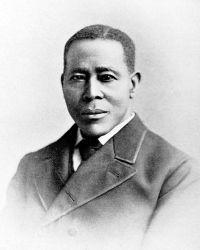 William Still,
The Underground Railroad
William Still,
The Underground Railroad
“ Kindness and warm affection, clearness of moral vision, and purity of heart, with a lively relish for quiet intellectual pleasures, for society and books adapted to refine, improve and elevate, were among the characteristics common to them all. ”
 Lady Caroline Lamb,
Glenarvon, Volume 1 (of 3)
Lady Caroline Lamb,
Glenarvon, Volume 1 (of 3)
“ Lovely indeed is that grace of manner, that perfect ease and refinement which 77 so many attempt to acquire, and for which it is to be feared so much too often is renounced—the native vigour of mind, the blush of indignant and offended integrity, the open candour of truth, and all the long list of modest unassuming virtues, known only to a new and unsullied heart. ”
 Oscar Wilde,
An Ideal Husband
(1895)
Oscar Wilde,
An Ideal Husband
(1895)
“ The world seemed to me finer because you were in it, and goodness more real because you lived. ”
 Ralph Barton Perry,
The Moral Economy
Ralph Barton Perry,
The Moral Economy
“ The term may be applied with equal propriety to types of action as universal as justice and as particular as conjugal fidelity. We shall find it necessary to confine ourselves to the more general and fundamental virtues. ”
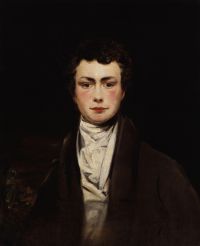 Thomas Moore,
The Complete Poems of Sir Thomas Moore
Thomas Moore,
The Complete Poems of Sir Thomas Moore
“ "Pleasure's the only noble end "To which all human powers should tend, "And Virtue gives her heavenly lore, "But to make Pleasure please us more. "Wisdom and she were both designed "To make the senses more refined, "That man might revel, free from cloying, "Then most a sage when most enjoying!" ”
 John Ruskin,
Modern Painters, Volume 5 (of 5…
John Ruskin,
Modern Painters, Volume 5 (of 5…
“ A gentleman’s first characteristic is that fineness of structure in the body, which renders it capable of the most delicate sensation; and of structure in the mind which renders it capable of the most delicate sympathies—one may say, simply, “fineness of nature.” ”
 Laurence Sterne,
The Life and Opinions of Tristram Shandy…
(1765)
Laurence Sterne,
The Life and Opinions of Tristram Shandy…
(1765)
“ So that if you would form a just judgment of what is of infinite importance to you not to be misled in,—namely, in what degree of real merit you stand either as an honest man, an useful citizen, a faithful subject to your king, or a good servant to your God,—call in religion and morality.—Look,—What is written in the law of God?—How readest thou?— Consult calm reason and the unchangeable obligations of justice and truth;- -what say they? ”
 B. H. Roberts,
The Life of John Taylor
B. H. Roberts,
The Life of John Taylor
“ When we recount the activity of his life, when we contemplate the dignity of his character and of his course, and how exceptional it has been, what an example it is for us! Should we not be tending upward too and continually so? ”
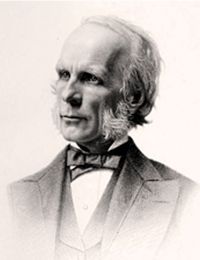 William G. T. Shedd,
Sermons to the Natural Man
William G. T. Shedd,
Sermons to the Natural Man
“ If the beauty of virtue, and the grandeur of truth, and the sublimity of invisible things, have been able to make such an impression upon your intellects, and your tastes,—upon that part of your constitution which is fixed and stationary, which responds organically to such objects, and which is not the seat of moral character,—then why is there not a corresponding influence and impression made by them upon your heart? ”
 David Hume,
Treatise of Human Nature/Book 3…
(1739)
David Hume,
Treatise of Human Nature/Book 3…
(1739)
“ Thus we are still brought back to our first position, that virtue is distinguished by the pleasure, and vice by the pain, that any action, sentiment or character gives us by the mere view and contemplation. ”
conte Baldassarre Castiglione, The Book of the Courtier (1901)
“ So, to pursue these gentlemen’s discourse, which I wholly approve and confirm, I say that of the things that we call good, there are some which simply and in themselves are always good, like temperance, fortitude, health, and all the virtues that bestow tranquillity upon the mind; others, which are good in various respects and for the object to which they tend, like law, liberality, riches, and other like things. ”
 Joseph Conrad,
A Personal Record — Preface
(1912)
Joseph Conrad,
A Personal Record — Preface
(1912)
“ The manner in laughter, in tears, in irony, in indignations and enthusiasms, in judgments--and even in love. The manner in which, as in the features and character of a human face, the inner truth is foreshadowed for those who know how to look at their kind. ”
Archibald B. D. Alexander, Christianity and Ethics: A Handbook of Christian Ethics
“ It is not enough to ask what is most attractive, what line of life will ensure the greatest material gain or worldly honour? Rather should we ask, Where shall I be safest from moral danger, and, above all, in what position of life, open to me, can I do the most good? ”
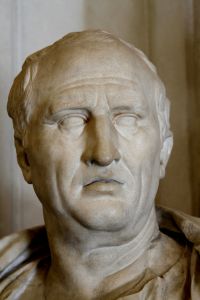 Marcus Tullius Cicero,
The Academic Questions, Treatise De Finibus…
(1891)
Marcus Tullius Cicero,
The Academic Questions, Treatise De Finibus…
(1891)
“ And as on this subject there is great difference of opinion among the most learned men, who can think it inconsistent with that dignity which every one allows to belong to me, to examine what is in every situation in life the best and truest good? ”
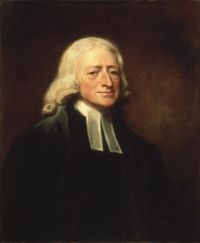 John Wesley,
The works of the Rev. John Wesley…
(1771)
John Wesley,
The works of the Rev. John Wesley…
(1771)
“ But if we appeal to them to know the true good of man, or the proper happiness of our rational nature; if we ask them what guilt there is in sin, or what excellence there is in piety; if we consult them as guides in these matters, we act full as absurdly as if we were to try to hear with our eyes, or to see with our ears. ”
 Victor Cousin,
Lectures on the true, the beautiful and the good
Victor Cousin,
Lectures on the true, the beautiful and the good
“ The only penalty that is brought upon us by the counsels of prudence, comprehended more or less well, followed more or less well, is, in the final account, more or less happiness or unhappiness. Now I pray you, am I obligated to be happy? ”
 John Gregory,
A Father's Legacy to his Daughters…
(1808)
John Gregory,
A Father's Legacy to his Daughters…
(1808)
“ If you have any sensibility or imagination, this will establish such an intercourse between you and the Supreme Being, as will be of infinite consequence to you in life. It will communicate an habitual cheerfulness to your tempers, give a firmness and steadiness to your virtue, and enable you to go through all the vicissitudes of human life with propriety and dignity. ”
 Saint Anselm,
Monologium — On the Being of God
Saint Anselm,
Monologium — On the Being of God
“ And, indeed, nothing is ordinarily regarded as good, except either for some utility -- as, for instance, safety is called good, and those things which promote safety --or for some honorable character -- as, for instance, beauty is reckoned to be good, and what promotes beauty. ”
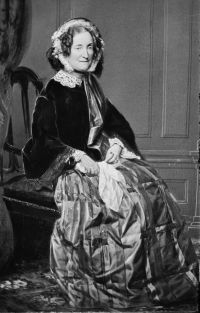 Lydia Sigourney,
Moral Pieces in Prose and Verse
(1815)
Lydia Sigourney,
Moral Pieces in Prose and Verse
(1815)
“ Let the standard of real goodness be your standard of judgment, and not those adventitious distinctions which may he possessed without virtue, and lost without a crime. All beings are either good or evil, as they imitate or oppose the Great Author of all good ”
 Leslie Stephen,
The English Utilitarians, Volume 1…
Leslie Stephen,
The English Utilitarians, Volume 1…
“ Pleasures caused by persons indirectly correspond first to the 'popular or moral sanction,' and are pleasures (4) of 'amity,' caused by the goodwill of individuals, and (5) of a 'good name,' caused by the goodwill of people in general; secondly, to 'political sanction,' namely (6) pleasures of 'power'; and thirdly, to the 'religious sanction,' or (7) pleasures of 'piety.' All these are 'self-regarding pleasures.' The pleasures caused directly by the pleasure of others are those (8) of 'benevolence,' and (9) of malevolence. ”
J. Herbert Slater, The Romance of Book-Collecting
“ The pleasantest places are to them those which time has consecrated with a gentle touch, and which reflect all their imaginings, even as they echo their footsteps. These are departing under the mandate of an inexorable law, and we go with them. ”
Leslie Stephen,
Social Rights And Duties: Addresses to Ethical Societies…
“ But above and beyond all the separate instances, such a person,—the object only to a few, perhaps, of love and reverence, but to those few the object of those feelings in the most unreserved and unequivocal form,—is something far more than a source of any number of particular benefits. ”
Samuel Finley Breese Morse, Samuel F. B. Morse, His Letters and Journals
“ I concede to you conscientious motives in what you do. You are sustained by those around you, men of intellect, men of character. I respect them while I differ from them. I appeal, however, to a higher law, and that, I think, sustains me. ”
 George Edward Moore,
Principia Ethica — Chapter I
(1903)
George Edward Moore,
Principia Ethica — Chapter I
(1903)
“ Every one does in fact understand the question ‘Is this good?’ When he thinks of it, his state of mind is different from what it would be, were he asked ‘Is this pleasant, or desired, or approved?’ It has a distinct meaning for him, even though he may not recognise in what respect it is distinct. ”
 George Grote,
Plato and the Other Companions of Sokrates…
George Grote,
Plato and the Other Companions of Sokrates…
“ All persons are just, through Justice — wise, through Wisdom — good, through Goodness or the Good — beautiful, through Beauty or the Beautiful. Now Justice, Wisdom, Goodness, Beauty or the Beautiful, must each be something. ”
“ By no greatest happiness principle, greatest nobleness principle, or any principle whatever, will you make that in the least clearer than it already is;—forbear, I say, or you may darken it away from you altogether! ”
 Origen,
The writings of Origen, Vol. 1…
(1869)
Origen,
The writings of Origen, Vol. 1…
(1869)
“ Now we must ask these persons the following questions: Whether to desire what is good is virtuous or vicious; and whether the desire to run in order to reach the goal in the pursuit of what is good be worthy of praise or censure? ”
 Mrs. Humphry Ward,
The History of David Grieve
Mrs. Humphry Ward,
The History of David Grieve
“ Around thee are the institutions, the ideals, the knowledge and beliefs, ethical or intellectual, in which that work, that life, have been so far fragmentarily and partially realised. Submit thyself and press forward. Thou knowest well what it means to be better: more pure, more loving, more self-denying. ”
Various, Blackwood's Edinburgh Magazine…
“ Taking, as our limits necessarily oblige us to take, a broad survey of the principle, and the results of the principle disclosed by experience, we cheerfully pronounce both to be positively and undeniably good. ”
 Jean Paul,
The Invisible Lodge
Jean Paul,
The Invisible Lodge
“ In short, every tone and glance, not proved, but simply assumed, that virtue was nothing more than--the economus of the stomach, the refectorist of the senses, the officiating priestess and daughter of the body. Love fared like virtue. ”
Various, Popular Science Monthly (1894)
“ Without dust there would be no blue firmament. The sky would be as dark as or darker than we see it in the finest moonless nights. The glowing disk of the sun would stand immediately upon this dark background, and the same sharp contrast would prevail upon the illuminated surface of the earth—blinding light, where the sun's rays fall, and deep black shadows where they do not. ”
 Clement of Alexandria,
Ante-Nicene Christian Library/Volume XII
(1869)
Clement of Alexandria,
Ante-Nicene Christian Library/Volume XII
(1869)
“ Then he puts on the top-stone of the discourse: "Those who have the disposition of their soul well suited not to one only of these things, but to them all—those I assert to be wise and perfect men, and to possess all the virtues." ”
Richard Finch, Free and Impartial Thoughts, on the Sovereignty of God…
“ But if all Things are in themselves equally Good, where is the Use to appoint, or the Sense of talking about it? Wisdom and Goodness must, according to this Notion, be idle and unmeaning Sounds, without Sense or Service. ”
G. A. Johnston, An Introduction to Ethics, for Training Colleges… (1915)
“ We may affirm, then, that practically all our experience has an affective tone. It is either pleasant or unpleasant, either agreeable or disagreeable. It is obviously important to consider what attitude we ought to adopt towards pleasure. Is pleasure good or evil? Ought we to seek pleasure or shun it? ”
 Hannah Webster Foster,
The Boarding School; Lessons of a Preceptress to Her Pupils
Hannah Webster Foster,
The Boarding School; Lessons of a Preceptress to Her Pupils
“ The exercise of that prudence and caution which I have recommended, will lead you to a thorough investigation of the character and views of the man by whom you are addressed.“Without good principles, both of religion and morality, (for the latter cannot exist independent of the former) you can not safely rely, either upon his fidelity or his affection. Good principles are the foundation of a good life. ”
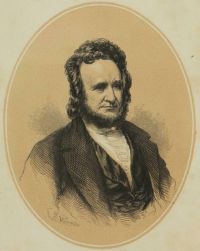 John Bovee Dods,
Twenty-Four Short Sermons On The Doctrine Of Universal Salvation
John Bovee Dods,
Twenty-Four Short Sermons On The Doctrine Of Universal Salvation
“ It affords us other unruffled streams of unmingled felicity in the common intercourse of life. The approbation of the wise and the good, the confidence and esteem of our friends and associates, and the good opinion even of the vicious, are considerations of no ordinary moment. ”
W. R. Washington Sullivan, Morality as a Religion
“ Without hesitation, we may ascribe our minor sorrows to the one self-same source, the attempt to dissever the sensual sweet, the sensual strong, the sensual bright, from the moral sweet, the moral deep, the moral fair. ”
 Arthur Young,
The Autobiography of Arthur Young
(1898)
Arthur Young,
The Autobiography of Arthur Young
(1898)
“ Their vices may differ, but they are all equally remote from virtue, truth, justice, gratitude, the love of excellence, or any other of those qualities which constitute the real dignity of human nature. ”
 Samuel Johnson,
The Rambler
(1801)
Samuel Johnson,
The Rambler
(1801)
“ I have often thought those happy that have been fixed, from the first dawn of thought, in a determination to some state of life, by the choice of one, whose authority may preclude caprice, and whose influence may prejudice them in favour of his opinion. ”
 Plato,
The Republic of Plato
(1901)
Plato,
The Republic of Plato
(1901)
“ Since, then, the pleasures of each class and the life of each are in dispute, and the question is not which life is more or less honorable, or better or worse, but which is the more pleasant or painless—how shall we know who speaks truly? ”
 Thomas Adolphus Trollope,
A Decade of Italian Women, vol…
Thomas Adolphus Trollope,
A Decade of Italian Women, vol…
“ And those things, which lead us to sin, appear to us good and delightful; and virtue, and that which leads us to virtue, appears to us bitter and of great difficulty. But he, who has light, knows well the truth ”
 Friedrich Schiller,
Aesthetical Essays of Friedrich Schiller
Friedrich Schiller,
Aesthetical Essays of Friedrich Schiller
“ Dignity offers to us an example of subordination of sensuous nature to moral nature—an example which we are bound to imitate, but which at the same time goes beyond the measure of our sensuous faculty. ”
