Temperance, a cardinal virtue focused on curbing excess and practicing voluntary restraint, reflects the harmony between desires and reason, as well as moral balance. From Plato’s emphasis on self-control as a foundation of the ideal society to Aristotle’s view of temperance as the mean between physical indulgence and overindulgence, the concept has developed across philosophical and religious traditions.
Writers like Cicero described it as a guide for managing desires rationally, while Frances Wright underscored its role in calming destructive emotions. Contemporary perspectives, such as Johnston’s, highlight the need for a balance between discipline and the recognition of natural inclinations. Grounded in Greek, Christian, and Eastern philosophies, temperance continues to serve as a link between personal morality and social cohesion, demonstrating how moderation influences both individual character and collective values.
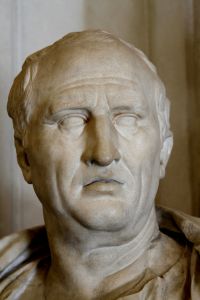 Marcus Tullius Cicero,
The Academic Questions, Treatise De Finibus…
(1891)
Marcus Tullius Cicero,
The Academic Questions, Treatise De Finibus…
(1891)