The concept of "mean" refers to a central value within a dataset, acting as a summary of numerical trends through different measures such as arithmetic, geometric, or harmonic averages. In literature, authors have examined its multifaceted implications: David Graham Phillips critiques the moral ambiguity of actions described as "mean," while Josiah Royce ponders the nature of existence through definitional clarity.
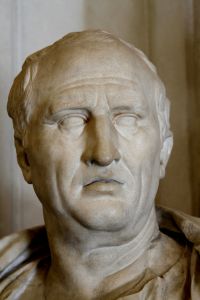
Marcus Tullius Cicero, on the other hand, emphasizes the accuracy of habitual human conditions. These diverse perspectives illustrate how "mean" goes beyond mere calculation, intersecting with ethics, philosophy, and linguistic subtlety. The theme ultimately connects quantitative analysis with qualitative interpretation, highlighting the relationship between statistical centrality and human significance.
 David Graham Phillips,
The Husband's Story: A Novel
(1910)
David Graham Phillips,
The Husband's Story: A Novel
(1910)