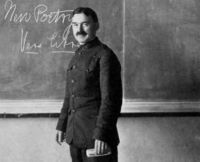
Robert Thomas Kerlin

Robert Thomas Kerlin

Summary

Portrait of Robert Thomas Kerlin Robert Thomas Kerlin Negro Poets and Their Poems (1923)

But in dark days the Negro has ever had refuges and sources of strength for the want of which other races have been crushed. One of these refuges for them is the benignant breast of nature—the deep peace of the woods and the hills, the quiet soothing of pleasant-running water, the benediction of bright skies. A rarely-gifted woman, Mrs. Georgia Douglas Johnson, singing her own consolation, with a pathos that pierces the heart, has sung for thousands of the women of her race else dumb alike in grief and in joy, and in mingled grief and joy
Source: Wikisource

Portrait of Robert Thomas Kerlin Robert Thomas Kerlin Negro Poets and Their Poems (1923)

And that path leads the poet ever back to the golden days of his youth, when Southern suns and Southern moons George Marion McClellan steeped his very being in dreams and Southern birds gave him their melodies and Southern mountains lifted his soul heavenward. A wanderer upon the earth he appears to have been, and as all wanderers’ hearts turn back to some loved region or spot so his to Dixie. Seldom has the longing for distant, remembered scenes, for spring’s returning and for summer’s glow, been more sweetly expressed in rhyme than in the various poems of The Path of Dreams.
Source: Wikisource

Portrait of Robert Thomas Kerlin Robert Thomas Kerlin Negro Poets and Their Poems

In every home it has a place and is cherished. Its contents are better known and more loved than the contents of any other book. Untutored, nameless poets, nature-inspired, gave this priceless boon to all generations of children, and to all sorts and conditions—an immortal book. As a life-long teacher and student of poetry, I venture, with no fear, the assertion that from no book of verse in our language can the whole art of poetry be so effectively learned as from Mother Goose’s Melodies.
Source: Gutenberg

Get perspective with Kwize: daily news enlightened by great literature