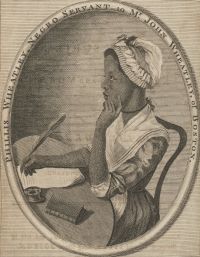
Phillis Wheatley, born in West Africa around 1753 and enslaved in Boston, became the first African-American poet to publish a collection of verse, Poems on Various Subjects, Religious and Moral (1773). Her writing, influenced by her education in classical texts and Christian doctrine, explored themes of belief, selfhood, and bondage, while quietly questioning racial hierarchies.
Although her verses frequently sidestepped explicit mentions of her own enslavement, her intellectual depth and spiritual insights gained praise from notable figures such as George Washington and Jupiter Hammon. Lawson Andrew Scruggs later celebrated her life as a demonstration of African-American perseverance, portraying her as a key figure in affirming the dignity and potential of Black people. Wheatley’s influence persists as both a literary trailblazer and a representation of the tensions between liberty and subjugation in 18th-century America.
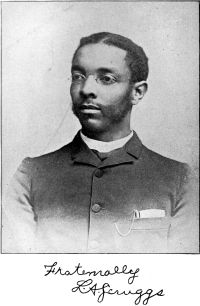 Lawson Andrew Scruggs,
Women of distinction
(1893)
Lawson Andrew Scruggs,
Women of distinction
(1893)