Summary

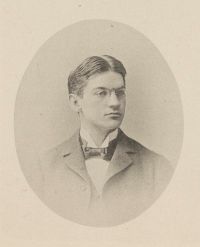
Portrait of William Lyon Phelps William Lyon Phelps The Advance of English Poetry in the Twentieth Century

No twentieth century English poet has a stronger personality than William Watson. There is not the slightest tang of it in The Prince's Quest. This long, rambling romance, in ten sections, is as devoid of flavour as a five-finger exercise. It is more than objective; it is somnambulistic. It contains hardly any notable lines, and hardly any bad lines. Although quite dull, it never deviates into prose—it is always somehow poetical without ever becoming poetry. It is written in the heroic couplet, written with a fatal fluency; not good enough and not bad enough to be interesting.
Source: Gutenberg

Portrait of William Lyon Phelps William Lyon Phelps The Advance of English Poetry in the Twentieth Century

It is the absolute object that interests this poet, rather than vague or futile speculation about it. The flower in the crannied wall he would leave there. He would never pluck it out, root and all, wondering about the mystery of the life principle. No poet is more clean-eyed. His eyes are achromatic. He has lost his illusions gladly; every time he has lost an illusion he has gained a new idea. The world as it is seems to him more beautiful, more interesting than any false-coloured picture of it or any longing to remould it nearer to the heart's desire. He faces life with steady composure.
Source: Gutenberg

Portrait of William Lyon Phelps William Lyon Phelps The Advance of English Poetry in the Twentieth Century

Yeats and Mr. Russell are both mystics and of a quite different stamp. Mr. Yeats is not insincere, but his mysticism is a part of his art rather than a part of his mind. He is artistically, rather than intellectually, sincere. The mysticism of Mr. Russell is fully as intellectual as it is emotional; it is more than his creed; it is his life. His poetry and his prose are not shadowed by his mysticism, they emanate from it. He does not have to live in another world when he writes verse, and then come back to earth when the dinner or the door bell rings; he lives in the other world all the time.
Source: Gutenberg

Get perspective with Kwize: daily news enlightened by great literature