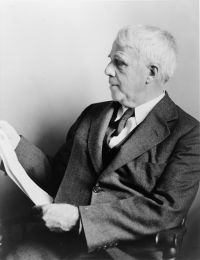
Robert Frost (1874–1963), a four-time Pulitzer Prize-winning American poet, is celebrated for his evocative depictions of rural New England life and his examination of existential themes through accessible, colloquial verse. His work, grounded in the landscapes and challenges of everyday people, explores the contrast between nature’s beauty and its indifference, as well as the intricacies of human decision-making and solitude. While Frost’s own poetry, such as The Road Not Taken and Out, Out—, contemplates destiny and duty, contemporaries like Jr.
Horatio Alger portrayed his early life as a rags-to-riches story in Out for Business; or, Robert Frost's Strange Career, merging fiction with the poet’s genuine struggles. Hallie Erminie Rives, in A Fool in Spots, juxtaposed Frost’s public image with personal insights into his private life, unveiling a man molded by hardship and perseverance. Together, these viewpoints highlight Frost’s lasting influence: a poet who elevated the ordinary into the profound, interweaving philosophical reflection into the fabric of daily life.