“ Order is the sanity of the mind, the health of the body, the peace of the city, the security of the State. As the beams to a house, as the bones to the microcosm of man, so is order to all things.—Southey. ”
Order
Definition and stakes
Order, a taxonomic rank in biological classification positioned between class and family, serves as a fundamental framework for organizing life's diversity. From Linnaeus’ systematic hierarchies to contemporary nomenclature, its definition depends on taxonomists' criteria, reflecting both scientific agreement and discussion.
Authors have long wrestled with its broader implications: Alexander Pope framed it as “Heaven’s first law,” highlighting cosmic structure, while Henri Frédéric Amiel connected it to personal discipline and the organization of life. Jean-Jacques Rousseau, meanwhile, contemplated societal structure as a natural, almost divine, framework. These perspectives, though varied, converge on order’s dual function—as a scientific tool and a metaphor for harmony, self-control, and universal principles.
Quotes about “order”
 Alexander Pope,
An Essay on Man
(1734)
Alexander Pope,
An Essay on Man
(1734)
“ Order is Heaven's first law; and this confest, Some are, and must be, greater than the rest, More rich, more wise; but who infers from hence That such are happier, shocks all common sense. ”
Henri Frédéric Amiel, Amiel's Journal: The Journal Intime of Henri-Frédéric Amiel
“ To know where one is going and what one wishes—this is order; to keep one’s word and one’s engagements—again order; to have everything ready under one’s hand, to be able to dispose of all one’s forces, and to have all one’s means of whatever kind under command—still order; to discipline one’s habits, one’s effort, one’s wishes; to organize one’s life, to distribute one’s time, to take the measure of one’s duties and make one’s rights respected; to employ one’s capital and resources, one’s talent and one’s chances profitably—all this belongs to and is included in the word order. ”









Related terms
Authors who wrote about “order”
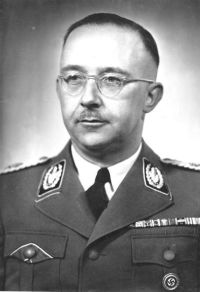 Heinrich Himmler
 Herbert SpencerAlexander PopeWilliam JamesHenri Frédéric AmielVictoria C. WoodhullEdward Huntington Williams
 Jean-Jacques RousseauRobert A. WatsonP. CoffeyOliver Prescott Hiller
 Will Levington ComfortJosiah Hotchkiss Gilbert
 George Stuart FullertonRev. James WoodJohn Morley and XArthur O. Lovejoy
 George MacDonald
 John Stuart Mill
 H. G. Wells
Related articles
The Templar Paradox, From Political Target to Enduring Myth
In the 14th century, King Philip IV of France systematically dismantled the Knights Templar, driven by ambition and an empty treasury. Their downfall, fueled by trumped-up charges and brutal torture, reveals how state power can rewrite history, transforming political targets into enduring legends—even when facts disappear.
The confrontation between natural chaos and the human dream of order
Catastrophic natural events expose the psychological and political fragility of human systems. From scientific causality to legal frameworks, humanity's quest for predictability is a constant, defining struggle against the vast unknown, navigating the narrow path between anarchy and tyranny.
