AI-generated from sources
The Templar Paradox, From Political Target to Enduring Myth
In Brief
- King Philip IV of France orchestrated the Knights Templar's destruction to consolidate royal power and seize their vast wealth.
- Accusations of heresy, including idol worship and blasphemy, were manufactured and widely disseminated to justify the order's suppression.
- Confessions of Templar misconduct were systematically extracted through torture, a practice explicitly sanctioned by Papal authority to produce “truth.”
- The fabricated narrative of Templar wickedness evolved into an enduring cultural myth, influencing folklore, literature, and secret societies for centuries.
Main authors
On the eve of its dramatic downfall in the early 14th century, the Order of the Knights Templar appeared to be at the zenith of its power and influence [2]. With extensive privileges and immunities, it functioned almost as an autonomous entity within the kingdoms of Europe, particularly in France, where it held immense wealth and operated as a state within the state [3]. This very power, however, made it a formidable obstacle to the centralizing ambitions of monarchs like King Philip IV of France . The king, whose treasury was depleted after a series of costly measures including the expulsion of Jewish and Lombard bankers and the debasement of currency, viewed the Templars not just as a political rival but as a source of immense, untapped wealth [1]. The suppression of the order presented a dual opportunity: to eliminate a powerful institution that challenged royal authority and to seize its vast assets [4].
The assault on the Templars was therefore not a spontaneous reaction to revealed heresy but a meticulously planned campaign rooted in political and financial opportunism . To justify the order's destruction, a narrative of profound corruption and blasphemy was constructed, leveling accusations that were as shocking as they were elaborate [6, 8]. These charges, ranging from the denial of Christ to the worship of idols and engagement in unnatural acts, served to transform a respected military order into an object of public abhorrence [7]. The process by which these accusations were substantiated—primarily through confessions extracted under extreme duress—and the subsequent evolution of this vilification into a persistent cultural myth reveal a great deal about the interplay of power, propaganda, and collective memory [13, 20]. The story of the Templars' fall is a stark illustration of how a narrative, born of expediency, can achieve a life of its own, transcending its historical origins to shape belief for centuries [24, 28].
A Calculated Destruction Driven by the Crown
The destruction of the Knights Templar was fundamentally an act of statecraft, orchestrated by a king determined to consolidate his power and replenish his finances . Philip IV of France had already demonstrated a pattern of targeting wealthy groups to solve his fiscal problems, and the Templars, with their vast landholdings and financial operations, represented the ultimate prize . Despite having recently sought refuge with the order and attended its ceremonies, the king had been plotting its demise for years, viewing its suppression as a means to escape its influence and claim its riches . The order's considerable autonomy and prestige made it a natural target for a monarch intent on establishing absolute despotism . This political context, combined with a growing unpopularity fueled by the knights' perceived pride and splendour, created a fertile ground for public acquiescence to their downfall [5].
To dismantle such a powerful institution, the accusations had to be extreme enough to shatter its esteemed reputation completely. The formal charges alleged a systematic repudiation of Christianity at the very moment of initiation, including denying God and Christ, spitting upon the cross, and declaring Jesus a false prophet crucified for his own crimes . This official narrative was amplified by even more lurid popular rumors, which spoke of roasted infants, idols anointed with human fat, and the worship of a mysterious cat . The Templars were depicted as a perfidious, idolatrous society of “ravishing wolves in sheep’s clothing,” whose actions polluted the very air .
Central to these accusations was the worship of an idol named Baphomet [10]. Later analysis from the early 20th century suggests this name was likely a corruption of
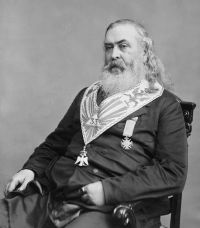
a reflection of a persistent medieval Christian misunderstanding that depicted Islam as an idolatrous faith [11]. Thinkers like Albert Pike, writing in the 19th century, proposed a different interpretation, arguing that such symbols were not objects of worship but rather misunderstood esoteric devices used by an intellectual elite to conceal truths from the uninitiated, much like other ancient religious symbols that became idols for the ignorant masses [9]. Regardless of its origin, the charge of idol worship served as a powerful tool for demonizing the order . The brutal efficacy of Philip's campaign is underscored by the fact that executions of Templars were largely confined to France and territories under its direct influence, indicating that the persecution was driven by a specific political will rather than a universally accepted truth of heresy [12].
Torture as the Engine of Truth
The entire case against the Knights Templar rested upon confessions, and the principal instrument for obtaining them was torture [17]. This method was not an anomaly but an established, if horrific, component of the inquisitorial process for dealing with heresy [14, 16]. The use of torture was explicitly sanctioned and even mandated by papal authority; Pope Clement V personally ordered its application in kingdoms where local authorities had been reluctant to use it, insisting it was a necessary means to “obtain the truth” . This created a judicial framework where unimaginable suffering was systematically employed to produce the evidence required to condemn the accused [15].
The theological justification for such practices had evolved to position heresy as a uniquely heinous crime. Some historical analyses contend that Christian authorities developed torture to a degree of cruelty previously unknown, operating under the belief that heretics and witches, aided by Satan, possessed supernatural fortitude requiring extreme measures to break . It was believed that torture could not only extract information about accomplices but could even serve a spiritual purpose, such as confirming a prisoner in the true faith before their execution . The process often involved suggestive questioning that guided victims toward pre-determined narratives, resulting in elaborate, internally consistent systems of demonic pacts and blasphemous rituals constructed from confessions obtained under duress .
While the popular imagination, shaped by sensational writers, often pictures the inquisitorial torture chamber as a place of exceptional and ingenious cruelty, some historians like Henry Charles Lea caution that this image can be an exaggeration [18]. Nonetheless, the impact of these methods was profound, instilling widespread terror and creating a system where the wealth of the accused could make them targets, as confiscation of property was a standard consequence for heresy . In the face of this machinery of persecution, the Templars' response was not uniform. Many confessed under torment, providing the validation Philip IV sought. Yet, in moments when they could speak freely, they often asserted their innocence, demanded to face their accusers, and professed a willingness to die rather than renounce their faith—a stark contrast to the coerced admissions of guilt [19].
The Enduring Legacy of a Fabricated Narrative
Long after the political motivations of King Philip IV faded into history, the narrative of the Templars' guilt and wickedness proved remarkably resilient . Despite subsequent efforts to dispel these notions, the image of a brave but corrupt order became embedded in the popular consciousness . This transition from a specific historical event to a broad cultural myth demonstrates how powerful, officially sanctioned stories can supplant factual records . The historical chronicle of the Templars became corrupted, mystified, and entangled with legend to the point where separating the two became a significant challenge for later historians .
Over time, the figure of the Knight Templar was absorbed into folklore and romance. In some regions, local legends preserved a more sympathetic memory, with tales of martyred knights whose skulls were kept as relics or whose ghosts appeared annually to defend the honor of their destroyed order [21]. Their architectural legacy—the chapels, commanderies, and temples—became powerful sites of memory, often reinterpreted by later generations [22, 25]. These locations, intertwined with literary giants like Shakespeare and Johnson, became enchanted spaces where history and romance merged, further cementing the Templars' place in the cultural imagination as figures connecting “fact and fiction, between history and the fairy tale” [29].
The Templar myth was also actively appropriated by later groups, most notably within the lore of Freemasonry [23, 26]. In the 18th century, a narrative emerged, often promoted by anti-Masonic sources, that cast Freemasons as the secret successors to the Knights Templar . This story claimed they were bound by an ancient oath to avenge the death of the last Grand Master, Jacques de Molay, by seeking the destruction of the French monarchy and the Papacy that had condemned him . This reinvention illustrates a common mythological process where a historical event becomes a nucleus around which new traditions and animosities can form [27]. The legend of the temple and its builders, in various forms, proved to be an endlessly adaptable symbol, demonstrating how historical persecution can be transmuted into a foundational myth for subsequent movements .
The fall of the Knights Templar stands as a powerful historical case study in the anatomy of a politically motivated persecution. An order of immense wealth and influence became a direct threat to the ambitions of a consolidating monarchy, leading to its systematic destruction by King Philip IV of France . To achieve this, a sophisticated propaganda campaign was launched, accusing the Templars of the gravest heresies imaginable, from idolatry to the explicit denial of Christ . The 'truth' of these charges was then manufactured through the institutionalized use of torture, a practice sanctioned by the Papacy itself to extract the necessary confessions that would legitimize the order's dissolution and the seizure of its assets .
Ultimately, the story of the Templars illustrates the remarkable durability of narrative over fact. The accusations, born of expediency and confirmed by cruelty, evolved into a complex and enduring cultural myth that has far outlived its original purpose . This fabricated history became a fertile ground for folklore, romantic literature, and the foundational lore of secret societies, each generation reinterpreting the Templar legacy for its own purposes . The trajectory from powerful institution to vilified heretics and finally to mythic figures reveals how collective memory is not merely a passive record of the past, but an active and often contentious process of storytelling, where the most compelling narratives—regardless of their veracity—can shape belief and identity for centuries to come .