AI-generated from sources
The Outlaws Legacy, Violence, Memory, and the Making of a Hero
In Brief
- The legend of Robin Hood sanitizes the historical reality of outlawry, transforming violent acts into a narrative of righteous rebellion against tyranny.
- Robin Hood's idealized image is built upon a strict moral code, distinguishing him from common criminals by selectively targeting the powerful and protecting the vulnerable.
- Despite the romantic folklore, historical accounts and philosophical critiques reveal the inherent brutality of an outlaw's existence and raise profound moral questions about the sanctification of crime.
- The human "faculty for myth" allows societies to project desires for justice and rebellion onto figures like Robin Hood, ensuring their immortality in collective memory and defying the finality of death.
Main authors

The figure of the outlaw hero occupies a potent and enduring space in the collective imagination, embodying a romantic rebellion against perceived injustice. In this pantheon, Robin Hood stands as a preeminent example, his name synonymous with a form of righteous larceny—robbing from the powerful to give to the powerless [3, 6]. This idealized narrative, passed down through centuries in ballads and stories, transforms a figure operating outside the law into a champion of the people, a courtly and generous thief whose illegal acts are retrospectively sanctioned by the corruption of the system he opposes [2, 5]. The greenwood becomes not a haven for a criminal, but a sylvan court for a displaced nobleman of Saxon descent, waging a noble struggle against oppressive Norman conquerors [1, 7].
This enduring appeal, however, hinges on a significant sanitization of historical reality. The legend's focus on a moral code—sparing women, yeomen, and husbandmen—serves to soften the inherent violence of an outlaw's existence [4]. The narrative of a man driven to the forest by political offense or a reckless act obscures the brutal necessities of survival outside the bounds of society . By framing outlawry as a justifiable response to an era when might made right, the myth refashions a violent career into an allegory of justice . This transformation allows the hero to transcend the grim finality of his actions and his own eventual death, securing a permanent place as a symbol of courage and generosity for subsequent generations [19].
The Noble Thief and the Just Cause
The traditional legend of Robin Hood is built upon the foundation of a noble spirit forced into an ignoble life by circumstance . He is often depicted not as a common criminal, but as a man of gentle birth, stripped of his lands and titles by unjust forces, who then flees to the sanctuary of Sherwood Forest . This backstory immediately casts him as a victim of tyranny, making his subsequent actions a form of righteous retribution rather than mere banditry. His followers are portrayed as a loyal band of "tall men and good archers," drawn to his cause and living a merry life dedicated to a higher purpose . This framing is crucial, as it provides a moral justification that elevates him above a common outlaw.
Central to this idealization is a meticulously defined code of conduct that distinguishes his brand of robbery from base criminality . According to the chronicles, Robin Hood explicitly instructed his men on whom to target and whom to protect, creating a clear moral hierarchy. His enemies were the wealthy and the powerful, particularly those who abused their station, while his protection extended to the common tiller of the land, the good yeoman, the honorable knight, and any party that included a woman . This selective approach to crime, coupled with a refusal to kill except in self-defense, paints him as a discerning and principled leader, a characterization that Mrs. Katherine Dunlap Cather argues mitigates the dangers of portraying an outlaw as a hero .
The legend further burnishes his heroic image through tales of his magnanimity and generosity . He is not just a protector but also a provider, offering aid and friendship to those abandoned by society [8]. A recurring motif is his assistance to a knight who has fallen into debt and been deserted by his fair-weather friends; Robin Hood welcomes him as a guest and offers help, reinforcing the idea that Sherwood Forest is a refuge for all who are in trouble . This portrayal as the "gentlest and most generous thief" has cemented his status as a beloved figure, particularly for young people, across centuries, making him a timeless symbol of courage and resistance against oppression .
The Unseen Blood on the Green Leaves
Beneath the romantic veneer of the greenwood legend lies the unavoidable reality of violence. The same ballads that celebrate Robin Hood's generosity also contain stark descriptions of his capacity for killing. His fatal duel with Guy of Gisborne, for instance, is not a clean or chivalrous affair but a desperate struggle ending with Robin slaying his opponent with a sudden back-handed stroke [9]. The narrative continues with a chilling request: having killed the master, he asks the sheriff for permission to "go strike the knave," suggesting a coldness that complicates the image of a man who kills only in self-defense [10]. This darker side of the legend is occasionally substantiated by physical evidence, such as the discovery of skeletons believed to belong to foresters killed by Robin's band, a grim reminder of the real human cost of his rebellion [11].
The actions of the outlaws, celebrated in folklore, were viewed by the established authorities not as social justice but as criminal depredations. The king saw Robin Hood as a felon who willfully defied royal authority and whose poaching had severely depleted the herds of wild deer, a serious offense against the crown [12]. From the perspective of the law, his activities were not a noble crusade but a series of "misdoings" that warranted a sworn oath of vengeance from the monarch . This official view aligns with the historical reality described by Charles Kingsley, who noted that such outlaw bands emerged across Europe from a societal breakdown where, deprived of justice, men broke from society to plunder their oppressors while maintaining their own crude moral codes [14].
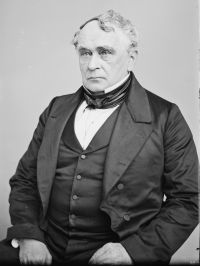
The celebration of Robin Hood's violence, however justified by the narrative, raises profound moral questions about the sanctification of crime. Thinkers from different eras have grappled with the paradox of how scale seems to alter the perception of wrongdoing. As Brigham Young observed in the 19th century, a single murder makes a villain, while causing the deaths of millions can make a hero [13]. This sentiment is echoed in the writings of Leo Tolstoy, who cited the argument that the magnitude of a crime cannot be its extenuation and that killing many is no less a crime than killing one [15]. This critique, also voiced in the context of 20th-century warfare, questions how multiplying an assault and adding weapons can transform a criminal act into a legally innocent or even glorious one [17]. From the standpoint of civilized law, the very concept of declaring a person an outlaw—someone who can be slain without trial—is seen as a barbaric outrage, an idea that modern international law abhors [16].
Myth, Memory, and the Defiance of Oblivion
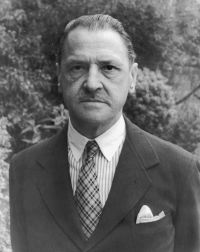
The transformation of a violent outlaw into an enduring hero is a testament to what William Somerset Maugham termed the innate human "faculty for myth" [28]. This faculty acts as a form of protest by romance against the mundane or brutal realities of life, seizing upon mysterious or surprising events in a person's life to construct a legend . This process, according to Maugham, becomes the hero's surest path to immortality. In the case of Robin Hood, the legend ensures his fame is not "buried clean" with his bones, preserving his story for future generations even though his death was ignominious and his final resting place is unknown [18]. The myth becomes a more durable monument than any physical tomb, which, as Ambrose Bierce notes, is merely a feeble defiance against the oblivion that eventually levels all [24].
This myth-making impulse can be understood through a psychological lens. Otto Rank suggests that myths are not created by the heroes themselves but by average people who project their own desires, and particularly their own childhood fantasies of rebellion, onto a chosen figure [26, 27]. The historical accuracy of the events is secondary; what matters is the creation of a hero who embodies the myth-maker's own internal struggles and aspirations . The legend of Robin Hood, therefore, serves less as a historical record and more as a vessel for a collective desire for justice, freedom, and the triumph of the individual against an oppressive system.
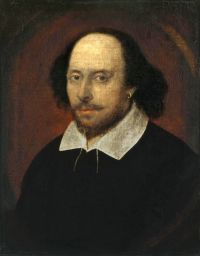
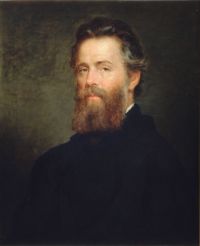
Ultimately, the creation and perpetuation of such myths represent a profound human struggle against the finality of death [29]. Death is the genuine, ugly fact that both nature and narrative try to hide [21, 22]. As William Shakespeare observed, a person who does not build their own monument in life—whether of stone or story—risks being forgotten as soon as the mourning ends [23]. The legend of Robin Hood is precisely such a monument, an immortality-preserver, as Herman Melville might say, that transforms the grim reality of a coffin into a symbol of enduring life [25]. The collective memory chooses to honor not the brutal facts of the outlaw's life, but the idealized spirit of the hero, ensuring that the name Robin Hood continues to resonate long after his physical existence has been worn away by time . Henry David Thoreau notes approvingly that even Little John's grave yielded useful whetstones, a metaphor for how a hero's legacy can continue to serve a practical, inspiring purpose long after death [20].
The legend of Robin Hood provides a compelling case study in the selective process of collective memory. An idealized image of a courtly, generous champion of the oppressed is carefully constructed, his criminal acts reframed as justified resistance against a tyrannical system . This popular narrative, however, stands in stark contrast to the inherent brutality of outlawry, which involved real violence, killing, and defiance of established law—actions that contemporary authorities viewed as felonious and that philosophical critiques challenge as morally ambiguous, regardless of their supposed cause . The romantic hero of lore is thus an edited version of a much more complex and violent reality.
The chasm between the historical figure and the mythical hero is bridged by the powerful human impulse to create legends. This faculty for myth serves as a defense against the commonplace and, more profoundly, against the finality of death and oblivion . By transforming the violent life of an outlaw into an enduring story of justice and freedom, society erects a monument more lasting than stone, ensuring that the hero's spirit outlives his physical demise . In this way, Robin Hood's legacy reveals less about the man himself and more about our collective need to find meaning, to believe in the possibility of righteous rebellion, and to craft narratives where virtue ultimately achieves a form of immortality.