AI-generated from sources
The Heroic Façade, Polar Exploration and the Human Truth
In Brief
- The 'heroic age' of polar exploration created a powerful mythos, casting explorers as paragons of national virtue and superhuman fortitude.
- Personal accounts reveal the stark reality of polar exploration: intense psychological struggle, bitter disappointment, and immense physical hardship, far removed from the idealized public image.
- The justification for polar expeditions evolved from national glory and adventure to a formalized pursuit of scientific knowledge, demanding concrete results and expert staff.
- Humanity possesses an enduring need for myth to construct meaning and purpose, even as scientific and historical analysis continually deconstructs these narratives.
Main authors
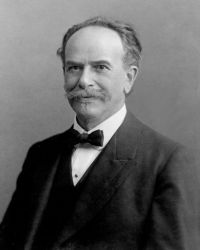
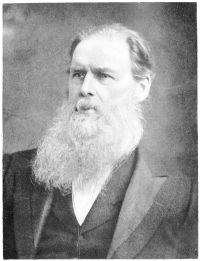

Human history is profoundly shaped by the stories it tells about itself, particularly those concerning extraordinary endeavors at the limits of endurance. The impulse to transform complex individuals into legendary figures is a timeless habit of collective myth-making, a process that concretes traditions and elevates historical actors into potent symbols for society [6, 7]. In times of great excitement or national ambition, prosaic individuals who perform remarkable deeds can become shadowy, almost supernatural characters, their actual lives and personalities obscured by the grand narratives woven around their achievements . This process serves a vital cultural function, providing archetypes of virtue, courage, and sacrifice that can unify a people and articulate their most cherished values.
The 'heroic age' of polar exploration stands as a quintessential example of this phenomenon. The unforgiving landscapes of the Arctic and Antarctic became a theater for projecting national ideals and celebrating human fortitude. Yet, this powerful cultural myth often stands in stark contrast to the documented personal experiences of the explorers themselves. The public image of the stoic, indomitable hero frequently dissolves upon closer inspection of private diaries and unvarnished accounts, which reveal complex men grappling with shyness, doubt, bitter disappointment, and the sheer, grinding misery of their work [8, 12]. This fundamental tension between the collective heroic narrative and the granular, often disillusioning, human reality reveals the vast distance between the symbol we create and the person who was.
The Forging of the Polar Hero
The transformation of polar explorers into national heroes was driven by a powerful confluence of patriotism and moral idealism. These expeditions were framed not merely as geographic quests but as profound tests of national character, with their hardships seen as a crucible for forging and demonstrating virtue [4, 5]. Contemporary accounts often positioned the explorers' struggle against the elements as a holier and more glorious cause than military conflict, a testament to benevolence and human sympathy that redounded to the glory of the entire race [2]. The loss of life, far from being a deterrent, was reinterpreted as a noble sacrifice—a gain that proved the fortitude of the human spirit and served as a moral bulwark for future generations . The silent, frozen bodies of the fallen were presented as the ultimate symbols of unwavering duty, a model for how citizens should face adversity and death [1].
Within this framework, the polar explorer was elevated to an almost superhuman status, embodying the highest qualities of mankind [3]. In the eyes of commentators like C. D. Mackellar, the daily life of an explorer, marked by constant self-control, resourcefulness, and endurance in an extreme climate, represented a form of heroism that dwarfed even the most daring deeds on the battlefield . This idealization focused on internal virtues—unselfishness, moral courage, and physical resilience—which were seen as essential components of an imperial identity. The explorer became less a specific individual and more an archetype of perfect manhood, a figure whose suffering was a necessary performance of national and racial superiority.
This process of elevation aligns with broader historical patterns of myth-making, where individuals involved in significant events become nuclei for collective memory and tradition . Just as figures from the distant past can become vessels for religious and warlike folklore, so too did polar explorers become subjects of an almost immediate legendary development . Their real, perhaps prosaic, personalities impinged so lightly on society compared to their one great deed that they quickly became shadowy figures, their achievements acquiring a color of the supernatural . In this way, the flesh-and-blood explorer was subsumed by the myth, their story repurposed to serve the imaginative and ideological needs of the nation.
The Unvarnished Reality of the Ice
The heroic narrative, with its emphasis on glory and noble sacrifice, stands in jarring contrast to the lived experience of polar exploration, which was often defined by misery, frustration, and the relentless struggle against an indifferent natural world. Apsley Cherry-Garrard’s blunt assessment of the endeavor as simply “the cleanest and most isolated way of having a bad time” captures a profound truth that the myths obscured . Explorers were perpetually confronted by a combination of bewildering and defeating forces—pressing ice, blasting winds, and blinding snow—that tested the limits of their sanity and endurance [11]. The landscape was not a noble adversary to be conquered but a sinister and menacing presence, capable of extinguishing human life with silent indifference [14].
The psychological toll of these expeditions was as severe as the physical one, a reality exemplified by the case of Robert Falcon Scott. The celebrated national hero known to the English public was, in private, a shy, reserved, and often misunderstood leader . His private writings reveal not a stoic figure of legend but a man crushed by “a terrible disappointment” upon finding that a rival had reached the South Pole first, forcing him to concede that “all the day dreams must go” [9]. The ultimate failure of his expedition was attributed not to a lack of heroism but to the inescapable frailties of the “uncertain human element” and the point at which human endurance simply breaks down against the titan forces of Nature [10]. This tragic humanity is a far cry from the idealized figures of public imagination.
Beyond the individual psyche, the internal dynamics of expedition teams often belied the myth of heroic solidarity. Sullen opposition, slurring criticism, and passive resistance could undermine the collective effort [13]. Robert E. Peary noted the existence of a particular type of explorer who, far from being a selfless pioneer, was primarily concerned with his own survival and perpetually congratulating himself as a hero for simply being alive in the polar regions . Moreover, as time passed, a more critical and pragmatic perspective emerged. By the late 19th century, some commentators began to view past expeditions—despite the magnificent heroism displayed—as little more than a series of failures, handicapped by ill-suited personnel and flawed strategies [15]. This blunt re-evaluation replaced the narrative of glorious sacrifice with a colder analysis of logistical and human inadequacy.
The Competing Impulses of Science and Spectacle
While narratives of national glory and heroic adventure dominated public perception, a parallel justification for polar exploration centered on the dispassionate pursuit of knowledge. Proponents of this view framed the endeavor as a noble sacrifice for the betterment of all humanity, with the explorer's primary objective being the extension of science, not the pursuit of personal or national admiration [16, 17]. From this perspective, the dangers and potential disasters were part of a devoted effort to wrest a “slender fragment of knowledge from the silence and mystery of the realm of ice” . The deaths of explorers, when they occurred in mystery and silence, were consecrated as a contribution to the intellectual inheritance of the human race .
This scientific ideal often existed in tension with the powerful allure of adventure and the public fascination with the unknown [18]. Thinkers like Franz Boas, writing in the 1880s, argued for a purist conception of scientific work, contending that science has an intrinsic right to demand human devotion and should not have to justify itself through potential utility or practical advantage [19]. This perspective implicitly challenged the framing of expeditions as mere quests for national prestige or trade opportunities, asserting instead that the pursuit of knowledge was a transcendent goal in its own right . The North Polar world held a unique charm for great minds precisely because it was unknown, representing a pure challenge for human intellect and enterprise .
By the early 20th century, this scientific imperative became more formalized and institutionally essential. William Spiers Bruce observed a growing recognition of the “comparative uselessness” of journeys undertaken merely for the sake of reaching a geographical point [20]. Consequently, securing financial backing for an expedition increasingly depended on the leader's ability to promise concrete scientific results, delivered by a staff of experts . The idealized image of the lone hero battling the elements began to give way to a more professionalized model, requiring dedicated laboratories and a hierarchical scientific staff on-site [21]. This evolution marked a significant shift in the culture of exploration, where the collection of verifiable data became as crucial a measure of success as the act of 'conquest' itself.
The Enduring Hunger for Myth
The construction of heroic narratives around polar explorers is not an isolated phenomenon but rather an expression of a fundamental human impulse to create meaning through storytelling. Myths often originate from the play of imagination on the raw material of human life, especially events that stir powerful emotions [27]. For the cultures that create them, these tales are not mere fiction but a synthesis of history, science, and religion that provides access to an inner, ideal life and a heroic past [23]. These stories, born from the analogies between human experience and the natural world, may not be factually precise, but they often contain a “germ of truth” that preserves the complexion and values of a specific era [22, 25].
This myth-making process, however, inherently involves a departure from objective truth. Critics throughout history have noted the tendency of literature, biography, and even historical accounts to transform real people into idealized heroes or exaggerated monsters, often with little regard for factual accuracy [24]. This tendency, described by Edward B. Tylor as a feature of the “myth-making stage” of human thought, reflects a willingness to convert speculation and interpretation into seemingly concrete historical fact without scruple [28]. Bertrand Russell made a similar observation regarding the myths surrounding war, which call forth genuine heroism and self-sacrifice but are ultimately founded on glamorous deceptions [29]. The heroic narrative, while inspiring, often requires a suspension of critical inquiry.
Modern society finds itself in a complex and contradictory relationship with these myths. The tools of science and critical history relentlessly anatomize heroic legends, checking their claims with “weights and measures” and revealing their constructed nature . Yet, this deconstruction can lead to what Friedrich Nietzsche identified as a state of myth-lessness, leaving modern culture feeling disconnected and “eternally hungering” for the meaning and mythical home it has lost [26]. The enduring public fascination with the heroes of polar exploration, even with full knowledge of their human frailties and the grim realities they faced, speaks to this unresolved tension. We dissect the legends, yet we still seem to hunger for the connection they provide to a past that felt, at least in the telling, larger than life.
The legacy of the heroic age of polar exploration is thus profoundly dual. On one hand, it gave rise to a powerful and enduring mythos in which explorers were cast as paragons of national virtue, their suffering and sacrifice transmuted into a glorious narrative of duty and superhuman fortitude . This idealized image served distinct cultural and political purposes, providing nations with inspiring symbols of human potential. On the other hand, the personal records left behind by the explorers themselves paint a starkly different picture—one of intense psychological struggle, bitter disappointment, and the mundane, overwhelming hardship of their environment . The very purpose of these expeditions was also contested and evolved, shifting from a spectacle of heroic conquest toward a more disciplined, institutionalized pursuit of scientific knowledge .
Ultimately, the gap between the polar myth and its human reality serves as a compelling case study of our species' relationship with truth and narrative. We are beings who construct meaning through stories, often simplifying the messy complexities of individual lives into inspirational, if not entirely accurate, legends . While the modern critical impulse, armed with scientific and historical analysis, excels at deconstructing these myths, it cannot fully extinguish the deep-seated need for the sense of purpose and connection they provide . The continued reverence for the flawed, tragic, and intensely human figures of the polar past suggests that we still navigate the ambiguous territory between what we can empirically know and what, on some level, we still need to believe.