AI-generated from sources
The Hero's Evolution, From Epic Ideal to Modern Individual
In Brief
- Ancient epic poems presented archetypal heroes who embodied the collective virtues and ideals of an entire civilization, shaping national consciousness and historical understanding.
- The emergence of the novel shifted the literary focus dramatically inward, exploring the complex psychological landscapes of average individuals rather than the idealized, public heroes of the past.
- The modern protagonist is defined by internal struggle and conquest, a profound departure from the external battles and circumstances that characterized ancient heroic figures.
- Contemporary fantasy and science fiction genres have revitalized the epic hero, reasserting a classic heroic structure that places normal characters into extraordinary, bewildering worlds, challenging the notion that such imaginative narratives are merely juvenile.
Main authors

The figure of the hero has long stood as a cornerstone of literature, embodying the paramount ideals of a given culture [2, 3]. In the earliest forms of fiction, this character was an archetype, a vessel for virtues such as strength, bravery, and wisdom, presented to a world otherwise unfamiliar with such literary constructs [1]. Ancient epic poetry, in particular, served as the primary medium for these figures, crafting narratives that were not merely stories but foundational myths for entire nations and civilizations [6]. These grand tales portrayed men in their objective struggles, shaping both individual character and the broader course of history within a framework often guided by supernatural forces [7, 8]. The epic provided a unifying vision, summing up the purpose of a historical period through its heroic protagonists.
This idealized, collective hero, however, eventually gave way to a profoundly different kind of protagonist with the rise of the modern novel [9]. The novel's focus shifted from the external, world-shaping exploits of exceptional personages to the internal, psychological landscape of the average individual [12, 17]. This literary evolution reflected a broader societal transition towards a more democratic, critical, and realistic sensibility, one that found the grand sincerity of the epic difficult to sustain [16]. The novel, with its intimate study of personal emotion, offered a different, more personal kind of depth than the epic's vast, societal sweep [15]. The enduring tension between these two modes of characterization—the archetypal and the individual—continues to shape narrative fiction, with the classic hero demonstrating a remarkable capacity for resurgence in contemporary genres.
The Form and Function of the Epic Archetype
As a literary form, the epic poem is a rare and monumental achievement, often considered the highest expression of a culture's poetic genius . Unlike the novel, which tends to capture the manners of a specific neighborhood or generation, the epic synthesizes the history and purpose of an entire civilization, culminating a thousand years of development into a single, cohesive story . Its purpose is to present characters in their most decisive and objective struggles, engaging with the social and institutional orders that define their world . This is accomplished through elevated language, a serious tone, and intricate plots that frequently weave in supernatural elements to guide the heroic exploits at the story's center .
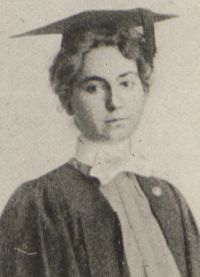
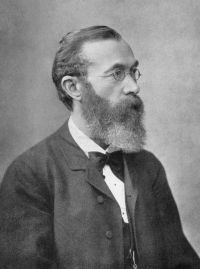
At the heart of this form is the hero, a figure who, according to the early 20th-century analysis of Wilhelm Max Wundt, is the dominant factor in shaping the consciousness of the 'heroic age' . This character is not merely a protagonist but the direct incarnation of a people's ideals, embodying the virtues most admired at the time, such as daring and physical prowess . Hero worship thus becomes a powerful force in shaping character, as individuals are thought to grow toward the ideals upon which they fix their gaze . This tradition of glorifying warriors and their deeds is so foundational that Voltairine De Cleyre, writing at the turn of the 20th century, identified the heroic legend as the direct ancestor of recorded history [5].
The classic epic hero often conforms to a mythic pattern, as identified by psychoanalytic thinkers like Otto Rank. This figure is frequently the child of distinguished parents, whose birth is preceded by prophetic warnings or unusual circumstances, portending danger to the established order, particularly a father figure [4]. These characters are presented as archetypes—the strong man, the truthful king, the wise woman—rather than as psychologically complex individuals . Their virtues and faults are understood not as personal traits but as communal and representative qualities, defined entirely by the part they play in the vast, societal conflict that drives the epic narrative [11].
The Novel and the Discovery of the Inner Self
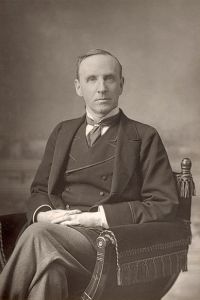
The novel emerged as a self-consciously 'young art,' breaking from the established traditions of epic and drama to forge a new path [14]. It distinguished itself by turning away from the myth, marvel, and supernatural beings that populated older forms of fiction . This new literary mode was better suited to a more critical and realistic era, an age that, as John Morley suggested, lacked the simple, exuberant poetic feeling necessary to produce a true epic . Consequently, the novel's scope became more intimate, focusing on the story of a generation rather than the grand narrative of a civilization .
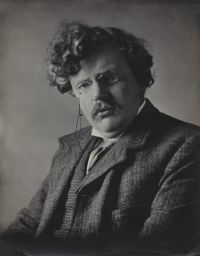
This shift in form was accompanied by a radical change in the nature of the protagonist. The designation of 'hero,' once reserved for figures of mythic stature like Achilles, was ironically applied to what G. K. Chesterton called the 'knock-kneed' modern man, beset by ordinary anxieties and indecisions [10]. This transformation reflected a broader democratization of literature, where stories no longer centered exclusively on the aristocratic exploits of kings and leaders but began to feature the common person . Novelists discovered that portraying a flawed, inconsistent human being was a more difficult and ultimately more rewarding artistic challenge than inventing a consistently ideal hero [13].
The most profound distinction between the epic and the novel lies in this turn toward interiority. The ancient hero was conceived as a 'magnificent child,' whose conflicts were external battles with circumstance and the world . The modern protagonist, by contrast, is defined by 'inward struggle and conquest' . The novel, with its capacity for an intimate study of individual emotion, proved to be the ideal vehicle for exploring this internal landscape . Whereas epic characters were memorable for their public roles in a societal cause, novelistic characters derive their interest from their private, personal traits . This introspective turn was not limited to prose; later poets, lacking the unifying vehicle of the epic, also began to write from a more subjective, personal perspective [19]. This evolution expanded the very definition of a hero to encompass any powerful individuality whose actions were seen as shaping events [18].
The Reassertion of Heroic Fantasy in the Modern Age
A common perception exists that imaginative literature filled with myths, sagas, and magic is inherently 'juvenile'—a form of storytelling intended for children and eventually outgrown by the mature mind [25, 30]. This view, however, is challenged by literary commentators who argue it is based on an 'unwarranted assumption' [21]. Arlo Bates, for example, asserted that 'wonder lore' is as normal and necessary for adults as it is for children, and the best of these stories hold their appeal across a lifetime [22]. The idea that science fiction and fantasy were exclusively for the young was a mid-20th-century phenomenon, born from a time when teenagers were seen as the primary audience open to speculating about the future [20]. The core elements of epic tales—their vast horizons and sense of action—are qualities that a developed taste should continue to appreciate, not discard .
The persistent fascination with heroic narratives speaks to a profound psychological resonance. A hero's story can act as a vessel for our own aspirations, representing a 'larger self' and giving voice to a universal human desire for significance and freedom [27]. From a psychoanalytic perspective, such as that of Otto Rank, the hero myth allows the individual to reconnect with their own infantile ego, which performed its first 'heroic act' in revolting against parental authority [26]. Fictional tales of adventure provide a necessary escape, allowing readers to relax, dream, and enter a state of aesthetic absorption where the story's world temporarily supplants reality [24, 29].
Contemporary fantasy literature often functions as a modern iteration of the epic tradition, creating new stories from the foundational elements of old things [28]. The enduring power of this genre may lie in its adherence to a classic heroic structure that G. K. Chesterton championed. According to his analysis, the old fairy tale remains potent because it places a normal, sane hero into a bewildering world of marvels; the story's tension arises from how a relatable person navigates an insane reality [23]. This contrasts sharply with some modern psychological fiction, which centers on an abnormal protagonist, creating a monotonous narrative of a 'dragon among dragons.' By reasserting a clear, heroic center, fantasy revitalizes the epic's appeal for an adult audience, proving its themes are anything but juvenile.
The literary representation of the hero has undergone a profound transformation, charting a course from the collective ideals of the ancient world to the subjective realities of the modern era. The epic poem once served as the crucible for archetypal figures who embodied the virtues of an entire civilization, their stories playing a crucial role in shaping national consciousness and historical understanding . With the advent of the novel, the focus shifted dramatically inward. Literature's new ambition became the exploration of the individual psyche, favoring the complex, inconsistent, and 'average' person over the idealized, public hero of the past . This evolution from external exploit to internal struggle marked a deep cultural shift from a heroic age of shared myths to a critical age of individual experience.
However, the eclipse of the formal epic did not extinguish the need for the epic hero. This archetypal figure has found renewed life in contemporary genres like fantasy and science fiction, which challenge the notion that imaginative wonder is solely the province of the young . These modern narratives tap into a timeless psychological need for aspirational figures and for stories that place ordinary individuals in extraordinary circumstances . In doing so, they prove that the capacity for 'childlike' imagination is a vital component of the adult mind, offering a space to dream and to grapple with fundamental questions of courage and purpose . The hero, therefore, remains a necessary and endlessly adaptable creation, perpetually resurrected to reflect the aspirations of each new age.