AI-generated from sources
The Enduring Voyage of Odysseus, From Ancient Cunning to Modern Conscience
In Brief
- Odysseus's heroism is rooted in his intellect and resourcefulness rather than brute strength, distinguishing him from other ancient epic heroes.
- His character is marked by profound moral ambiguity, where cunning and virtue often coexist with deceitfulness and questionable actions.
- The Homeric narrative intertwines divine intervention with Odysseus's profound homesickness and human resolve, driving his decade-long journey home.
- Literary interpretations have evolved from viewing Odysseus's vengeance as righteous justice to a modern perspective that emphasizes his psychological depth, vulnerability, and evolving moral conscience.
Main authors

The figure of Odysseus has long captivated audiences, distinguished from his epic peers by a profound and relatable humanity. Unlike the more colossal heroes of the Trojan War, the wandering voyager's appeal lies not in overwhelming martial might but in his complex and often morally ambiguous character [1]. He is a hero defined by his craftiness, subtlety, and passion—a full-grown man navigating a world of peril through intellect as much as strength [2]. His story, which Virginia Woolf characterized as the instinctive storytelling of a sea-faring people, transcends simple adventure to explore the depths of a resourceful but flawed human protagonist, making him a perennial subject of reinterpretation .
This enduring fascination stems from the character's capacity to reflect evolving societal ideals. The Homeric Odysseus, a crafty leader driven by a fierce homesickness, acted according to a code of honor and vengeance that appears starkly different from modern ethical frameworks [3, 28]. Over centuries, interpretations have charted a significant transformation, recasting the ancient hero into a more psychologically burdened and sympathetic figure. His journey through literary history mirrors a broader cultural shift from a pagan understanding of fate and retribution toward a more 'civilized' framework grounded in concepts of universal justice and inner moral law, making his epic not just a tale of return, but a continuous interrogation of what it means to be a hero [20, 26].
The Hero of Cunning and Human Frailty
In the landscape of ancient epic, Odysseus's heroism is primarily defined by his intellect and resourcefulness, a quality that sets him apart from warriors who rely on brute strength alone . The Homeric tradition establishes a clear contrast between physical prowess and strategic cunning, with Odysseus himself championing the power of wit and speech as forces that ultimately augment the strength of men [4]. This archetype of the resourceful hero, who overcomes enemies through subtle planning, is a recurring figure in folk psychology and legend, representing a different but equally potent form of heroic virtue [8]. His character offers a more accessible model of heroism, one grounded in the shrewdness required for survival rather than the superhuman rage of figures like Achilles .
This reliance on cunning, however, also casts a shadow of moral ambiguity over his character. In some ancient portrayals, such as in the works of Sophocles, his celebrated cleverness is condemned as deceitfulness—the mark of a dishonorable man descended from a dubious lineage [5]. This duality is central to his early conception as a hero who, while representing a striking model of humanity, is also visibly 'stained with dangerous vices' [7]. His actions often occupy a gray area, blurring the line between heroism and criminality, which, as some social analysis from the early 20th century suggests, was not uncommon in an age where the aggressive male disposition could produce both the hero and the lawbreaker [6].
It is precisely this complex mixture of virtue and vice that cements his unique place in the epic tradition. As William Lucas Collins observed, the greater popularity of the Odyssey may stem from its hero being less monolithically heroic and more of a common human type . Odysseus is not an idealized warrior but a voyager whose questionable methods and hairbreadth escapes make him feel tangible and real . He is presented as a mature and passionate individual, whose subtlety and craft are the tools of a fully realized adult navigating a perilous world . This foundation of a brilliant but flawed humanity provides the essential tension for his long journey home and the moral reckonings that would follow in subsequent interpretations.
Divine Will and Human Resolve on the Wine-Dark Sea
Odysseus's epic journey is propelled by a dynamic interplay between external forces and his own internal fortitude. His career is not shaped by human will alone; as De Witt H. Parker notes, non-human determinants like shipwrecks and the direct interference of gods are as decisive as his personal courage and cunning [9]. This constant negotiation between divine agency and human action is a hallmark of the narrative, which, in Hegel’s analysis, expands to show how circumstances are often more active than the hero himself [10]. While this persistent supernatural intervention might diminish the story's dramatic tension for a modern reader, it situates Odysseus's struggle within a cosmos where human destiny is inextricably linked with divine will, lending his trials a sense of profound, if fated, significance [11].
At the heart of his decade-long struggle lies a singular, humanizing motivation: a profound homesickness . This is not a mere sentiment but the 'compelling passion' that drives the crafty leader through every trial . His greatness is measured by personal qualities like courage, steadfastness of purpose, and deep-seated loyalty to his family and comrades [14]. This devotion is so central to his character that he rejects the offer of immortality from the goddess Calypso, choosing instead the mortal life of a husband and father in his own land [15]. His ultimate goal is not glory for its own sake but the deeply personal task of reclaiming his home and restoring his world, which begins and ends with his small island kingdom .
The odyssey is thus a testament to endurance in the face of immense suffering and social decay. During his absence, his household is consumed by arrogant suitors, and the community, despite its moral disapproval, lacks the courage to intervene [12]. Odysseus's resolve is therefore not only a fight against monsters and angry gods but also against the collapse of social order at home. His perseverance is cast as a form of piety; by reverencing the gods and mastering his passions, he earns divine favor, symbolized by Pallas Athene lighting his way with her golden lamp [13, 17]. Though aided by deities, his eventual return is ultimately framed as a victory achieved through his own thought and strength, a triumph of human will against overwhelming odds [16].
From Vengeance to Vulnerability, The Reinterpretation of a Hero
The moral assessment of Odysseus's actions, particularly the violent climax of his return, has shifted dramatically over time. In antiquity, his slaughter of the suitors was largely understood as a righteous victory of justice over lawlessness, an act of retribution with clear moral significance [19]. However, later perspectives begin to view his character through a different lens. George A. Lawrence imagined a 'Christian and civilized' observer finding the hero's 'pagan' and 'barbarian' nature unsatisfying, suggesting that his violent solutions belong to a cruder age . This sentiment, echoed by late 19th-century commentators, called for heroes with more neutral tints, better suited to modern compromises than the stark colors of the heroic age [27]. The ancient justification for vengeance as a religious duty thus collides with a modern standard of humanity that finds such acts troubling .
Yet, even within ancient texts, there exist the seeds of a more compassionate and restrained hero. In Sophocles’s Ajax, Odysseus advocates for the honorable burial of his fallen enemy, appealing to the 'laws of heaven' over personal hatred and demonstrating a capacity for pity in the face of a shared mortal doom [21, 24]. A pivotal moment in the Odyssey itself shows him checking the triumphant cries of his nurse over the dead suitors, proclaiming it an 'unholy thing to boast over slain men' [22]. This gesture reveals a crucial distinction between justifiable revenge and dishonorable cruelty, a moral nuance that, according to scholar Hubert Joseph Treston, was recognized even by the Achaeans [30]. Such instances of mercy and wisdom provide a foundation for his later 'redemption' in the literary imagination.
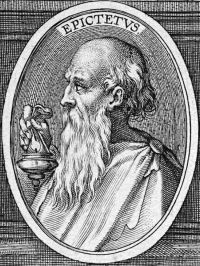
The character's psychological depth has also become a central focus of reinterpretation. Stoic philosophers like Epictetus used Odysseus as a moral case study, arguing that his weeping and wailing were signs of imperfection, as a truly good man who understands the universe would not be miserable [23]. In contrast, modern literary analysis often frames his long journey as a process of profound internal transformation, suggesting he returns from his trials with a new and developed set of values [18]. This evolution reflects a broader shift in what constitutes heroism, moving from the execution of external deeds to the cultivation of inner strength and adherence to what one author termed an 'eternal law' that transcends pagan codes .
Ultimately, modern audiences often project their own ethical sensibilities onto the ancient voyager. The moral complexities of his choices are no longer accepted without question; contemporary readers might react with indignation at his decision to sacrifice six comrades to Scylla, viewing it as a shocking failure of leadership and friendship [25]. The Homeric worldview, in which gods could be both merciful and vengeful, is filtered through a modern conscience that increasingly demands empathy and compassion [29]. Odysseus is thus remade into a figure grappling with universal questions of justice, human frailty, and emotional vulnerability, ensuring his continued relevance as a mirror for society's evolving moral landscape.
The literary voyage of Odysseus has proven as long and transformative as his fabled return to Ithaca. Born in an epic tradition that valued cunning and resourcefulness as highly as martial valor, he was conceived as a hero whose profound humanity set him apart from the divine rage of his peers . His ambiguous morality, a blend of heroic resolve and questionable vice, made him a complex and enduring figure . His struggle was defined by the relentless pressures of divine will and mortal circumstance, but it was his deeply personal and unwavering desire for home that fueled his perseverance through a decade of suffering . In his own time, the violent vengeance he exacted upon his return was seen as the necessary restoration of justice and order .
Over the centuries, however, this ancient hero has been reshaped by the currents of changing ethical thought. The stark 'pagan' certainty of his world has been re-examined through the lens of modern psychology and a demand for a more universal morality . Interpreters have increasingly focused on moments of mercy and self-restraint, recasting him as a figure capable of pity, wisdom, and profound inner growth . No longer simply a wily avenger, Odysseus has become a timeless symbol of the human condition itself—a wanderer navigating not only the treacherous seas but also the ever-shifting landscapes of justice, conscience, and what it truly means to be heroic .