Summary

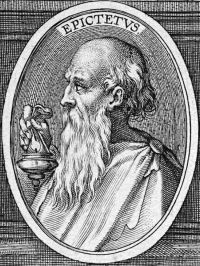
Portrait of Epictetus Epictetus Epictetus, the Discourses as reported by Arrian… (1928)

What harm has philosophy done you? How has Chrysippus wronged you that you should prove by your own conduct his labours to be useless? Were not the ills at home enough for you, all that you had to cause you grief and sorrow, even if you had not gone abroad, but did you add yet others in addition to them? And if you get other intimates and friends again, you will have more reasons for lamentation, yes, and if you get attached to another land. Why, then, live? Is it to involve yourself in one grief after another that makes you miserable?
Source: Wikisource

Portrait of Epictetus Epictetus Epictetus, the Discourses as reported by Arrian… (1928)

Why, to him it was no mere story which he had heard, that Zeus is father of men, for he always thought of Him as his own father, and called Him so, and in all that he did he looked to Him. Wherefore he had the power to live happily in every place. But it is impossible that happiness, and yearning for what is not present, should ever be united. For happiness must already possess everything that it wants; it must resemble a replete person: he cannot feel thirst or hunger.—Still, Odysseus felt a longing for his wife, and sat upon a rock and wept.
Source: Wikisource

Portrait of Epictetus Epictetus Epictetus, the Discourses as reported by Arrian… (1928)

To reach out for the impossible is slavish and foolish; it is acting like a stranger in the universe, one who is fighting against God with the only weapons at his command, his own judgements.
But my mother mourns because she does not see me.—Yes, but why did she not learn the meaning of these words of the philosophers? And I am not saying that you ought to take no pains to keep her from lamenting, but only that a person ought not to want at all costs what is not his own.
Source: Wikisource

Get perspective with Kwize: daily news enlightened by great literature