Summary

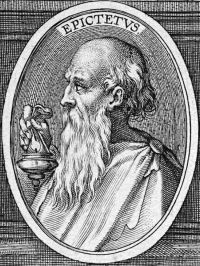
Portrait of Epictetus Epictetus The Discourses of Epictetus (1877)

When you have considered all this, if you still choose, go to the contest: if you do not, you will behave like children, who at one time play at wrestlers, another time as flute players, again as gladiators, then as trumpeters, then as tragic actors: so you also will be at one time an athlete, at another a gladiator, then a rhetorician, then a philosopher, but with your whole soul you will be nothing at all; but like an ape you imitate every thing that you see, and one thing after another pleases you.
Source: Wikisource

Portrait of Epictetus Epictetus The Discourses of Epictetus (1877)

And go to divination, as Socrates said that you ought, about those matters in which all the inquiry has reference to the result, and in which means are not given either by reason nor by any other art for knowing the thing which is the subject of the inquiry. Wherefore when we ought to share a friend's danger or that of our country, you must not consult the diviner whether you ought to share it. For even if the diviner shall tell you that the signs of the victims are unlucky, it is plain that this is a token of death or mutilation of part of the body or of exile.
Source: Wikisource

Portrait of Epictetus Epictetus The Discourses of Epictetus (1877)

You can be invincible, if you enter into no contest in which it is not in your power to conquer. Take care then when you observe a man honoured before others or possessed of great power or highly esteemed for any reason, not to suppose him happy, and be not carried away by the appearance. For if the nature of the good is in our power, neither envy nor jealousy will have a place in us. But you yourself will not wish to be a general or senator (πρύτανις) or consul, but a free man: and there is only one way to this, to despise (care not for) the things which are not in our power.
Source: Wikisource

Get perspective with Kwize: daily news enlightened by great literature