AI-generated from sources
From Moral Mirror to Agent of Subversion, The Evolving Allegory of the Fairy Tale
In Brief
- Early fairy tales primarily served as didactic tools, establishing clear moral dichotomies to reinforce societal values and cultivate character in children.
- Over time, a shift occurred from viewing fairy tales as strict moral instruments to appreciating their role in fostering imagination and amusement, with criticism emerging regarding their outdated themes.
- The imaginative and impossible nature of fairy tales makes them powerful allegories for human agency, wish-fulfillment, and challenging established social structures.
- Contemporary scholarship, particularly feminist thought, reinterprets fairy tales to subvert patriarchal narratives, reclaim female spirituality, and empower marginalized identities.
Main authors

Fairy tales have long occupied a foundational role in cultural transmission, serving as repositories of societal values and instruments of moral instruction. Originating from oral traditions and later codified in print, these narratives functioned as a child's first encounter with the ethical architecture of their world [8]. They presented a universe of clear moral relations, where good and bad were starkly delineated and outcomes were justly determined [3]. This didactic purpose was often subtly woven into the fabric of imaginative storytelling, leveraging fantasy to quicken the moral sentiments far more effectively than direct admonition ever could [1, 5]. By populating the world with giants, witches, and benevolent fairies, these stories not only amused but also established a framework for understanding virtue, duty, and the consequences of transgression [4, 6].
Over time, however, the purpose and interpretation of these tales have undergone a significant transformation. What once served primarily to reinforce the existing social order has increasingly been recognized as a powerful medium for questioning and subverting it. The imaginative freedom inherent in the genre—its ability to open doors through hard conditions and envision alternate realities—contains the seeds of resistance [23]. This evolution reflects broader shifts in cultural attitudes towards childhood, education, and the function of literature itself [14]. Scholars and creators alike began to re-examine the tales, moving beyond their explicit lessons to explore their potential as allegories for human agency, wish-fulfillment, and the challenging of entrenched power structures, particularly from feminist and other critical perspectives [20, 25].
The Moral Architecture of Early Tales
The primary function of early fairy tales was deeply rooted in the establishment and reinforcement of social and ethical norms. These narratives operated within an ideal realm of simple moral relations, where the lines between right and wrong were drawn with unmistakable clarity . This structure was not merely for entertainment; it was a pedagogical tool designed to cultivate a child's character. As authors like Laura Fry Kready argued in the early 20th century, every reaction of sympathy or aversion to a story's events helped to set a child's personality more firmly in the mould of a correct moral attitude . The tales held up for imitation a catalogue of cardinal virtues—from kindness and courage to industry and thrift—thereby building concepts of family life and social duty .
This moral instruction was often delivered through an implicit, rather than explicit, framework, which amplified its power . The desired outcome was a world where good invariably triumphs over evil, reassuring young audiences that virtuous behavior ultimately leads to reward . The archetypal characters—the kind princess, the brave champion, and the wicked witch or ogre—served as clear embodiments of these poles, with punishment reserved exclusively for the latter [2]. This system was perceived as a vital force for social order, with the belief in fairies themselves once considered more effective for maintaining public morals than a justice of the peace [7]. Even the fantastical elements served this purpose, making the underlying ethical lessons more palatable and memorable.
Despite this clear didactic goal, the mechanics of moral development were understood with some nuance. The fairy's power, for instance, was often depicted as limited to external fortunes, with the fundamental goodness of a character remaining a matter of personal choice and self-discipline [9]. This suggests an understanding that true morality cannot be magically bestowed but must be cultivated internally. In this sense, the fairy tale functioned much like other forms of art, which, as Charles Hardwick noted, seek a general moral truth rather than a literal one [10]. By uniting actions and actors in a clear relationship of cause and effect, the tale provides a powerful, if simplified, parallel to the moral complexities of life, allowing a child to vicariously experience and reflect upon ethical standards .
Imagination Beyond Instruction
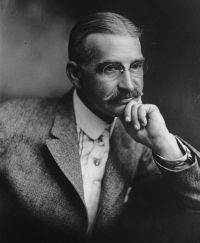
As societal views on childhood and education evolved, the rigidly moralizing function of the fairy tale came under increasing scrutiny. At the turn of the 20th century, voices like L. Frank Baum called for a new kind of
wonder tale
one that would eliminate the stereotyped figures and
horrible and blood-curdling incidents
devised merely to point a fearsome moral [11]. This signaled a broader shift away from viewing tales as simple instruments of instruction towards appreciating them as artifacts of human imagination and amusement. The enduring appeal of ancient stories about giants, witches, and magical objects was recognized as stemming not from their moral lessons, but from their origins as entertainment for and by people with a childlike perspective [13].
This evolving perspective reframed the genre's history. Thinkers like Herbert Spencer observed a pattern where elements once held as grave belief—the fairy lore that governed people's conduct—were later transformed into literary
ornament
for children's books and theatrical productions [12]. Yet, this very antiquity became a point of contention. Some analysts, such as Lucy Sprague Mitchell, argued against the uncritical acceptance of folk tales, insisting they should be subject to modern analysis rather than being exempt due to their age or perceived role in cultivating imagination [15]. Critics pointed out that many tales originated from a
cruder and coarser social state
and contained elements of cruelty, superstition, and trickery that were at odds with modern sensibilities [18].
The most direct challenge came from the realization that children themselves were often resistant to heavy-handed moralizing. Young readers and listeners showed a clear preference for classic, incident-rich stories over the
moral fairy stories
that were sometimes imposed upon them [17]. It became apparent that in real life, virtue is not always rewarded nor is vice always punished in such a straightforward manner, and children would soon discover this for themselves [16]. This led to a more sophisticated pedagogical understanding, articulated by figures like Walter Lowrie Hervey, who cautioned against interrupting narratives with moral precepts. The most effective approach was to present an interesting story that was psychologically true, allowing children to recognize bad behavior for what it is without needing it to be explicitly condemned, thus avoiding the monotony of purely moral plays [19].
Allegories of Agency and Subversion
Beyond their roles as moral guides or imaginative pastimes, fairy tales possess a powerful capacity to function as allegories for human agency and the subversion of established power. The genre's fundamental reliance on enchantment and the impossible provides a unique space for exploring wish-fulfillment [21]. These narratives offer a symbolic escape from
hard conditions,
allowing the spirit to crave and achieve power, freedom, and happiness in a world where wrongs are righted and patience and virtue are rewarded . This dynamic can be interpreted, as Floyd Dell suggested, as a record of humanity's ancient wish-dream to overcome its physical weakness and, with mysterious help, gain mastery over a terrifying world . The fairy wand becomes a symbol of human adaptation and purpose.
This imaginative space often operates outside conventional ethics. Some interpretations posit a fairy world where the moral categories of Right and Wrong do not apply, and where the only guides are the Possible and the Impossible [22]. This amoral quality creates fertile ground for challenging and inverting societal norms, a potential that was paradoxically feared by earlier realist movements in education. Followers of Jean-Jacques Rousseau, for instance, placed fairy tales under a ban, believing they cultivated the imagination
unduly
and fostered dissatisfaction with one's common-place lot in life [24]. This very capacity for inspiring discontent is what later interpreters would harness as a tool for social critique and empowerment.
In contemporary scholarship, this subversive potential has been most powerfully explored through feminist and gender-based reinterpretations. These approaches seek to re-mythologize the world according to a feminist imaginary, reclaiming female spirituality and challenging the hegemony of patriarchal power structures . Analysts critique the historical construction of woman as disordered nature versus man as ordered culture, a dichotomy that justified the persecution of women as witches [26]. The figure of the witch, often linked in folklore to symbols of female-centric activities like agriculture, represents a fossil survival of a culture where women's roles were more prominent [29]. Modern movements harness these archetypes to construct new mythologies where female divinity possesses both nurturing traits and traditionally masculine ones like strength and aggression [27]. In this context, the socially marginalized female becomes a central spiritual motif, and ritual spaces become arenas where established gender norms can be inverted and new forms of identity performed [28].
The journey of the fairy tale is one of profound ideological evolution. Conceived in a world that demanded moral clarity and social reinforcement, these stories began as mirrors reflecting and enforcing the ethical standards of their time . Their simple dichotomies of good and evil, virtue rewarded and vice punished, served as a foundational curriculum for character, embedding societal norms within the captivating fabric of fantasy . However, the very imaginative power that made them such effective didactic tools also contained the potential for their own transformation. As cultural sensibilities shifted, the genre's overt moralizing was questioned, and its capacity for pure amusement and imaginative freedom came to the forefront .
This evolution did not stop at mere entertainment. The fairy tale's inherent break with the laws of reality has made it an enduring and potent vehicle for social commentary and subversion . By creating worlds where the powerless can triumph and established hierarchies can be inverted, these narratives provide a framework for exploring human agency and challenging restrictive conditions. In modern re-imaginings, particularly within feminist thought, this allegorical power is explicitly harnessed to deconstruct patriarchal myths and empower the marginalized . Thus, the fairy tale persists not as a static relic, but as a dynamic and adaptable genre, continually reinterpreted to articulate the deepest anxieties and aspirations of the societies that tell them.