AI-generated from sources
Goblins in the Nursery, Where a Child's Fear of the Dark Comes From
In Brief
- Fear of the dark was long blamed on nurses and their goblin stories: on this view, a bogey has nothing to do with darkness until an adult ties the two together, sometimes for life.
- Children carefully shielded from every ghost story were still reported to cry in dark places, which suggests that fear often comes first and borrows its shapes afterwards.
- John Locke, the philosopher who blamed the “foolish maid” for joining goblins to the night, never wanted a fearless child: where danger is real, he wrote, a sense of danger should follow.
- The sharpest harm lies in fright used as a weapon—threats, dark closets, bogeymen called up to force obedience—while fright met in a story, within reach of comfort and laughter, can become a game the child learns to win.
Main authors
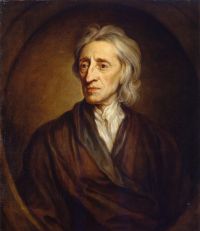
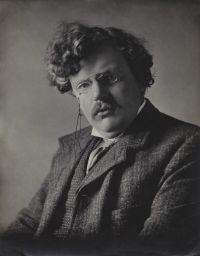

The goblin at the bedside has been argued over with surprising heat. Is a child afraid of the dark because a nurse once filled the dark with monsters, or because the dark was full before anyone spoke? For one long line of educators and physicians, the answer was plain: fear is put in from outside, and the nursery tale is its vehicle [1, 2]. For their opponents, it was just as plain the other way. Answering a woman who thought fairy tales cruel because they frighten, Chesterton retorted that a child deprived of bogies would simply make them up, since a small child in the dark can “invent more hells than Swedenborg” [3].
The quarrel looks small, but it carries two pictures of the mind. In one, the child arrives empty, fearing only pain, and every terror is a lesson someone taught [4]. In the other, he arrives with fears that only wait for a shape [5, 6]. Each picture yields its own rule for the nursery: silence the nurse, or trust the story. Yet the texts that carried the debate, read side by side, do not end in a victory for either camp. They converge on a quieter distinction, which matters more than the origin of fear: whether fright is held over the child as a weapon, or placed in his hands as something he can learn to master.
Locke's foolish maid and the goblin in the dark
The case against the tale rests first on psychology, not morals: fear of the dark is an association, and associations are made by someone. Locke set the scene with almost clinical economy. Goblins and sprites, he observed, have no more to do with darkness than with light. But let a “foolish maid” repeat them often enough to a child, and the two ideas may be joined for life, so that darkness forever brings the goblins back with it . Left to themselves, children would welcome the night for sleep as readily as the day for play [7]. The remedy follows from the diagnosis. If someone's folly has taught the child that the dark differs from merely closing his eyes, the idea must be removed as quickly as possible .
Behind the argument lies a sparse theory of nature. The only thing we naturally fear, Locke held, is pain or the loss of pleasure, and pain has no shape or colour of its own . His example is fire: children reach for the bright flame until experience burns the lesson into them . Much later, in 1846, Lydia Maria Child returned to the same hearth to draw a decisive contrast. A child told that fire burns believes it, yet stays calmly in the room, because he knows the fire cannot come to him. What terrifies him is the “something in the dark,” the old man who steals children, the rats waiting in the shut closet [8]. Known dangers teach caution. Mysterious ones, which can be neither seen nor checked, are the ones that can be planted.
What the reformers attacked above all was the tale turned into an instrument of government. Horace Fletcher describes a man who had been scared into obedience as an infant by tales of goblins in the dark. Nothing he could see held any terror for him; the phantoms he could not see kept him a slave to fear [9]. Harriet Martineau saw the same mechanism in irritable parents. When threats and blows failed with a spirited child, they turned to shutting him in the dark or to hobgoblin prophecies, and won no obedience worth the name, only defiance or sullen submission. It would be less unkind, she wrote, to bruise the child's limbs than to plant torturing feelings in his mind [10]. In these accounts the goblin is not a story. It is a disciplinary tool borrowed from the imagination.
In later hands the indictment hardened into outrage, and its favourite image was permanence. A. Mosso compared every fright given to a child to minute splinters left in the flesh, torturing him all his life [11]. Frank Crane went further. Almost all our fears, he argued, are taught in childhood, and whoever frightens a child with the dark, ghosts or a vindictive Deity should be flogged . The prosecution even had its experiment: Carl Avery Werner reported that his son, guarded from any word coupling darkness with danger, never knew the usual terrors of the unlit room [12]. The case seemed closed. But it rested on a single empirical wager, that a child left untold would remain unafraid, and that wager was precisely what others disputed.
Meynell's ineffectual love, the fear that needs no teacher
The first objection was raised against Locke himself. Edmund Burke summarized Locke's view—that darkness is not naturally an idea of terror, and that a nurse's ghosts make the night horrible ever after—and admitted that so great an authority seemed to stand in the way of his own general principle [13]. The phrasing marks the fault line: Burke's principle evidently required the dark to be dreadful in itself. A contributor to the Atlantic Monthly in 1862 split the difference in one stroke. Darkness, the writer held, is naturally fearful to human beings, and the ghost stories of many nurses—“stupid” ones, in the writer's own word—make it especially fearful to a child [14]. Nature supplies the dread; the nurse sharpens it.
The decisive evidence came from children who had been protected and were frightened anyway. Fanny Kemble, recalling her girlhood, drew from one striking instance a general conclusion. Children's fears, she wrote, are by no means the work of the bogeys suggested by foolish servants; children select or create their terrors from sources so strange that no precaution can shield them . A Popular Science Monthly writer of 1887 made the same point in the language of heredity. Children carefully guarded from all ghost stories, the writer observed, still cry with terror when led into a dark place, especially if sounds are made there . Against Werner's untroubled son stood these other children, equally guarded and not at all untroubled . The nursery experiment could be read both ways.
The most penetrating form of the objection reversed the order of events. In Alice Meynell's account, fear comes first, as a storm in the blood; only afterwards does terror reach for “any thought, any shape, any image” to explain that storm to the child's mind [15]. The goblin is not the cause but the alibi. Hence the futility of protection: love decrees that the child shall not be frightened, and though no one frightens him, he is afraid . Chesterton, in 1909, drew the same lesson for the fairy tale. A small child, he noted, can imagine monsters too vast for any picture, and fear springs not from the tales but from the soul itself [16]. Even Fletcher's cautionary case, read closely, speaks of phantoms the man himself created .
The defenders of innate fear soon found a scientific ally, though a double-edged one. George Herbert Betts relays Hall's observation that night has become the safest of the twenty-four hours, and that nothing justifies the frenzy wind and thunder provoke in children; the frightened child, in this view, sums up the fear experiences of the race [17]. James Sully was more guarded. Nature, he granted, has poised the child's nervous system so that fear comes readily, but the inheritance of savage ancestors' dread of darkness he presents only as the opinion of some [18]. From another quarter, Freud turned the argument round. The young child is at first fearless because he does not recognize danger, running to the water's edge or playing with fire, and real fear is awakened by education [19]. Born prone to phantoms and blind to real dangers, the child would need both less fright and more of it—only not of the same kind.
The chuckle of superiority, fright as a nursery game
The boldest defence of the tale did not stop at saying that fear is native. It held that children go looking for it. Hannah Lynch remembered being swung into the air and shrieking in pretended fright. Children, she wrote, must persuade themselves of peril even in their tamest games, for not to imagine oneself afraid is to miss the “peculiar zest” of enjoyment [20]. Chesterton saw the same appetite. The child commonly likes horrors and keeps indulging in them even when he no longer likes them; it is as hard to say where pure pain begins for him as for an adult who walks freely into a great tragedy .
What the child seeks, on this reading, is not fear itself but the moment of mastering it. James Sully described the mechanism with care. When nerves are slack and the setting eerie, a sudden sound sends a shudder through the small body; in daylight, the same child may play with his fears and talk of them with a “chuckle of superiority” [21]. The deeper the fright, Sully added, the sweeter the release when a clear-sighted laugh dispels it . An editorial remark in a collection of English fairy tales compared the effect to tragedy: the purging of pity and terror works among little ones as among the spectators of a drama [22]. Yet the same note doubted how far gruesome subjects belong in a children's book. The cathartic defence was sure of the mechanism, less so of the dose.
From there, fear could be recast as a faculty rather than a wound. Harriet Martineau held that every child has some capacity for fear, or ought to have it. A child who has never known any kind of fear, she argued, can have no imagination, no wonder, no awe [23]. This is the same writer who condemned hobgoblin prophecies and the dark closet as worse than blows . Her two positions are not a contradiction. They trace the line the whole debate was groping towards: fear as an experience that enlarges the child, and fear as a pressure that subdues him.
A last argument made the tale a rehearsal for life. Charlotte Mason, siding with Wordsworth, held that the knowledge of evil carried by fairy tales under a certain glamour helps save children from painful shocks in real life [24]. The goblin becomes a small dose of the world's darkness, given in a form the child can handle. Chesterton put the reformers' error more bluntly. Banning tales because they frighten, he wrote, rests on a complete forgetting of what a child is like, and makes no more sense than banning sentimental novels because they make girls cry . The retort strikes home. Yet it leaves untouched what the prosecution had really feared: not the story, but the voice that tells it and the purpose it serves.
The mother's arms and Locke's second lesson
The truce that emerged is a matter of dose and setting. Porter Lander MacClintock granted that many of the most attractive nursery tales are violent, some heavy with grisly physical horror. His conclusion was measured: one should not read so many of them, or linger so long over their details, as to create a deep or abiding atmosphere of terror [25]. The fright is allowed; the climate of fright is not. Sully named the condition that makes the difference. A frightened child may suffer acutely, but if his mother's arms are within reach, the fear is more than repaid by the loving embrace [26]. The true tragedy of childhood, he added, lies elsewhere—in shy fears exposed to unloving eyes and to ridicule .
The middle path had, in fact, been sketched by the prosecutor himself. When an infant takes fright at something that cannot easily be kept out of its way, Locke advised every means of allaying the fear—diverting the child's thoughts, mixing pleasant sights with the frightening one—until the object grows familiar and harmless [27]. Nor did he dream of a child without fear. True fortitude, he wrote, does not mean being unmoved by any fear at all, for “where danger is, sense of danger should be” [28]. The enemy of the goblin was no enemy of fear as such. His target was misplaced fear, fastened to things that cannot hurt, while real dangers deserve their due apprehension.
A third route, neither the nurse's tale nor the child's nature, came into view in Bertrand Russell's advice of 1926: fear is caught. A parent afraid of thunderstorms passes the fear on the first time the child hears thunder in his presence. A parent who voices a dread of social revolution frightens the child all the more because he cannot understand it [29]. The foolish maid of Locke's far older scene has changed costume . She is now the anxious parent, and the goblin is the adult's own dread, half spoken. Hence Russell's rule, which assigns the cure to the adult rather than the child: to dispel fear in children, be fearless oneself .
A final correction concerns the prosecution's most dramatic claim, that early fright lasts a lifetime. A Popular Science Monthly essay of 1895 granted, with George Sand, that fear may be the greatest moral suffering of children, above all of weakly, nervous and imaginative ones. It nonetheless warned against swinging from brutal indifference to sentimental exaggeration. Childish suffering is terrible while it lasts, but happily it has “a way of not lasting” [30]. Set beside the image of splinters festering for life , the remark suggests that both camps argued from their worst cases. Most childish terrors, on this sober view, pass and leave the little face as sunny as before .
Whether a child's fear of the dark is put there by a nurse's goblin stories or born in him was argued for generations, and neither side carried the day. Those who blamed the tale were right that a terror can be fastened to darkness by repetition, and turned into a lasting instrument of obedience . Their opponents were right that children guarded from every story still trembled, as if the fear came first and looked for its shape afterwards . What both camps came to share was a distinction subtler than nature against upbringing: fear used to rule a child, through threats, dark closets and hobgoblin prophecies, against fear met within reach of comfort, as a game the child can win .
That distinction explains how one writer could condemn hobgoblin threats and still hold that a child who has never known fear can feel no wonder . It explains, too, why the very thinker who blamed the foolish maid wanted children to keep a sense of real danger . By this long reckoning, children need neither to be emptied of fear nor filled with it; they need to learn that it can be faced, laughed at and outgrown . A goblin wielded as a threat serves the adult. A goblin told as a story ends up belonging to the child.