Summary

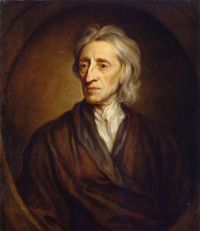
Portrait of John Locke John Locke Some Thoughts Concerning Education…

Though the managing ourselves well in this part of our behaviour has the name of good-breeding, as if peculiarly the effect of education; yet, as I have said, young children should not be much perplexed about it; I mean, about putting off their hats, and making legs modishly. Teach them humility, and to be good-natur'd, if you can, and this sort of manners will not be wanting; civility being in truth nothing but a care not to shew any slighting or contempt of any one in conversation. What are the most allow'd and esteem'd ways of expressing this, we have above observ'd.
Source: Wikisource

Portrait of John Locke John Locke Some Thoughts Concerning Education…

Such a suspicion or intimation cannot be borne by any one without uneasiness. Besides, one angry body discomposes the whole company, and the harmony ceases upon any such jarring.
The happiness that all men so steadily pursue consisting in pleasure, it is easy to see why the civil are more acceptable than the useful. The ability, sincerity, and good intention of a man of weight and worth, or a real friend, seldom atones for the uneasiness that is produced by his grave and solid representations. Power and riches, nay virtue itself, are valued only as conducing to our happiness.
Source: Wikisource

Portrait of John Locke John Locke Some Thoughts Concerning Education…

If children were let alone, they would be no more afraid in the dark, than in broad sun-shine; they would in their turns as much welcome the one for sleep as the other to play in. There should be no distinction made to them by any discourse of more danger or terrible things in the one than the other: but if the folly of any one about them should do them this harm, and make them think there is any difference between being in the dark and winking, you must get it out of their minds as soon as you can
Source: Wikisource

Get perspective with Kwize: daily news enlightened by great literature