“ What I wish here to repress, is not censoriousness, but only that idle gossip and mischievous tattling, the natural occupation of ignoble minds in a state of idleness. The breed of censorious people are by far too useful to be destroyed ”
Censoriousness
Definition and stakes
The theme of “censoriousness” has been addressed by authors such as Alexander Whyte. It is often associated with terms like wealth, census, population, class and property.
Quotes about “censoriousness”
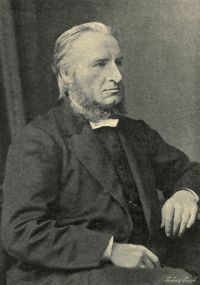 Alexander Whyte,
Samuel Rutherford and Some of His Correspondents
Alexander Whyte,
Samuel Rutherford and Some of His Correspondents
“ Just as, on the other hand, the ignorance, the censoriousness, the bitterness, the intolerance, that too often accompany what would otherwise be true godliness, work as widespread mischief as true godliness works good. ”
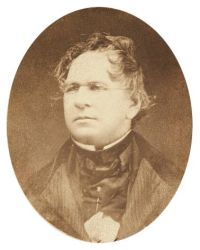 Henry Rowe Schoolcraft,
Notes on the Iroquois
Henry Rowe Schoolcraft,
Notes on the Iroquois
“ In truth, of all subjects upon which these people have been called on to think and act, during our proximity to them of two or three centuries, that of political economy is decidedly the most foreign and least known to them, or appreciated by them, and the census movement was, consequently, the theme of no small number of suspicions and cavils and objections. ”
 Thomas De Quincey,
Note Book of an English Opium-Eater
Thomas De Quincey,
Note Book of an English Opium-Eater
“ And hence it is that our encyclopaedias now display one characteristic of this age—the very opposite of superficiality (and which on other grounds we are well assured of) —viz. its tendency in science, no less than in other applications of industry, to extreme subdivision. In all the employments which are dependent in any degree upon the political economy of nations, this tendency is too obvious to have been overlooked. Accordingly it has long been noticed for congratulation in manufactures and the useful arts— and for censure in the learned professions. ”
 George Santayana,
Soliloquies in England, and Later Soliloquies
George Santayana,
Soliloquies in England, and Later Soliloquies
“ The Censor sends our children to the best schools, to prove what sacrifices we are willing to make for their good, and to relieve us of further responsibility in regard to them. He directs that considerations of wealth shall control our careers, our friendships, and our manners; and this is perhaps the greatest sham of all the shams he has set up: that money is an expression of happiness and a means to it. ”
“ But worthy of censure, above all things, is the discontinuance of the private mass in certain places, as though those having fixed and prescribed returns are sought no less than the public masses on account of gain. ”
 W. E. B. Du Bois,
The Quest of the Silver Fleece…
W. E. B. Du Bois,
The Quest of the Silver Fleece…
“ The lords of the soil stood round, gauging their cotton, measuring their men. Their stores were crowded, their scales groaned, their gins sang. In the long run public opinion determines all wage, but in more primitive times and places, private opinion, personal judgment of some man in power, determines. ”
Isaac A. Hourwich, The Economics of the Russian Village
“ In a word, through the census a picture is drawn of the economic condition of all the households of the community. The number of those who can read, or who are learning to read, is also given in the census. Certainly the material collected appears to be of such a character as to furnish fundamental facts for the formation of a judgment as to the economic condition of the population. ”
 John Clark Ridpath,
The Life and Work of James A. Garfield…
John Clark Ridpath,
The Life and Work of James A. Garfield…
“ The legislator without statistics is like the mariner at sea without the compass. Nothing can safely be committed to his guidance. A question of fearful importance, the well-being of this Republic, has agitated this House for many weeks. It is this: Are our rich men growing richer, and our poor growing poorer? And how can this most vital question be settled, except by the most careful and honest examination of the facts? Who can doubt that the next census will reveal to us more important truths concerning the situation of our people than any census ever taken by any nation? ”
 Ralph Waldo Emerson,
Essays: Second Series — Politics
(1844)
Ralph Waldo Emerson,
Essays: Second Series — Politics
(1844)
“ This accident, depending, primarily, on the skill and virtue of the parties, of which there is every degree, and, secondarily, on patrimony, falls unequally, and its rights, of course, are unequal. Personal rights, universally the same, demand a government framed on the ratio of the census: property demands a government framed on the ratio of owners and of owning. ”
 Theodore Parker,
The Collected Works of Theodore Parker
(1864)
Theodore Parker,
The Collected Works of Theodore Parker
(1864)
“ The official census gives America about seven thousand millions of dollars. Thirteen hundred millions thereof is vested in the souls of three and a quarter million men! So one-sixth of the nation's property has no natural foundation; rests on no moral law; has no conscience on its side: all religion is against it; all that property is robbery, unnatural property, inhumanly got, also held only by violence. ”
 George Bernard Shaw,
An Unsocial Socialist
(1883)
George Bernard Shaw,
An Unsocial Socialist
(1883)
“ And what more can man desire than wealth with descent from a county family! Could a man be happier than I ought to be, sprung as I am from monopolists of all the sources and instruments of production—of land on the one side, and of machinery on the other? ”
Thomas De Quincey,
Memorials and Other Papers — Volume 1
“ Regularly, and by law, a Gentleman Commoner is liable to little heavier burdens than a Commoner; but, to meet the expectations of those around him, and to act up to the part he has assumed, he must spend more, and he must be more careless in controlling his expenditure, than a moderate and prudent Commoner. In every light, therefore, I condemn the institution, and give it up to the censures of the judicious. So much in candor I concede. ”
 Charles Dudley Warner,
The Complete Essays of Charles Dudley Warner
Charles Dudley Warner,
The Complete Essays of Charles Dudley Warner
“ Long ago, in the middle of the seventeenth century, John Ward of Stratford-on-Avon, clergyman and physician, wrote in his diary: “The wealth of a nation depends upon its populousness, and its populousness depends upon the liberty of conscience that is granted to it, for this calls in strangers and promotes trading.” ”
 William Graham Sumner,
The Forgotten Man, and Other Essays
William Graham Sumner,
The Forgotten Man, and Other Essays
“ He says that the country has prospered under protection and on account of it. He brings from the census the figures for increased wealth of the country, and, to speak of no minor errors, draws an inference that we have prospered more than we should have done under free trade, which is what he has to prove, without noticing that the second term of the comparison is absent and unattainable. In the same manner I once heard a man argue from statistics, who showed by the small loss of a city by fire that its fire department cost too much. ”
 Herbert Spencer,
Popular Science Monthly
(1881)
Herbert Spencer,
Popular Science Monthly
(1881)
“ It is true that, as pointed out, differences of wealth, in the shape of chattels, boats, slaves, etc., cause some class-differentiations; and that thus, even before private land-owning begins, quantity of possessions aids in distinguishing the governing from the governed. ”
Baron Henry Lytton Bulwer Dalling and Bulwer, Historical Characters: Mackintosh…
“ That a mere money-making population, which, lapped in the luxury of commercial prosperity, begins to disregard its nice sense of honour, its admiration for valour and daring, becomes daily weaker against the spoiler, and a greater temptation to spoliation. ”
P.-J. Proudhon, System of Economical Contradictions…
“ The commission-merchant is the type, the highest expression, of monopoly, the embodiment of commerce, that is, of civilization. Every function depends upon his, participates in it, or is assimilated to it: for, as from the standpoint of the distribution of wealth the relations of men with each other are all reducible to exchanges,—that is, to transfers of values,—it may be said that civilization is personified in the commission-merchant. ”
Roger North, The History of Esculent Fish
“ Only by the way, I presume to advise the censorious sparks to do nothing unjust; let their dealing be plain, though in selling of horses, spend what is their own, provide for their families, and be true to their friend; and after this, whether they sell corn, cattle, conies, sheep, deer, horses, or fish, I will insure their honour for a farthing. It is the truth and substance of things, and no person’s opinion, that governs honour, which consists wholly in doing what is truly just and good, and nothing otherwise. ”
Ralph Waldo Emerson,
Society and solitude: Twelve chapters
(1870)
“ Is it not plain that not in senates, or courts, or chambers of commerce, but in the dwelling-house must the true character and hope of the time be consulted? These facts are, to be sure, harder to read. It is easier to count the census, or compute the square extent of a territory, to criticise its polity, books, art, than to come to the persons and dwellings of men, and read their character and hope in their way of life. ”
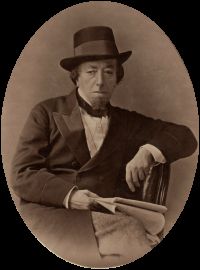 Benjamin Disraeli,
Tancred — Chapter XIX. Lord Henry Sympathises
(1847)
Benjamin Disraeli,
Tancred — Chapter XIX. Lord Henry Sympathises
(1847)
“ The boy, whom we have traced intent upon the revival of the pastimes of the people, had expanded into the statesman, who, in a profound and comprehensive investigation of the elements of public wealth, had shown that a jaded population is not a source of national prosperity. ”
William Simpson, The Man from Mars: His Morals, Politics and Religion
“ No other idea appears to have been held by the founders of your nation, but that your land was a chattel, to be disposed of for money, and as much a subject of barter and speculation as merchandise, and like it, liable to that depression in value which a superabundant supply produces. Its unequalled advantages as a subject for speculation became more and more apparent as your population increased. ”
American Anti-Slavery Society, The Anti-Slavery Examiner, Omnibus
“ By what rule of political or commercial arithmetic does the Senator calculate the amount of property in human beings? Can it be fancy or fact, that I hear such calculation, that the people of the United States own twelve hundred millions' (double the amount of all the specie in the world) worth of property in human flesh! And this property is owned, the gentleman informs us, by all classes of society, forming part of all our contracts within our own country and in Europe. ”
 Alice Stopford Green,
Town Life in the Fifteenth Century…
Alice Stopford Green,
Town Life in the Fifteenth Century…
“ Traders and manufacturers took their places somewhat noisily beside their fellow politicians of older standing, filling the whole land till it seems for a moment as if nothing counted any more in English life save its middle class—a busy, hard, prosperous, pugnacious middle-class. ”
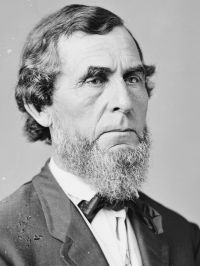 Columbus Delano,
Report of the Secretary of the Interior
(1872)
Columbus Delano,
Report of the Secretary of the Interior
(1872)
“ But the main object of the census, in which alone would be found the justification for so great an expenditure of labor and money, is its immediate use in directing the legislation and the industrial and social efforts of the present age. ”
 Hilaire Belloc,
The French Revolution
Hilaire Belloc,
The French Revolution
“ Face to face with that you had an institution not popular, one whose public functions were followed by but a small proportion of the population, one in which income was most unequally distributed, and one whose feudal property yielded in dues an amount equal to more than a quarter of the total revenue of the State. ”
F. Barham Zincke, Last winter in the United States (1868)
“ On the other hand, however, I never met with any flourishing and respectable merchant, and I may almost say with anyone whom we should describe as belonging to the upper class of society, who admitted for a moment the possibility of repudiation in any form. It seems, then, that in forecasting the probabilities of this question, the class that has numbers on its side must be regarded as pitted against the class that has on its side cultivation, intelligence, and wealth. ”
 Mark Antony Lower,
The Curiosities of Heraldry
Mark Antony Lower,
The Curiosities of Heraldry
“ Under the antient system, a broad line of demarcation had separated the nobility and gentry from the common people; but gradually the commercial interests of the nation introduced that intermediate rank recognized as the middle classes of society, and these, by means of the wealth acquired in merchandise and trade, often eclipsed in the elegancies of life many of the antient gentry. ”
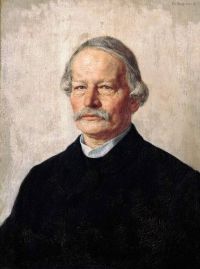 Gustav Freytag,
Pictures of German Life in the XVIIIth and XIXth Centuries…
Gustav Freytag,
Pictures of German Life in the XVIIIth and XIXth Centuries…
“ As great landed proprietors on the desolated country they brought about an increase of population, guided the cultivation, for almost 150 years laboured as strict economists, thought, tolerated, dared and did injustice, in order to create for their State a people like themselves—hard, parsimonious, discreet, daring, and ambitious. ”
 Henry Charles Carey,
Letters on International Copyright…
Henry Charles Carey,
Letters on International Copyright…
“ Half a century since, when our people were but four millions in number, and were poor and scattered, gentlemen like you were secured in the monopoly of their works for fourteen years, with a power of renewal for a similar term. Twenty years since, when the population had almost tripled, and their wealth had sixfold increased, and when the facilities of distribution had vastly grown, the term was fixed at twenty-eight years, with renewal to widow or children for fourteen years more. ”
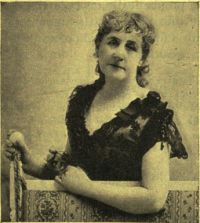 Anna M. Fitch,
Better days; or, A Millionaire of To-morrow
(1891)
Anna M. Fitch,
Better days; or, A Millionaire of To-morrow
(1891)
“ For the life of me I cannot see that this country or this people have any just cause of complaint. The census returns of 1890 show that in the preceding ten years there was added to our national wealth, values amounting to nearly $20,000,000,000. ”
 Anthony Trollope,
An Autobiography of Anthony Trollope
Anthony Trollope,
An Autobiography of Anthony Trollope
“ But I think I may certainly say that as some of these periodicals are certainly entitled to great praise for the manner in which the work is done generally, so are others open to very severe censure,—and that the praise and that the censure are chiefly due on behalf of one virtue and its opposite vice. It is not critical ability that we have a right to demand, or its absence that we are bound to deplore. Critical ability for the price we pay is not attainable. ”
United States. Congress, Abridgment of the Debates of Congress…
“ In that case, there would be many other subjects for censure, as well as the self-created societies. Land-jobbing, for example, has been in various instances brought to such a pass that it might be defined swindling on a broad scale. Paper money, also, would be a subject of very tolerable fertility for the censure of a moralist. ”
Edward Berens, Christmas Stories
“ Much malignant censure have some writers bestowed upon the rich for their luxury and expensive living, while the poor are starving, not considering that what the rich expend, the labouring poor receive in payment for their labour. It may seem a paradox if I should assert, that our labouring poor do, in every year, receive the whole revenue of the nation ”
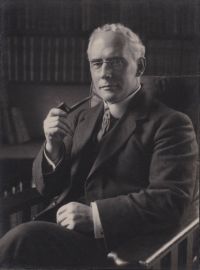 A. F. Pollard,
The History of England - a Study in Political Evolution
A. F. Pollard,
The History of England - a Study in Political Evolution
“ The whole trend of affairs, however, both conscious and unconscious, was to make the world one vast hive of industry, instead of an infinite number of self-sufficient, separate hives; the village market had expanded into the provincial market, the provincial into the national, the national into the imperial, and the imperial into the world market. ”
Helen Campbell, Prisoners of Poverty: Women Wage-Workers…
“ The professional political economist of the old school, the school to which all but a handful belong, takes refuge in the census returns as the one reply to any arraignment of the present. Blind as a bat to any figures save his own, he answers all complaint with the formula: “In 1860 the property of this country, equally divided, would have given every man, woman, and child $514 each. ”
Modern Eloquence: Vol II, After-Dinner Speeches E-O
“ I would tell you that the last census showed that you had gained so many millions, as if the rabbits did not beat us in that way of multiplication, as if it counted for anything! It seems to me that what we make of our several millions is the vital question for us. ”
 Leo Wiener,
Anthology of Russian literature from the earliest period to the present time…
(1902)
Leo Wiener,
Anthology of Russian literature from the earliest period to the present time…
(1902)
“ And if a collector, seeing them, tries to collect the revenue, the gentry take the peasant’s part and send the collector away more dead than alive, and the government officers look on, and dare not interfere. ”
 William Morris,
Signs of Change
William Morris,
Signs of Change
“ He has also to pay the commission of the middle-men who distribute the goods which he has made, in a way so wasteful that now all thinking people cry out against it, though they are quite helpless against it in our present society. ”
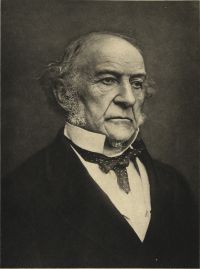 William Ewart Gladstone,
Prose Masterpieces from Modern Essayists…
(1891)
William Ewart Gladstone,
Prose Masterpieces from Modern Essayists…
(1891)
“ As to riches, it is reasonable to establish, from the decennial stages of the progress thus far achieved, a series for the future; and, reckoning upon this basis, I suppose that the very next census, in the year 1880, will exhibit her to the world as certainly the wealthiest of all the nations. ”
 William Smith,
A Smaller Dictionary of Greek and Roman Antiquities
William Smith,
A Smaller Dictionary of Greek and Roman Antiquities
“ Land formed the most important article in the census; next came slaves and cattle. The censors also possessed the right of calling for a return of such objects as had not usually been given in, such as clothing, jewels, and carriages. We can hardly doubt that the censors possessed the power of setting a higher valuation on the property than the citizens themselves had put. The tax (tributum) was usually one per thousand upon the property entered in the books of the censors ”
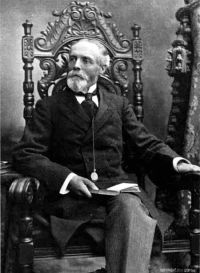 Whitelaw Reid,
Problems of Expansion
Whitelaw Reid,
Problems of Expansion
“ It is no paltry question of an outlet for the surplus products of a mere nation of seventy-five millions that confronts you. Your mathematical professors will tell you that, at the ratio of increase established in this Nation by the census returns for the century just closing, its population would amount during the next century to the bewildering and incomprehensible figure of twelve hundred millions. ”
