“ When groping in the dim recesses of memory, we always perceive that there are associations and intimate connections amongst the phenomena of thought. The blood, making its way into certain parts of the brain, is like the light of a torch penetrating subterranean passages, on the walls of which are painted pictures of things we know. Often the blood-vessels do not yield, and we then wander in vain in that labyrinth, retracing our steps, roaming hither and thither, until suddenly we see an opening, and what we were seeking appears unexpectedly before us. ”
A. Mosso
Biographical details
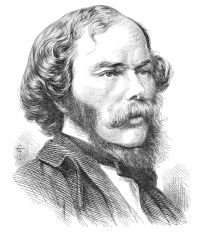
A. Mosso, a pioneering figure in the exploration of human emotion and physiology, is best known for his seminal work Fear, which delves into the intricate interplay between the body’s responses and the mind’s processes. His writings examine how heredity shapes neural activity and cultural development, contrasting inherited traits with learned knowledge.
Through vivid metaphors and scientific investigation, Mosso illuminates the visceral dimensions of thought, connecting emotional states to physiological occurrences. His work resonates with contemporaries like George Henry Lewes and William James, bridging the gap between biological determinism and the evolving understanding of human consciousness.
Quotes by A. Mosso
“ We sometimes imagine that the most important branch of culture is that which we attain through education and study, that the progress of humanity is wholly represented by science, literature, works of art which are handed down from one generation to another; but in ourselves, our blood, there is a no less important factor. Civilisation has remoulded our nerve-centres; there is a culture which heredity transmits to the brain of our children; the supremacy of present generations depends upon the greater power in thinking, the greater skill in acting. ”
“ Scarcely, however, has he seen the man before he becomes aware that he has made a mistake, and he is glad; but his heart has already begun to beat more vigorously, the perturbation and oppression do not at once subside, but continue to annoy for some time. They are like the continued vibrations of a cord that has been shaken, like a flame shooting up as the spark disturbs the equilibrium of the molecules in the nerve-centres, like the echo of a sound reverberating in the nervous fibres and slowly dying away. ”
“ But such a work must be a complete treatise, a mirror in which each might see himself and learn to what ridicule he exposes himself, what punishment awaits him, when he mounts the rostrum uncalled for and untried. Each must see himself with pallid cheeks, perturbed, distorted countenance, suffering from that unhealthy excitement which, like a storm of emotion, breaks out in trembling. Before entering the lists let each feel the oppression on the chest, the cough, the compression of the bladder, the loss of appetite, the unquenchable thirst, the dizziness which will blind him ”
“ These dreams, in which we feel ourselves paralysed, are a [237] positive torture; the ground gives way under us and we are precipitated into an abyss; we fall while being pursued and cannot get up again; we find ourselves stretched out in the middle of the street and hear the approaching roll of wheels that will crush us, or see a horse gallop up to trample us with its hoofs. We cannot even scream, hands and feet try in vain to move, the oppression and despair increase until the nightmare passes and we awake with beating heart and laboured breath. ”
“ It is an actual relief to many, this repose of attention, this extinction of the will which steals over us in the midst of life’s troubles, lifting the burden of care and allowing us to contemplate quietly the curious spectacle which, when left to itself, the brain at work presents. How rapidly things and thoughts are transformed, melting into each other without order, aim, or pause! How easily we glide by winding paths through time and space, while in endless succession new horizons and new countries rise before us! ”
“ The vital centres are stunned by a mysterious emotion—by a charm which deadens the senses and slackens the reins of control. With the cessation of the moderating force of the brain, the harmony of aim is destroyed, oppression seizes us, and words almost unconsciously spoken are now interrupted and repeated, anon breathless and drawn out, and are at last extinguished in the languor of a swoon. The dim eyes look upwards or hide moodily behind their lids, roll frightened in their orbits, or fill with tears of joy and close with the uncertain glance of the dying. ”
“ Just as an electric spark or a flash of lightning which lasts the one-thousandth part of a second leaves an impression in us a hundred times longer; just as our eye is unable to follow the different positions of a burning brand swung round in the dark, but sees, as it were, a ribbon of fire; just as we burn our hand when we touch a glowing object before we have time to feel the pain; just as, when in movement, we often stumble against obstacles which confront us without our having time to stop ”
“ The most difficult thing in the study of man is to surprise him on the threshold of life, to meet him as he detaches himself from the tissues of the mother, in the guise of a cell seeking the mysterious contact of the fertilising element; to seize the moment in which that wondrous force containing potentially the whole story of an existence penetrates the chemical elements of the germ; to learn how, in the protoplasm of the first imperceptible nucleus, that marvellous activity awakes which only death will end. ”
“ I have studied the expression of the eye in those born blind. These poor people, who could not even see dim shadows of objects, nor distinguish night from day, as though a sevenfold bandage covered their eyes, used to play instruments and be happy together, nor would anyone have thought that in them the eye was dead, insensible for ever to light; but it was only its movements which gave it an expression of joy and amiability, which inspired confidence and tenderness. ”
“ Often patients spring out of bed, crying that a snake is twining round their neck, and they tear, panting, the clothes from their body, and wander about naked, writhing, as though trying to release their neck from a noose, to free themselves from fetters in which their madness has bound them fast.Then they grow quiet again, but the delirium has broken out and will develop, leaving them no more peace. They will lend life to every shadow, and see perpetually before them reptiles and insects crawling about and multiplying. ”
“ Consciousness was extinguished, the troublous thoughts of life had ceased, only the last sentinels of the nervous system were still vigilant. At the slightest noise a wave of blood disturbed the surface of the brain. If the hospital clock struck the hour, or someone walked along the terrace, if I moved my chair, or wound up my watch, or if a patient coughed in the next room—everything, the slightest sound was accompanied by a marked alteration in the circulation of the brain, all immediately traced by the pen which the brain guided on the paper of my registering apparatus. ”
“ But how does it happen that under the influence of a powerful emotion the empire of the will over the muscles ceases, and the energy for defence fails?If we study the phenomena of sleep, we can easily imagine that there are links between the centres of the will and the muscles which may, in certain circumstances, be severed. We all know what nightmare is; we all remember the oppression we have suffered when, in a dream, we have felt ourselves suffocating under an immovable weight on the chest, or from a noose round the throat which we cannot unloose. ”
“ Before beginning the study of the nerve-centres I shall remind the reader of a few very simple facts, which, doubtless, he already knows, but which, recalled, will render more apparent the part taken by the body in the functions of the mind.In order to know how the brain works, it is sufficient to recall the pictures and visions which pass before us when we are absent-minded. How curious it is when the mind sets out on its fanciful wanderings! when, unconsciously, we leave the everyday world behind us and stand motionless, with open eyes, seeing and hearing nothing. ”
“ At the market I chose those animals that blushed most easily and frequently, just as the slave-dealer picks out for the harem those women who charm by blushing more vividly than the others. If one studies attentively the loss of colour in the ears of a rabbit when perfectly quiet, one can nearly always discover the cause in some external circumstance. Often while the animal has red ears and is breathing quietly, one notices a sudden change in the rhythm of respiration; the rabbit lifts its head, looks around, or sniffs; a contraction of the blood-vessels follows, and the ears become pale. ”
“ In vain the eye tries to find a path through this intricate network of filaments and cells; imagination loses itself as in a labyrinth, and we remain humbled and almost frightened at the thought that we are contemplating the corpse of the noblest part of the brain. The activity of these cells has roused the most powerful emotions of our life: our knowledge of men, our sympathy, indifference, suspicion were provoked by the movements which they gave to the faces of those we have known ”
“ Many may regret that such a characteristic difference between man and the other animals should be effaced, and that we should try in cold blood to prove that what is most noble, beautiful, and human in our countenance, we have in common with the brutes. But we console ourselves with the reflection that poetry, enthusiasm, inspiration and passion rise again under new and stronger forms in the contemplation of reality, that in the search after truth there lies a fascination which beautifies and ennobles the human intelligence, and that sentiment is never extinguished by any advance of science. ”
“ The aspect of the countenance is impalpable; its beauties are covered by a subtile, delicate veil, which we cannot touch without tearing it and destroying the charm.It is on this account that I stretch out my hand hesitatingly to take hold of the scalpel and lay bare the head of a corpse, in order to cut through the skin and detach the muscles. When I have separated the muscles of the face from the bones of the skull, a mask like a funnel of flesh remains in my hand. Oh, how ugly is the human face seen from the wrong side! We do not recognise ourselves ”
“ This instance shows how insensible the heart is, and yet, in the language of the poets and in the imagination of the people, it will always remain the centre of the passions and of feeling, because during fear, and in the decisive moments of life, we feel it hammering against the walls of the chest like a machine hidden within, the force of its contractions booming and echoing in our ears and head, exciting that strange feeling of oppression which we imagine that this rebellious organ, unchained by a storm of passion, alone produces. ”
“ Even men who have been hardened and accustomed to the sight of blood and of human misfortunes, are yet moved at the terrible picture of pain wreaking its rude will on a sensitive organism. Human pain is of such importance that all scientific curiosity becomes a trifling and ridiculous thing, and our mind rebels and feels an invincible repugnance to every desire which has not the alleviation of the sufferer for its object, to every act which does not spring from a lively and intense compassion. ”
“ Let us now see what happens when the master is not at home, or what an animal does when its head is cut off, and only the spinal cord is left. We shall see here, too, that the more liberty the master gives to the maid, the more arrogant she grows, at last lording it over the master himself.A decapitated frog does not die immediately; it may move for days, and if deprived of the brain only remains alive for some time. ”
“ What airy phantoms look down from the clouds above, what voices and harmonies strike the ear in the waterfalls of the brooks, what living pictures peer at us from amongst the flowers and grasses on the bank! Then suddenly a flood of memories rushes over us and leaves us confused, bewildered, as it rolls on again to the dim horizon of consciousness. And in this rushing flood of thoughts and forms we see the familiar faces of those whom the grave seems to give back to us, and we hasten to meet them with smiling lips or with tears in our eyes. ”
“ We have all experienced this transformation which takes place in the work of the brain. It enters on another phase when the wine begins to circulate. If we had not already met the guests on similar social occasions, we should be greatly surprised at their metamorphosis, and feel constrained to correct previous misconceptions of their character. Men, whom I had always thought silent and cold, I have seen, to my amazement, carrying on the most daring discussions with brilliant fluency, and rebutting sarcasms with such promptitude and success as to earn them loud applause. ”
“ And from the glowing faces, the sparkling eyes, we know that the blood is rushing in abundance to the brain. The tongue is loosed, ideas accumulate in the mind, as though some kind hand had set the rusty wheels of thought in motion and poured oil on the hinges of the vocal mechanism. ”
“ The physiologist used to be like a man wishful to study the life of a city, and only able to do this by looking down from a terrace at the coming and going of the crowd, the perpetual stream of people in the street. ”
“ We now see that in our body some mechanism is lacking which would act as a curb to save us when we fall. It is one of the greatest imperfections of our nature that at every false step we may be thrown down and crushed, as though in the wheels of a machine. We may compare ourselves to those poor wretches who intoxicate themselves with opium or alcohol, and who, at last, cannot stop themselves on their downward path of intemperance, because if they cease drinking, opium-smoking, or opium-eating, there is an immediate aggravation of the morbid phenomena and tremor with which they are afflicted. ”
“ I remember the night-watches, when we used to relieve each other in attendance on those unfortunate beings who had fallen a prey to tetanus, and whose life had to be prolonged by inhalations of chloroform. In the long, silent halls of [148] the infirmaries I still see the pitiable look of those suffering from tabes dorsalis or paralysis agitans, who could not stand steadily, nor indeed erect themselves at all, as though a curse were agitating the muscles, over which the will had lost all control, and which at last became so rigid that even the bones of the skeleton were bent and deformed. ”
“ The eye examines the human countenance with such rapidity and such accuracy that no one will ever succeed in giving in words a picture of the minute details and fugitive traits which we see appear and disappear on the face during emotion. ”
“ The young physician, just beginning to practise, is astonished at the remarkable things which his patients tell him with the utmost confidence and in all good faith. Nearly all relate the story of their illness, beginning with that circumstance which, in their opinion, originated it. It is an innate tendency which spurs the human mind to find an explanation for everything; and the reason of phenomena, which is the foundation of science, is yet the cause of prejudices and the most abundant source of error. ”
“ We know that our friend will certainly not poke his finger into our eye, but the conviction that it is a joke does not suffice. Even if a thick pane of glass were between us and the approaching hand, with all the force of reason and will, many would be unable to avoid shutting the eyes, as though there were in us two natures: one, animal and unreasoning which commands, and the other human and intelligent which succumbs. ”
“ Men, calm and sedate, in whom none suspected a poetic soul, are capable of rising and improvising verses, and we are full of admiration at their skill, and at the harmonious grace of rhythm, metaphor, and rhyme.Each one feels something like inspiration within him, as though warmed by the quickening pulse of life. ”
“ What a wonderful phenomenon is this power in man to reappear in future generations by means of heredity, to transmit his own nature to his descendants by transfusing it—working it into their organism! And no less wonderful is it to see how not only instincts but organs gradually disappear in the course of generations when they are not put into action. ”
“ Anyone who studies the parts of a machine can judge of the accuracy of its movements, because the structure of a machine represents its function; the dead organism is, therefore, no less important a field for observation and study to the physiologist than the living organism.When we see, on opening the skull, that three nerves leave the brain to move the eye, and that six muscles are attached to this little ball weighing on an average seven grammes, we may conclude at once that perhaps no other organ has the same variety, independence, and rapidity of movement. ”
“ Science has advanced so greatly that perhaps no one now who wished to learn the elements of physiology would study his treatise on man, and yet none who know the history of science but are moved by those marvellous pages out of which breathes that spirit of innovation which has fertilised the science of centuries. ”
“ I see young poets, too, who cannot steady the paper as they rise to read their verses to a merry company; and busy housewives with trembling lips, and faces beaming with satisfaction, who have to sit down because they cannot subdue their exultation at their success; and lastly, relatives who, with convulsive hands, embrace each other in the joy of meeting once more.I have known men so nervous that they had to retire at the slightest emotion, lest they should betray an agitation which seemed ridiculous to them ”
“ A slight emotion, a little exertion, a loss of blood, or a fever is sufficient, nay, it is only necessary to enter a room where the air is warm or bad, to stoop or to go up steps, in order at once to accelerate the breath. So long as we are quiet, we may believe ourselves able to modify our respiratory movements at will; but, when the calm ceases, the working of our machine becomes apparent, and we are no longer able to arrest it. Our liberty is in no respect complete with regard to the functions of the organism. ”
“ Often, in contemplating the brain of my patients, pondering over its structure and functions, and seeing the blood coursing through it, I have imagined that I might penetrate into the inner life of the brain-cells, might follow the movements which agitate their minute branches in the labyrinth of the nerve-centres ”
