AI-generated from sources
The ethics of Elfland: why myth offers solace when human reason fails in grief
In Brief
- Profound grief represents a crisis for human reason, as emotional intensity consumes the mental capacity required for subtle logical processing and reflection.
- The philosophy of 'Elfland ethics,' characterized by incomprehensible conditions governing fate, offers an alternative, stricter structure for interpreting inexplicable human tragedies.
- Attributing loss to mythic agents, such as fairies, moves the event from meaningless chaos into a poetic narrative, providing a necessary psychological structure for processing trauma.
- Fairy tales provide a language for experiences beyond empirical discourse, confirming the poetic imagination's role as an essential tool for human survival against overwhelming sorrow.
Main authors


Human existence is often defined by its confrontation with sorrows too great for life to seemingly support, an anguish that seizes the very being and renders all other occurrences as mere dreams or fleeting amusements [1, 2]. In these moments of profound grief, the ordinary frameworks of understanding can crumble. The human intellect, which so often seeks to reconcile contrary principles to achieve a semblance of peace, finds itself at an impasse, its logic insufficient to process overwhelming emotional trauma [3]. This failure of conventional reason creates a vacuum where the mind strains against the limits of its own comprehension [4].
It is within this void that an alternative mode of explanation emerges, one rooted not in causality but in narrative, not in science but in magic. The logic of the fairy tale offers a system for interpreting events that defy rational explanation [5, 6]. This is not a denial of reality, but a re-framing of it through a different philosophical lens. Where human reason falters, the poetic rationalization of fairy lore provides a structure for comprehending the incomprehensible, transforming the chaotic pain of loss into a story with its own internal, albeit magical, coherence [7, 8]. This narrative turn allows for the processing of grief not as a random, senseless event, but as an episode within a larger, mystical order where incomprehensible conditions govern both happiness and sorrow [9].
The limits of human reason in the face of anguish
The experience of profound loss presents a fundamental challenge to the faculties of the human mind . Anguish of this magnitude is not a problem to be solved by logic; indeed, when intense feeling is the measure, one can easily disregard the constraints of rational thought [10]. The structures of reason prove brittle against the weight of a sorrow that seems to shake the foundations of existence . This confrontation often reveals what some philosophers have identified as an ordinary weakness of the human intellect: the tendency to abandon logic in a desperate search for peace . The result is a cognitive dissonance where the mind, unable to synthesize its emotional state with its rational understanding of the world, is left adrift.
This emotional turmoil is not merely parallel to a failure of logic; it actively hinders the process of reason. The mind possesses a finite degree of force, and the energy expended on powerful emotions comes at the expense of subtle reasoning and reflection . A tragic poet, for instance, knows that heroes who are too witty in their misfortune fail to touch the passions of the audience, because the two states are mutually prejudicial . In the depths of grief, the regular flow of sentiment is disrupted, making the complex work of logical processing impossible. The mind, which naturally seeks to find a cause for every effect, is presented with a tragedy for which no satisfactory cause can be found, leading to an error in supposition born from emotional necessity rather than evidentiary fact [11].
Stripped of the comforting scaffolding of reason, human nature often defaults to a state of deep melancholy and despair [12]. This existential crisis is compounded by the terrifying awareness of ordinary human suffering, a reality so overwhelming that, if felt with keen vision, would be like hearing the grass grow—a roar on the other side of silence that would be fatal [13]. Thinkers have long pointed to the inherent folly and misery that characterize the human condition [14]. Without a narrative to make sense of this suffering, the mind is left alone with its own perceived inadequacy, a state which it continually seeks to forget through distraction and amusement .
The alternative order of 'Elfland ethics'
In contrast to the stark world of human logic stands the realm of the fairy tale, which offers not an escape from sanity but a journey into a different kind of order [15]. This world operates on a distinct philosophy, one that replaces the predictable 'Laws of Nature' with the sovereign power of 'magic' . Events in this sphere do not follow the chains of cause and effect that mortals painstakingly try to decipher. For fairies, things simply happen, and if they do not, the fairies make them happen, a mode of existence that views the human need for rationalization as slow and dull-witted [16]. This framework provides an alternative to a reality that has become nonsensical.
The logic of 'Elfland' is predicated on a foundational principle: incomprehensible happiness rests upon an incomprehensible condition . A word is forgotten, and a city perishes; a flower is plucked, and a life is forfeit. This is not lawlessness but a different, stricter form of law, one based on arbitrary but absolute magical decrees. This system mirrors the experience of sudden, inexplicable tragedy in the human world, but it provides a metaphysical explanation where empirical logic offers none. It posits a world governed by forces that are powerful, mysterious, and often capricious, thereby giving a name and a narrative to the seemingly random nature of fate [17].
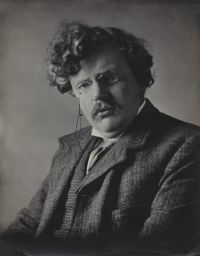
This perspective fundamentally challenges the presumed superiority of scientific rationalism by highlighting its own unexamined assumptions. G. K. Chesterton observes that the transformation of an egg into a bird is no less magical than the transformation of a mouse into a horse; the only difference is that one is a recurring phenomenon we have labeled a 'natural law' . The fairy tale simply refuses to domesticate this sense of wonder and terror. It treats every event as a unique act of will or enchantment, providing a framework that is, in its own way, more philosophically consistent with the experience of a world that often feels arbitrary and mad .
Reframing trauma through poetic narrative
The adoption of this fairy logic becomes a powerful coping mechanism. By attributing an inexplicable loss—such as the death of a child, often historicized through the myth of the changeling—to the intervention of fairies, the event is moved from the realm of meaningless chaos into that of narrative . This aligns with a natural human propensity to personify the inanimate and ascribe malice or goodwill to forces that hurt or please us [18]. It is a form of poetic projection that gives a face to the facelessness of tragedy, allowing for a structured emotional response—anger, fear, bargaining—directed at a specific agent, however fantastical [19].
This process is essentially one of poetic and metaphysical reframing. At their highest points, poetry and philosophy coincide, both serving to project human consciousness onto the world in an attempt to understand it [20]. Fairy tales, particularly through the use of allegory, provide a vessel for this projection, connecting earthly events to a mystical order and thereby imbuing them with meaning . They become a stage upon which the aspirations and struggles of the human soul are played out, offering a narrative that helps uplift weary souls navigating an often-confusing world . The written word itself can act as a mocking fairy, speaking in a feigned voice, yet providing a necessary fiction to endure reality [21].
This narrative containment does not erase sorrow, but it makes it bearable. The fairies of these tales can be frivolous, cruel, or demanding, forcing mortals into acts of sacrifice and imposing harsh transformations as punishment [22, 23]. Their world reflects the often-unjust nature of human suffering. However, because their actions are part of an established, albeit magical, order, the victim of tragedy is no longer isolated in a random universe. Their pain becomes part of a larger story, a testament to the power of unseen forces. This transformation of experience into story is what allows human beings to manage grief that would otherwise be psychologically annihilating.
In the crucible of great sorrow, where the architecture of human logic proves inadequate, the imagination constructs its own shelters . The alternative system of 'fairy logic' is not a regression into delusion but a sophisticated and necessary psychological strategy for navigating existential crises. It substitutes the cold, often absent, causality of the material world with the rich, narrative causality of myth . By framing inexplicable loss within a story of capricious spirits or magical decrees, the human mind can process trauma that would otherwise remain a source of raw, unstructured anguish .
Ultimately, the endurance of these tales speaks to their profound psychological utility. They are a testament to the idea that sorrow, if properly integrated, can become an indestructible force, changing its form from pain into sympathy and deeper insight [24]. While science may seek to demystify the world, fairy tales remind us that some truths are best expressed through allegory and enchantment [25]. They provide a language for the experiences that lie beyond the reach of empirical discourse, confirming that the poetic imagination is not an escape from the human condition, but one of its most essential tools for survival.