AI-generated from sources
Hans Christian Andersen: The paradox of the lovely life and the lonely heart
In Brief
- Andersen framed his life as a 'lovely story' guided by God, seeing his journey from poverty to fame as a fulfillment of divine providence and a personal fairy tale.
- This optimistic self-portrait was sharply contrasted by his lived experience of intense suffering, chronic isolation, and deep wounds inflicted by critical censure and petty jealousy.
- He viewed the creative life as a burden, believing that original artists are 'martyrs of genius' destined to walk a solitary and 'thorny road of honor'.
- Andersen's literary genius stems from his ability to embrace this central paradox, holding both divine light and earthly shadow in a delicate, creative tension.
Main authors
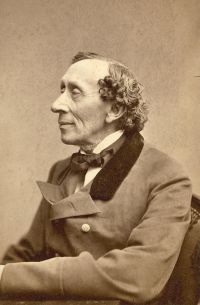

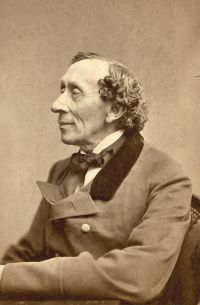
The autobiographical writings of Hans Christian Andersen present a profound and persistent paradox. On one hand, he framed his existence as a divinely guided narrative, declaring, “My life is a lovely story, happy and full of incident” [1]. This conviction rested on a deep-seated belief in a loving God who directs all things for the best, a worldview that seemed to transform his personal history into a fairy tale [2]. This perspective suggests an artist secure in his purpose and cosmic significance, protected and guided toward a pre-ordained greatness [3].
On the other hand, this optimistic self-portrait is starkly contrasted by a pervasive undercurrent of suffering, isolation, and conflict that surfaces throughout his work. He documented intense struggles with critical ridicule, which he dismissed as pitiful yet found deeply wounding [4, 5]. His writings also reveal a profound sense of creative isolation and a desperate longing for human connection, exploring the hidden griefs that weigh upon the lonely heart [6, 7]. This tension between a life perceived as a beautiful, guided story and the lived experience of what he termed the “thorny road of honor” for the “martyrs of genius” [8] forms the central conflict of Andersen’s artistic identity.
A Divinely Authored Life: Faith and the Fairy-Tale Narrative
At the core of Andersen’s personal mythology was a foundational belief in a divinely orchestrated life. He asserted that had a fairy been tasked with guiding his fate, it could not have been directed more happily or prudently, attributing this perfect unfolding to a loving God . This conviction was not merely an abstract faith; it was reinforced by tangible events that seemed to confirm his special destiny. From a “wise woman’s” prophecy in his youth that he would become a great man in whose honor his hometown would one day be illuminated , to receiving a royal order from the King of Prussia, his life’s milestones often felt to him like events from a fantastical story . This perception allowed him to frame his journey from poverty to fame as a coherent and meaningful narrative, authored by a benevolent higher power.
This worldview naturally extended to his philosophy of art, which he viewed as a sacred, almost religious calling. Through the example of singer Jenny Lind, he claimed to have become sensible of the “holiness there is in art,” learning that an artist must forget the self in service to the Supreme [9, 10]. This devotion was a source of inner strength, a process through which “sunshine from without has streamed into my soul” . Faith, in his view, was an active force, capable of breaking the metaphorical “stone” that knowledge lays upon the grave, thereby affirming the truth of immortality [11]. His conviction that scientific truth could never be at variance with the truth of faith provided a stable intellectual foundation for his creative work [12].
Consequently, themes of spirituality and the soul’s journey are woven deeply into the fabric of his literary creations. His tales frequently explore the profound distinction between beings with immortal souls and those without, presenting the soul as the ultimate prize and the source of humanity's unique place in the cosmos [13, 14]. This preoccupation reflects his own contemplations on the nature of the soul and its destination after the body decays [15]. The belief in eternal life is presented not just as a comfort, but as a fundamental truth glowing like a single, shining word [16]. Within this divinely ordered universe, even the smallest flower could preach a sermon on immortality, aligning the laws of nature with the eternal laws of love .
The Poet Against the World: Censure and Misunderstanding
Despite his profound faith in a grand, personal narrative, Andersen’s earthly experience was frequently marked by harsh confrontation with the literary establishment. He lamented that Danish critics, in particular, seemed to lack an “open eye for nature” and were prone to petty, literal-minded attacks . He was censured for describing a moonlit rainbow, an image deemed too fanciful, and was accused of vanity simply for identifying himself as a poet in his prose . Andersen characterized his detractors as sickly, irritable figures, whose own creative works were derivative and made “out of books, not out of life” [17]. This painted a picture of a visionary artist struggling against a tide of uninspired and one-sided judgment.
The psychological toll of this constant criticism was severe. In one instance, he recounts hearing from afar that a new satirical poem had become the talk of Copenhagen by making him appear “famously handled” and “ridiculous” . The particular pain of this attack lay in his ignorance of its specific content, leaving him to suffer the humiliation without understanding its cause . This experience of being publicly shamed aligns with a broader observation, noted by others, that inferior writers often attempt to obscure and depress a rising genius before they are eventually reduced to imitating his style to maintain their own credibility [18]. The artist is thus placed in a position of perpetual defense against those who would seek to diminish his originality.
The recurring theme of being wronged by the world suggests a deep-seated feeling of alienation. His tales sometimes feature characters who feel their “accursed poetical nature” has transformed them into something vulnerable and pitiable, a poor creature at the mercy of others [19]. While some sources suggest that the wronged poet can do nothing but wait for time to redress his wrongs, affecting a tranquility that silence may eventually bring [20], Andersen’s own writings betray the deep wounds such conflicts inflicted. The struggle was not merely professional but deeply personal, shaping his identity as an artist who, to be true to his vision, had to stand in opposition to the prevailing tastes of his critics.
The Burdens of Genius: Isolation and Concealed Sorrows
Andersen's work suggests that the path of genius is defined as much by internal struggle as by external conflict. A recurring motif is the idea of hidden grief, a sorrow concealed from human eyes that presses far more heavily on the “lonely heart” than any publicly acknowledged tragedy . This concept of profound, private suffering is a cornerstone of his artistic sensibility. It finds expression in characters consumed by a terrible loneliness [21] and in narrators who feel an intense longing to escape a life of sameness and “vegetating” in order to finally “become human altogether” . This suggests that the artist’s heightened perception can lead to a painful separation from the simple flow of ordinary life.
This sense of isolation can be understood as an inherent condition of genius. The creative individual often offends the general public through a fundamental unlikeness, scorning common delights and creeds, and possessing a self-sufficiency that appears as arrogance to the multitude [22]. This creates a difficult emotional paradox: while the poet may feel a deep need for sympathy, the nature of their work and being often precludes it [23]. For a mind defined by romantic fancy, the collision with the dreariness of real life can inflict secret wounds akin to the horror of being buried alive, a stark metaphor for creative and social suffocation [24]. This is the essence of the “thorny road” that Andersen believed the “martyrs of genius” are destined to walk .
This perspective imbues much of Andersen’s work with a dark, observational quality that pierces through social facades. His
The writings of Hans Christian Andersen reveal an artist perpetually navigating the chasm between his sincere faith in a benevolent destiny and the painful realities of a creative life. He constructed an overarching narrative of divine providence, seeing his own story as a beautiful fairy tale guided by God . Yet, this framework could not entirely contain or explain the profound alienation, public censure , and deep internal sorrow that accompanied his unique vision . His work consistently suggests that genius is not a gift to be enjoyed freely, but rather a state of being that demands a solitary and often agonizing journey, a path an original artist must clear for himself like Hannibal crossing the Alps [25].
Ultimately, Andersen appears to find resolution not by erasing this central paradox but by embracing it as the very substance of his art. His celebrated ability to write stories that resonated with both children and adults [26] seems to stem directly from this capacity to hold both optimistic, fairy-tale faith and a clear-eyed view of the world’s hidden darkness in a delicate, creative tension [27]. In the end, he embodies the identity described by one critic: not a scholar or a champion, but “simply a poet” [28], a figure whose essential task is to see and articulate the elementary truths of the human condition, with all its divine light and earthly shadow.