Summary

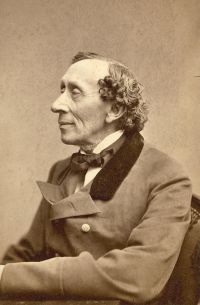
Portrait of H. C. Andersen H. C. Andersen Hans Andersen's Fairy Tales

They flew aloft with her feather-dress! “Sink down,” they cried; “you shall never fly in the swan-skin again; never see Egypt again! Stay in the moss!” And so they tore her feather-dress into a hundred pieces, till the feathers flew about as if it was snowing, and off flew the two good-for-nothing princesses.’
‘Oh, how dreadful!’ said mother-stork. ‘I can’t bear to hear it. But, tell me, what else happened?’
‘Our princess moaned and wept. Her tears fell on the elder-stump, and it was quite moved, for it was the Marsh King himself, who lives in the quagmire.
Source: Gutenberg

Portrait of H. C. Andersen H. C. Andersen Hans Andersen's Fairy Tales

You may never return to your sisters, and your father’s palace; and unless you shall win the prince’s love to such a degree that he shall leave father and mother for you, that you shall be mixed up with all his thoughts and wishes, and unless the priest join your hands, so that you become man and wife, you will never obtain the immortality you seek. The morrow of the day on which he is united to another will see your death; your heart will break with sorrow, and you will be changed to foam on the sea.’
‘Still I will venture!’ said the little mermaid, pale and trembling as a dying person.
Source: Gutenberg

Portrait of H. C. Andersen H. C. Andersen Hans Andersen's Fairy Tales

She swung the censer, and there came a fragrance as if from an altar, so powerful, so subtly operating, that the rushes and reeds of the moor put forth their flowers. All the germs sprang up from the deep soil; everything that had life arose. A veil of water-lilies spread itself like an embroidered carpet of flowers, and on it lay a sleeping woman, young and beautiful. Little Helga thought she saw herself mirrored in the still water; but it was her mother that she saw, the Marsh King’s wife, the princess from the waters of the Nile.
Source: Gutenberg

Get perspective with Kwize: daily news enlightened by great literature